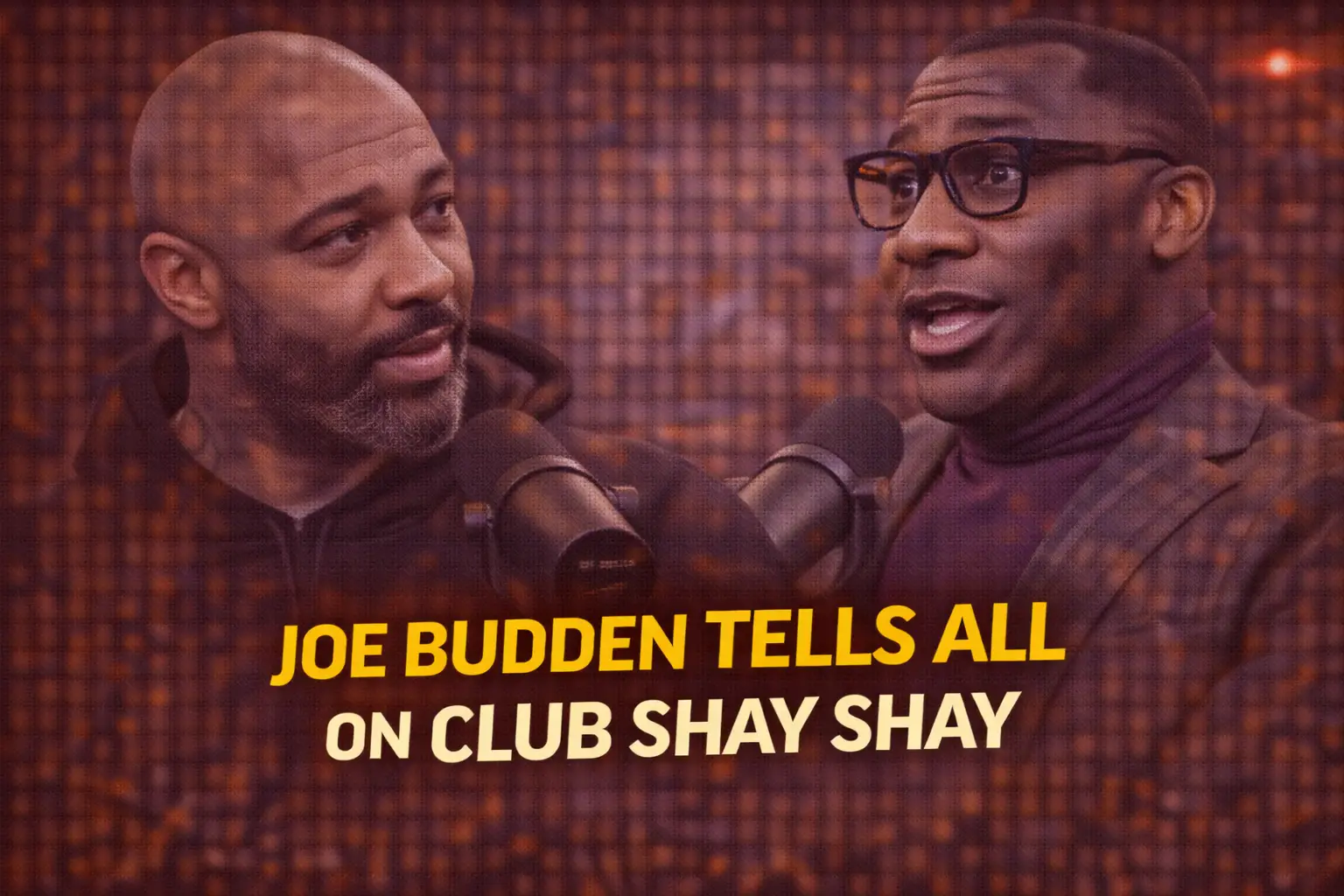
If you’ve ever wondered how creators go from “posting content” to running a real business, Joe Budden’s conversation with Shannon Sharpe is basically a masterclass in ownership, pressure, and learning the money side the hard way. It’s also a reminder that behind the jokes and headlines, there’s often a serious story powering the work.
The part people don’t clip enough: Joe Budden’s Percocet addiction (and why timing mattered)
By The Stream Watcher
Before the talk turns to contracts and platforms, Budden shares the kind of detail that makes everything else hit differently. He says his opioid addiction started after a hospital visit around 2008 or 2009, when he was prescribed Percocet as part of treatment for what he thought was a hand issue that turned into something bigger.
According to Budden, the prescription turned into dependency fast. He describes being able to buy pills “in bulk” on the street, carrying dozens at a time, and living with withdrawals when he tried to stop. He frames it as a slow-motion self-destruction that didn’t feel dramatic day-to-day, until it did.
The scariest piece is his gratitude that it happened before fentanyl became so widespread. Budden’s point is blunt: if his habit had overlapped with today’s counterfeit pill era, it could’ve been fatal.
Sharpe doesn’t sensationalize it, but he does underline the reality: the body doesn’t care if the story starts in a hospital or at a party. Dependency is dependency, and withdrawals are their own kind of trap.
Budden says he didn’t go to rehab for that specific period, and emphasizes the role of his circle, including family and friends, in helping him taper off. He also acknowledges it wasn’t an overnight “I’m healed” moment, it was a process.
“You can do it on your own”: the accidental income reveal and what Joe meant by it
Budden and Sharpe revisit the viral moment where Budden posted financial info and, whether by accident or not, people thought they saw what he was earning monthly. Budden explains he was trying to highlight growth and impressions, but something that was supposed to be blocked became visible (he jokes that “dinosaurs” unblocked it).
The result was exactly what you’d expect: phone calls, chatter, and internet math detectives clocking in for overtime. Budden’s framing is that good still came from it because the bigger message was always the same: creators can build independently, if they’re willing to do the work and live with the trade-offs.
He’s also clear that he doesn’t see transparency as “flexing,” he sees it as sharing information in a space where people are often kept in the dark. That’s a recurring theme throughout the interview: he wants creators to understand the business, not just participate in it.
Why Joe Budden chose Patreon over another big platform deal
Sharpe asks the question a lot of fans ask: why take the Patreon route when the Joe Budden Podcast has reach across YouTube, audio platforms, and major distributors?
Budden’s answer is about control and upside. He says they believed in the show, based on what they’d already built at Spotify, and they had data that helped them see what the audience would follow. He describes listening to offers, but choosing the place where he could be happiest, get paid, and celebrate growth without asking permission.
He also separates “creative control” from “business control.” Budden acknowledges partners usually didn’t interfere with his content. His issue was the machinery around it, especially how podcast ads and revenue participation worked. He describes being tied to ad deals where his involvement mattered, but his share didn’t reflect that leverage.
Patreon, for him, meant direct alignment: equity participation, more control, and a model that puts the show in the hands of him and his fans. That’s consistent with how the partnership was covered when he launched subscriptions and joined Patreon as a “Creator Equity” adviser, per Variety’s report on the Patreon deal.
The Spotify frustration Budden keeps coming back to
Budden describes a dynamic where, after being early and successful, his show got lumped into a massive pool of podcasts, which changed how advertising value was treated. He wanted true free agency, meaning market value based on his actual pull, not a small “bump” because he was inside someone else’s umbrella.
Sharpe echoes the point in plain terms: if the ad depends on your voice and your audience, the compensation should reflect that reality.
The podcast myth Budden wants to end: “Where’s the money by episode 8?”
One of the most useful parts of the interview is how honest both men are about how unglamorous podcast growth can be.
Sharpe shares how he got into podcasting because it was written into his Fox deal, and only later realized there was real revenue potential once he saw how YouTube, ads, and self-placed sponsorships could stack. Budden’s response is basically: of course they weren’t going to teach you that part.
Then they get into the biggest delusion in content creation right now: people wanting CEO results with hobby effort. Budden says he hears pitches like, “I want to do 10 to 12 episodes a year,” followed by unrealistic expectations about pay. He doesn’t mock the ambition, but he treats the math like it’s disrespectful to the grind.
He also points out a trend that’s quietly embarrassing for the industry: some celebrities announce big podcast deals, then never deliver an episode. Budden contrasts that with consistency being the actual superpower. He frames his own output as something audiences can count on, multiple drops per week, year-round.
This is also where Budden explains why podcasting still gets side-eyed. In his view, part of the stigma comes from how unclear the pay model is to outsiders. People hear the headline numbers, but don’t understand the long runway.
For readers who want a baseline on the show itself, The Joe Budden Podcast on Spotify gives a snapshot of the format and how it’s packaged on major platforms.
Ads, teams, and the real cost of “just talking”
Budden admits he’s never been a natural at promotion, even in rap. He says he didn’t like interrupting conversation flow with ads, and when he tried early podcast ads around 2015 or 2016, he went off-script and turned the reads into chaos. Funny, yes, but it speaks to something deeper: he didn’t want his show to sound like rented space.
Eventually, the business reality wins. Sharpe makes the point many audiences ignore: producers, editors, graphics, social, cameras, lenses, and travel all cost money. Budden agrees, and frames it as a choice between random programmatic ads everywhere or long-term brand relationships that fit the show’s tone and protect the operation.
Budden also talks about the logic behind building in-house capability, including an ad team. The point is simple: the more layers between the creator and the deal, the more value leaks out before it reaches the people doing the work.
That mindset connects back to his broader career story: fighting for independence, first in music contracts, then in media contracts.
For more detail on the business framing of his Patreon move, Music Business Worldwide’s breakdown of Budden joining Patreon tracks the same “ownership first” thesis.
Streamers, YouTube pressure, and the new definition of “network”
Budden’s media predictions land like a weather alert. He says YouTube should be concerned about what Netflix and other big spenders could mean over the next 5 to 10 years, not necessarily today, but in how the next generation consumes content.
He and Sharpe talk about why “network” status now requires sports rights and huge tentpole events. They point to platforms buying into live sports as a way to be taken seriously at the highest tier.
Then they zoom in on the cultural shift everyone feels: streamers getting access that used to be reserved for traditional TV. Budden says some streamers are already bigger than linear networks for the audiences that matter most, young viewers with strong attention and spending power. In his view, this is the new late-night circuit: celebrities pop into streamer ecosystems because that’s where the eyes are.
They also touch on creator controversies, including Budden’s criticism of streamer Aidan Ross and how he spoke about Doechii. Budden’s position is that certain disrespect only stops when it costs money, and he supports accountability that’s tied to actual consequences.
Hip-hop, relationships, and growing up in public
Budden’s career highlights show up in flashes: “Everyday Struggle” at Complex as a rebrand and a crash course in media, reality TV years on “Love & Hip Hop,” and the “Pump It Up” era that made him a global name at 22 or 23. He says the hit taught him he could deliver under pressure, but also that he knew almost nothing about the music business, budgets, recoupment, taxes, and how fast money can vanish.
On hip-hop today, Budden says motivation has changed. In the 1990s, he felt you had to be great to even get in the room. Now, visibility and speed matter more, and the “microwave” pace can affect quality and staying power.
Sharpe also asks about relationship headlines in Budden’s orbit: co-host departures, the Rory and Mal split, and Melissa Ford leaving. Budden wishes people well and says he actually wants people to grow beyond his platform. He treats his show like a springboard, not a cage, and says peace doesn’t always require a reunion conversation.
On romance, he says he’s happily involved, not afraid of marriage, and credits his partner with structure and accountability during this run.
And yes, they find time for the important cultural question: spades rules. Budden and Sharpe go full tradition mode, with talk of tournaments, trophies, and no patience for “kindergarten spades.”
Conclusion: the business lesson under all the headlines
Budden’s sharpest point isn’t about Spotify, Patreon, or streamers, it’s about being willing to live with the trade-offs of ownership. He describes a life built on asking questions, tracking data, and refusing to be “bunched in” when you’ve earned market value. Whether you agree with his delivery or not, the logic is consistent: control the product, or accept being controlled by the product.
If media keeps moving toward personalities over institutions, Budden thinks the winners will be the ones who can create, distribute, and protect their work without begging for permission.
Learn more about Pulse of Fame and our editorial team. Want to weigh in? Join the conversation in the Pulse of Fame community forum.
Related: The Zeus Network Files: Ghetto East Side Baddies needs help.