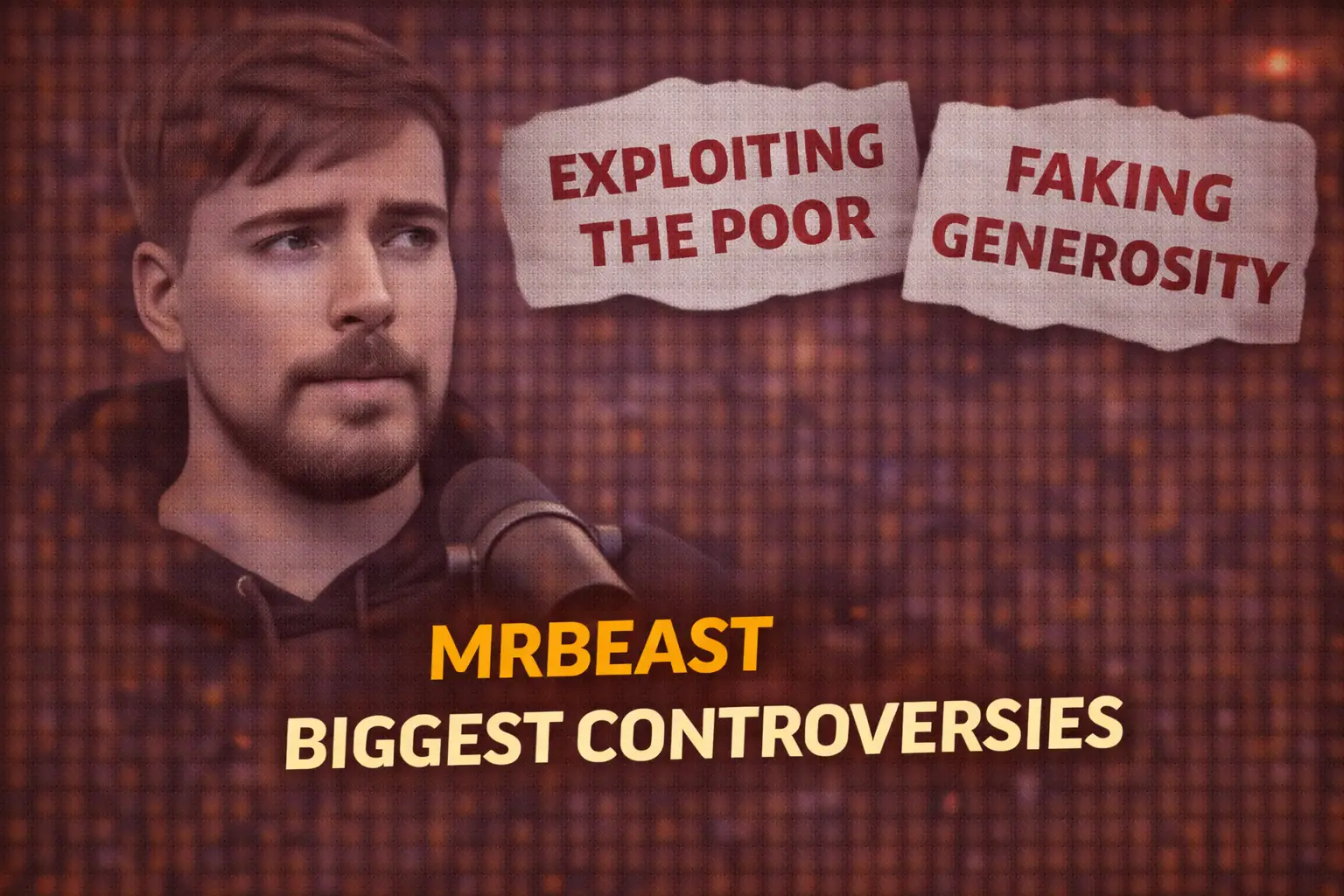
MrBeast, Jimmy Donaldson and the most-subscribed YouTuber, built the cleanest brand on YouTube by turning generosity into spectacle, and spectacle into a business that prints attention. When a creator gets that big, the praise gets louder, the expectations get impossible, and every rough edge starts looking like a scandal.
Below is a guided tour through the major controversies covered in Trap Lore Ross’s documentary, and why so many people argue the MrBeast empire feels like a corporation in a hoodie.
Quick note before we get into it
By Agent 00-Tea
If you want more creator deep dives like this, Trap Lore Ross points viewers to Influencers Exposed. There’s also an extended version option via Trap Lore Ross on Patreon.
Topics:
- Streamers and YouTubers
- Influencer backstories and the internal culture of creators
- Internet scandals and back-and-forths
Who is MrBeast, and why does controversy stick to him?
Jimmy Donaldson, the most-subscribed YouTuber on the platform with over 460 million subscribers, has a public image built on grand philanthropy and giving away huge sums of money. The video frames it as a perfect loop: the more “selfless” the content looks, the more attention it earns, and the more money it can recycle into even bigger stunts.
That scale is the point, and it’s also the problem. As the video lays it out, critics don’t just accuse MrBeast of being “annoying” or “too loud.” They question the foundations: whether the challenges are real, whether the charity is presented honestly, whether contestants are treated fairly, and whether parts of the business (crypto and food products) are built to monetize a young audience.
Scandal 1: The “fake nice guy” workplace stories
The first big theme is simple: the entire brand depends on you believing Jimmy is a nice guy. The video contrasts that camera-ready persona with accounts from former Team Beast workers who describe an intense, high-pressure environment.
Matt Turner’s story (and why it kept resurfacing)
An editor named Matt Turner, who joined the team in 2018, initially spoke positively about the experience. He said the job was fun, the company covered rent, and nobody “did anything wrong” when he was let go after about five months.
Later, Turner posted a much harsher account, describing the work as mentally exhausting, with yelling, public humiliation, harsh reactions to mistakes, creative credit being tightly controlled, and racially insensitive jokes. He also alleged heavy NDAs discouraged people from speaking openly about issues like unpaid wages. The video says the New York Times later interviewed 11 former employees who echoed similar concerns anonymously.
MrBeast’s response (as presented here) was that only a tiny number of people out of the many he’s worked with complained he was too demanding, and that he simply holds high standards. He also said Turner received a separation agreement and a recommendation.
Dogpack 404, Jake Weddle, and “how real are the videos?”
The documentary then shifts to the 2024 wave of renewed criticism, sparked by a former employee turned YouTuber, Dogpack 404 (Dawson French). His videos alleged that “random subscribers” in challenges are often not random, and that some outcomes are more controlled than viewers think.
A second key voice is Jake Weddle, who worked with MrBeast between 2019 and 2021. He claimed MrBeast’s generosity on-camera felt performative, and described being fired after asking for better pay, including raising concerns about a co-worker’s compensation. Weddle also described a difficult confinement-style challenge experience, citing unsafe working conditions such as unsanitary conditions, with contestants underfed and overtired; financial pressure made it hard to refuse opportunities.
The video also notes that Dogpack’s claims drew pushback, including a lengthy response from YouTuber Soggy Cereal, who argued many accusations were exaggerated or wrong, and included interviews with current employees who painted Dogpack as difficult to work with. That response later got its own criticism around disclosure and access.
The documentary’s takeaway lands in the gray area: lots of testimony, not many “smoking gun” receipts, and a brand so big that someone will always leave unhappy. Trap Lore Ross jokes about rating Jimmy “40%” on a “niceometer,” meaning not a monster, not a saint either.
Scandal 2: The Ava Kris Tyson controversy and culture questions
The darkest segment centers less on Jimmy directly and more on what was allowed around him amid misconduct allegations.
Ava Kris Tyson (a longtime friend and early on-screen member of the MrBeast circle) publicly transitioned and was defended by Jimmy amid online backlash. Later, in 2024, the focus shifted to allegations about Tyson’s past online behavior, including resurfaced posts and discussions around an artist named Shadman, described in the video as known for explicit drawings, including illegal content.
The documentary also revisits earlier workplace claims from Matt Turner, including allegations of crude jokes involving a manager’s young child. Turner claimed the manager reacted angrily and was fired, and he also alleged the replacement was someone nicknamed “Delaware,” tied to serious past charges. The video includes competing explanations, including the claim (raised in the response video it cites) that “Delaware” came from a Best Buy hiring story, not a coded joke, and that early MrBeast operations lacked proper background checks.
The “Lava” Discord storyline, leaks, and the investigation
Public attention then moved to a longtime fan known as Lava, who had contact with Ava Kris Tyson as a minor and helped create the official MrBeast Discord server. The documentary describes message screenshots, claims about NSFW channels, and later leaks of a large volume of Discord messages. Lava reportedly denied grooming allegations, even while acknowledging the situation looked bad.
MrBeast announced Tyson’s removal and an independent investigation by Quinn Emanuel. The video says the investigation later concluded grooming allegations were unsubstantiated, while confirming isolated incidents of sexual harassment and misconduct, followed by updated safety policies.
The documentary frames this as the most brand-threatening scandal, even noting MrBeast hired a crisis-management specialist connected (in separate work) to Harvey Weinstein, which intensified the “corporate crisis mode” vibe.
Scandal 3: “Fake” giveaways, charity optics, and payment confusion
This section starts with MrBeast’s origin arc: years of experimenting on YouTube, then hitting a growth engine once giveaways became the hook. The video points out that Jimmy openly acknowledged early on that filming generosity helps the channel.
Beast Philanthropy, his dedicated philanthropy initiative, is described as a separate nonprofit that says 100% of profits from revenue streams go toward charitable work. The documentary also notes a “who we are” story that used to be on the charity site, and later disappeared.
The 100 wells video and the “editing vs exaggeration” argument
One claim highlighted is that the “100 wells in Africa” video used repeated shots or missing frames that made people suspect the number was inflated. MrBeast responded in an interview (as shown in the documentary) that a couple of wells were accidentally duplicated in editing, and argued it wouldn’t make sense to fund almost everything and then fake a tiny part.
The documentary adds that MrBeast later tried to counter rumors by adding a webpage showing the wells, but that page later returned errors, which the narrator chalks up to neglect rather than proof of wrongdoing.
The “1,000 blind people” video and the Mexico nonprofit update
Another concrete controversy: a Mexico nonprofit called Mission Flight claimed it performed more than 60 surgeries tied to the “1,000 blind people” project and was left with over $100,000 in unpaid expenses. The segment also covers related backlash over filming logistics at archaeological sites such as Chichén Itzá during the promotional video shoot. Later, Mission Flight posted an update saying MrBeast’s team reached out, apologized, and wired the amount, attributing the issue to miscommunication with a third party.
The narrator’s verdict is that the charity results are real, but the machine is built for views, and that tension will always attract backlash.
Scandal 4: Crypto allegations and the “fund did it” defense
The documentary calls this one of the most damning MrBeast scandals because it’s a zero-sum arena. It references misconduct allegations, investigated publicly by Coffeezilla, that MrBeast was connected to early token buys (including a token called “Super”), social promotion, and later selling for large profits.
In the version presented here, MrBeast’s team said crypto activity was handled by a fund. Critics argue that explanation doesn’t cleanly solve the conflict, because the “MrBeast” name still adds hype. The documentary also points to podcast comments where Jimmy discussed NFT buys in a way that sounded more hands-on than the “fund” framing.
Trap Lore Ross rates this around “80%” on a “scamometer,” not as a proven legal conclusion, but as a harsh moral read on how ugly crypto incentives can get.
Scandal 5: Food products, kid marketing, and “healthier than what?”
MrBeast’s product era gets framed as a second empire: Feastables, MrBeast Burger, and later Lunchly (a lunch kit launched with Logan Paul and KSI, marketed against Lunchables).
The documentary says Lunchly marketing leaned on comparisons like fewer calories and less sugar, but critics and medical voices argued the charts were incomplete, and that sodium being framed as “electrolytes” was misleading. It also cites Consumer Reports commentary about artificial sweeteners, and later claims that testing found traces of lead in Lunchly, similar to concerns raised about Lunchables.
A viral moment amplified the Lunchly backlash when creator Rosanna Pansino posted a video claiming a moldy product. The brands responded by saying products passed inspections, and that problems could happen in shipping or store handling. The documentary treats that defense as technically plausible, but emotionally cold, with a “not our fault, competitors have issues too” tone.
Its chocolate bars also get criticism in the video for early “slave-free” messaging that later disappeared, with Jimmy later saying (as quoted) that sourcing gets harder at scale when cocoa supply chains move toward West Africa, while also pointing to Fair Trade certification and farmer pay standards.
MrBeast Burger is mentioned as another lesson in speed over control, using ghost kitchens, and later ending in legal conflict over quality hurting the brand.
Scandal 6: Beast Games, big records, and messy reality TV logistics
Beast Games, MrBeast’s Amazon Prime Video competition show, is framed as the biggest swing yet: enormous budget, giant cast, huge prizes, and a lot of record-breaking headlines.
The controversy comes from behind the scenes. Media reports (as referenced in the documentary) described early filming in Las Vegas as chaotic, including claims that contestants surrendered phones and even prescription medications, and that some contestants struggled to access medical care on time, resulting in hospitalizations. The video also mentions limited bathroom capacity, delayed food, and general confusion after a last-minute schedule flip.
A class action lawsuit filed by contestants accused MrBeast and Amazon of unsafe and unlawful conditions, including harassment and lack of adequate support. MrBeast’s side called the claims exaggerated and pointed to unexpected events and logistical breakdowns (the documentary mentions weather and the CrowdStrike incident as part of public explanations).
Contestants interviewed by Oompville described a mixed picture, with some saying later filming in Canada improved sharply, while others argued improvements don’t erase what happened early on. A second season of Beast Games was still ordered, with format changes and better reviews, which the documentary reads as evidence that the concept prints views, even when the rollout gets messy.
For extra context on how this story was covered beyond YouTube commentary, see reporting such as the BBC’s overview of the Beast Games lawsuit, a harsh critical take in The Guardian’s Beast Games review, and a broader roundup from The Independent on Beast Games controversies.
Final thoughts: demon behind the thumbnail, or symptom of the system?
The documentary ends by widening the lens. MrBeast scandals don’t land as one clean “gotcha,” they land as a pattern: maximize attention, maximize scale, clean up later. The video also points to Jimmy’s sensitivity to criticism, plus his occasional engagement-bait posts about running X or even politics, as proof that attention is always the north star.
Other creators, like Jacksepticeye (as shown), say this era shifted YouTube away from “having fun” and toward a constant chase for bigger numbers, where contestants often bear the brunt of these high-stakes spectacles. Trap Lore Ross’s closing idea is that MrBeast isn’t the only problem, he’s the most successful output of an algorithm that rewards extremes, pushing contestants into risky challenges and sparking a legal probe into greater corporate accountability.
If the platform keeps paying for spectacle, someone will always build it.
Learn more about Pulse of Fame and our editorial team. Want to weigh in? Join the conversation in the Pulse of Fame community forum.
Related: Prince Inspired Mýa to Go Independent, Plus Her “ASAP” Single and New Album Reve