Did Sneako “Self-Snitch” on VladTV About Campaign Finance and Employment Issues?
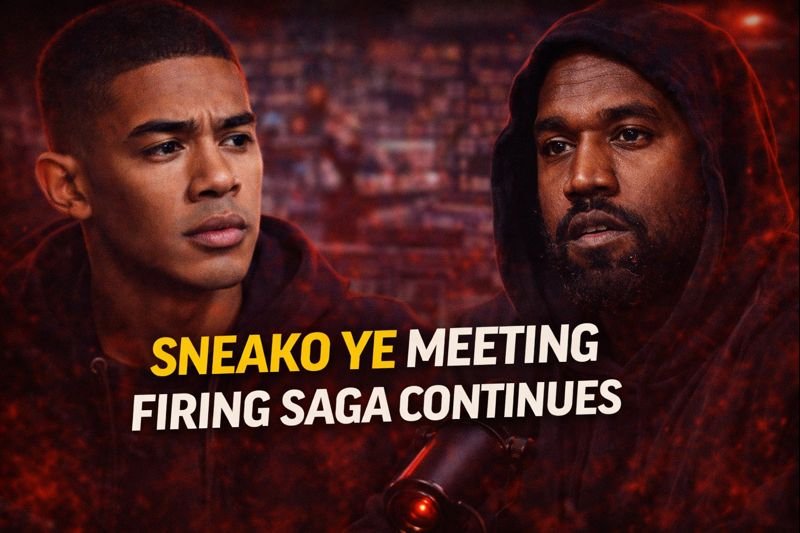
In a recent VladTV interview, content creator Sneako discussed his experiences working with Ye (formerly Kanye West) during Ye’s 2020 presidential campaign and his subsequent termination. While the interview appears casual, a closer legal examination reveals potential areas where Sneako may have inadvertently provided information that could be construed as self-incriminating or could open him up to scrutiny from various regulatory bodies or even civil litigation.
The core of the analysis revolves around the concept of “self-snitching,” a colloquial term for providing information that could potentially be used against oneself in legal proceedings. This isn’t necessarily an admission of guilt, but rather the disclosure of facts that could trigger an investigation or support a legal claim. The legal system generally protects individuals from being compelled to self-incriminate, primarily through the Fifth Amendment in the United States. However, voluntary statements, like those made in a VladTV interview, are generally admissible.
One key area of potential concern stems from Sneako’s involvement with Ye’s presidential campaign. Federal campaign finance laws are notoriously complex and strictly enforced by the Federal Election Commission (FEC). His discussion of his role, responsibilities, and potential compensation (or lack thereof) could raise questions about compliance with these laws. For example, if Sneako’s services were deemed to be a contribution to the campaign, and not properly reported or if it exceeded individual contribution limits, both Sneako and the campaign could face penalties. This is especially true if Sneako described specific activities that could be interpreted as coordinated spending or in-kind contributions exceeding legal limits. The FEC scrutinizes not just direct financial contributions, but also the fair market value of services provided to a campaign.
Furthermore, the interview touches upon the circumstances surrounding Sneako’s termination from the campaign or associated entities. While simply being fired is not inherently illegal, the reasons for the termination, as described by Sneako, could potentially give rise to legal claims. For example, if Sneako implied that he was terminated for discriminatory reasons, or because he refused to participate in illegal or unethical activities, he might have a basis for a wrongful termination claim. Conversely, his statements could also be used against him by the campaign or affiliated organizations if they believe he breached confidentiality agreements or made disparaging remarks. It’s crucial to remember that this analysis is based solely on the information presented in the interview; a complete picture would require access to all relevant documents and witness testimony.
Another legal angle to consider is potential exposure to civil lawsuits. If, during the interview, Sneako made statements about other individuals or entities that are demonstrably false and damaging to their reputation, he could be sued for defamation (libel if written, slander if spoken). This is particularly relevant if his statements concern Ye or other individuals involved in the campaign, especially if those statements suggest illegal or unethical conduct. Defamation suits require proving that the statement was false, published to a third party, caused harm to the plaintiff’s reputation, and made with a requisite level of fault (actual malice for public figures).
Finally, the interview’s reach through VladTV’s platform amplifies the potential legal ramifications. The widespread dissemination of information increases the likelihood that relevant regulatory bodies or potential litigants will become aware of Sneako’s statements. The internet’s permanence also means that these statements are easily accessible and can be used in future investigations or legal proceedings.
In conclusion, while the VladTV interview appears to be a casual conversation, it raises several potential legal concerns for Sneako. His discussion of campaign activities, termination circumstances, and statements about others could expose him to scrutiny from the FEC, potential wrongful termination claims, defamation lawsuits, or other legal challenges. It is advisable for Sneako to consult with legal counsel to assess the full scope of his potential exposure and take appropriate steps to protect his interests. His candidness, while potentially entertaining for viewers, underscores the importance of carefully considering the potential legal ramifications of public statements, especially when discussing sensitive topics. The key takeaway is that even seemingly innocuous comments can have significant legal consequences, emphasizing the need for caution and informed decision-making in the age of digital media.
Learn more about Pulse of Fame and our editorial team. Want to weigh in? Join the conversation in the Pulse of Fame community forum.
Related: Anthony Joshua on the Nigeria Car Accident That Took Latz and Sina