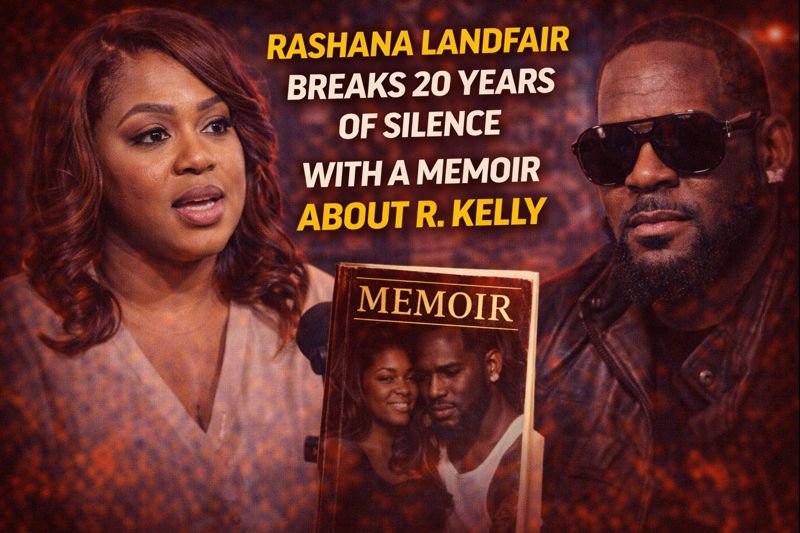
Rashana Landfair says she was the unnamed minor at the center of the infamous R. Kelly videotape, a case that echoed through headlines, courtrooms, and street-corner chatter. Now, in her early 40s, she’s telling her story publicly for the first time in a memoir, Who’s Watching Shorty? Reclaiming Myself from the Shame of R. Kelly’s Abuse. For anyone who’s watched the culture turn real pain into a punchline, this R. Kelly Tapes Tell-All-Book Hip Hop R&B moment lands differently.
- Rashana Landfair says she was the 14-year-old girl in the infamous R. Kelly video that fueled years of public outrage.
- She’s released a memoir, Who’s Watching Shorty?, and spoke in a first full interview (as described in the video).
- The video describes how grooming can happen in plain sight, through family trust and slow boundary-pushing.
- Landfair says she didn’t testify in the 2008 trial and now describes that as a lasting regret.
- She later testified in 2022 under a Jane Doe name, helping prosecutors show a long-term pattern of coercion and abuse.
- Today, the video says she works in a school-based health center, mentors young women, and is raising her son in Chicago.
By The Legal Eye
From shadow to spotlight: Rashana Landfair breaks her silence
For years, Rashana Landfair’s name wasn’t supposed to be public. According to Chronicle Speaks, she was known as an unnamed minor even as the tape itself became a grim piece of pop culture lore. The worst part is how casually the world handled it, like the real headline was the scandal, not the child caught inside it.
Chronicle Speaks describes a stretch of time where the video was mocked, sold, and passed around, while the girl at the center was stripped of privacy. In that kind of climate, a victim doesn’t get space to be a victim. She gets turned into a reference, a rumor, a “remember when,” something people say with a smirk.
A few ways her life was pushed into public view (as described in the video):
- Headlines and courtrooms: Her story circulated even while her identity stayed officially “protected.”
- Public jokes: The tape became a punchline, not a warning.
- No voice of her own: People debated her life while she stayed unnamed and unheard.
Chronicle Speaks says Landfair is changing that now, by publishing her memoir and sharing her account under her own name. The video also mentions a Rolling Stone interview as her first full public telling. The timing is part of the message: she’s not asking for permission anymore. She’s taking authorship back.
Before the headlines, she was a Chicago kid with talent and options
Chronicle Speaks frames Landfair’s early life with the details people tend to forget once the internet decides you’re only one thing. Before the trauma took over the narrative, she was a performer in the 1990s. She was part of a Chicago hip hop group called For the Cause, described as a cousin quartet that found modest success overseas.
Music wasn’t a random hobby in her family. It was the family language. According to the video, her father was a professional guitarist, her mother sang in a gospel group, and her aunt Sparkle was a rising R&B artist with industry access. The picture painted here is important: she had talent, ambition, and adults around her who believed opportunity could be real.
Chronicle Speaks also shares that Landfair had everyday dreams alongside the big ones. She dreamed of teaching preschool. She dreamed of music. She had a future that stretched beyond a single scandal.
That context matters because it pushes back on a tired myth, that kids in these stories are “fast” or “grown.” The video’s point is the opposite. She was a child with plans, and a powerful adult stepped into the middle of them.
Aunt Sparkle, industry access, and the introduction that changed everything
Sparkle, born Stephanie Edwards, is described as the key connection between Landfair and R. Kelly. Chronicle Speaks says Sparkle had a hit single in the late 1990s and was closely tied to him during her rise. In the video, Sparkle is quoted saying, “97 is the year I introduced my niece to him.”
That introduction was framed as opportunity. Chronicle Speaks explains that Sparkle initially believed R. Kelly could help open doors for her niece. It’s the kind of thinking that’s common in entertainment: proximity to power becomes a shortcut people trust because they want the dream to work.
But the video argues that grooming rarely happens as one dramatic moment. It’s built through trust. Chronicle Speaks describes R. Kelly embedding himself into the family’s world, gaining comfort and access before his intentions fully surfaced.
One detail shared from the memoir stands out because it shows how boundaries can blur fast when adults treat warning signs as “nothing.” Chronicle Speaks says Sparkle even suggested R. Kelly become Landfair’s godfather. In the memoir, Landfair describes climbing into his lap, rubbing his head, and asking him to be her godfather, and he agreed. With adults present, behavior like that was treated casually at the time, but later read as an early boundary violation.
In the Rolling Stone discussion described in the video, Landfair reportedly avoids painting her family as villains. The point is that grooming doesn’t need “bad parents” to work. It needs confusion, trust, and a grown man skilled at moving the line inch by inch.
When “boyfriend” turns into control, coaching, and fear
Chronicle Speaks describes the dynamic escalating through secret phone calls and emotionally charged conversations. R. Kelly allegedly insisted Landfair call him “daddy” in private. At first, she believed she was in a relationship with him, and saw him as her boyfriend. As the video tells it, that framing eventually collapses under the weight of control.
The video also describes punishments that left physical marks, including bruising. Chronicle Speaks says Landfair wrote that R. Kelly documented some of these acts himself. It’s a detail that speaks to power, not romance. It’s about dominance and evidence, not love.
When Chronicle Speaks references the time of the infamous video, Landfair reportedly says she had not yet had sexual experience, and that she was mentally impaired after being given alcohol repeatedly. The language here is important and careful: the video describes confusion and disorientation, a child not fully able to process what was happening.
By 16 and 17, Chronicle Speaks says Landfair felt like nothing else mattered. School, friends, family, music, identity, all of it faded behind his orbit. She describes being brainwashed and stripped of independence.
Then comes the part that explains how public cases can fail even when people “know.” Chronicle Speaks says Landfair was trained to lie, coached with long rehearsals until she could deny the truth smoothly. Not a casual suggestion, a drill. In that kind of setup, silence isn’t just fear. Silence becomes a job.
The 2002 arrest, the 2008 trial, and the years she says were stolen
Chronicle Speaks recounts R. Kelly’s 2002 arrest on a 21-count indictment related to child pornography. Between that arrest and the 2008 trial, the video says his control over Landfair intensified.
One of the hardest admissions in Chronicle Speaks’ recap is Landfair’s regret about not testifying in 2008. According to the video, she denied being the girl in the video under oath before a grand jury. Chronicle Speaks describes the reasons she gives: fear, shame, and a belief she’d be blamed for sending a powerful man to prison.
The video also adds a key detail about the courtroom period: Landfair was isolated on R. Kelly’s tour bus, close to the courthouse, but cut off from news coverage and anything that could challenge the story she’d been coached to repeat. Chronicle Speaks notes that jurors later cited her absence as a major factor in his acquittal.
After that, the video describes years marked by extreme control. Landfair was reportedly moved between studios, tour buses, offices, and makeshift sleeping spaces. Chronicle Speaks mentions sleeping on chiropractic tables, sleeping in closets, and needing permission even for bathroom use. Meals were delivered with coded knocks. Meanwhile, parties happened in the same spaces, with music and adults acting comfortable.
Her father, according to the video, sometimes showed up to gatherings to quietly check on her, knocking on doors and making his presence known as concern, not confrontation. By her mid-20s, Chronicle Speaks says she managed to leave, but “freedom came slowly.” She shortened her name, avoided introductions, and lived with the fear that any new job or relationship might come with whispers.
Testifying in 2022 and writing Who’s Watching Shorty? to reclaim her name
Chronicle Speaks says the 2019 docuseries Surviving R. Kelly blindsided Landfair, but that the same year brought a shift when he was indicted again. The video highlights a turning point: in August 2022, Landfair testified under a Jane Doe pseudonym in federal court in Chicago.
This time, Chronicle Speaks says she faced him directly. Her testimony helped prosecutors establish a long-term pattern of grooming, coercion, and abuse needed to prove racketeering and sex trafficking. The difference from 2008 is simple but heavy: the jury heard her voice.
Chronicle Speaks notes that R. Kelly was convicted in federal trials in New York and Illinois, and sentenced to decades in prison.
The memoir, the video argues, isn’t positioned as an exposé. It’s described as redemption, a reclaiming. Chronicle Speaks says Landfair now works in a school-based health center, founded a nonprofit mentoring program for young women, and is raising her son in Chicago.
The video also shares a response attributed to R. Kelly’s attorney: he wishes Landfair well, says she was unfairly forced into the public eye at a young age, and that she did not deserve that, adding he hopes she finds success and peace.
If nothing else, Chronicle Speaks’ framing lands on one clear point: she’s done being anonymous in her own life.
Timeline of Events (As Described in the Video)
- Late 1990s: Rashana Landfair performs with a Chicago group called For the Cause (modest overseas success).
- 1997 (as quoted in the video): Sparkle says she introduced her niece to R. Kelly.
- Over time: The video describes grooming through trust, access, and boundary-pushing.
- 2002: R. Kelly is arrested on a 21-count indictment connected to child pornography (as stated in the video).
- 2008: Criminal trial takes place, Landfair denies being the person in the video, and does not testify at trial (as described).
- Mid-20s: Landfair leaves, then lives cautiously, shortening her name (as described).
- 2019: Surviving R. Kelly airs, and he is indicted again that year (as described).
- August 2022: Landfair testifies as Jane Doe in federal court in Chicago (as described).
- After 2022: The video says R. Kelly is convicted federally in New York and Illinois and sentenced to decades.
What We Know vs What’s Speculation
| Category | Details |
|---|---|
| What’s stated in the video | Rashana Landfair identifies herself as the minor in the infamous tape, she released a memoir, and she later testified as Jane Doe in 2022 in federal court in Chicago. |
| What’s alleged (as described) | The video describes grooming, coercion, isolation, and control tactics, and attributes these details to Landfair’s memoir and interview. |
| What’s speculation | Any motive or inner reasoning of family members beyond what Landfair says, and any details not directly stated in the video (including specifics the video does not confirm). |
Official links referenced in the video description (and where the book is listed)
Chronicle Speaks’ social media, as listed in the video description:
Listings for Who’s Watching Shorty?:
- Google Play listing for Who’s Watching Shorty?
- Amazon listing for Who’s Watching Shorty?
- Apple Books audiobook listing for Who’s Watching Shorty?
Conclusion
Chronicle Speaks tells this story with the tone of “tea,” but the substance is heavier: a person whose name got swallowed by a scandal is taking it back. Landfair’s memoir, as described, draws a straight line from grooming and control to courtroom outcomes and long-term harm. Whether readers agree on every detail, the cultural shift is clear, she’s no longer being talked about as a rumor. She’s speaking as Rashana Landfair, on her own terms.
Learn more about Pulse of Fame and our editorial team. Want to weigh in? Join the conversation in the Pulse of Fame community forum.
Related: Minnesota Killing Debate, Bill Belichick Hall of Fame Snub, and Ray J’s Health S