By Petty Pablo | Lead Social Analyst
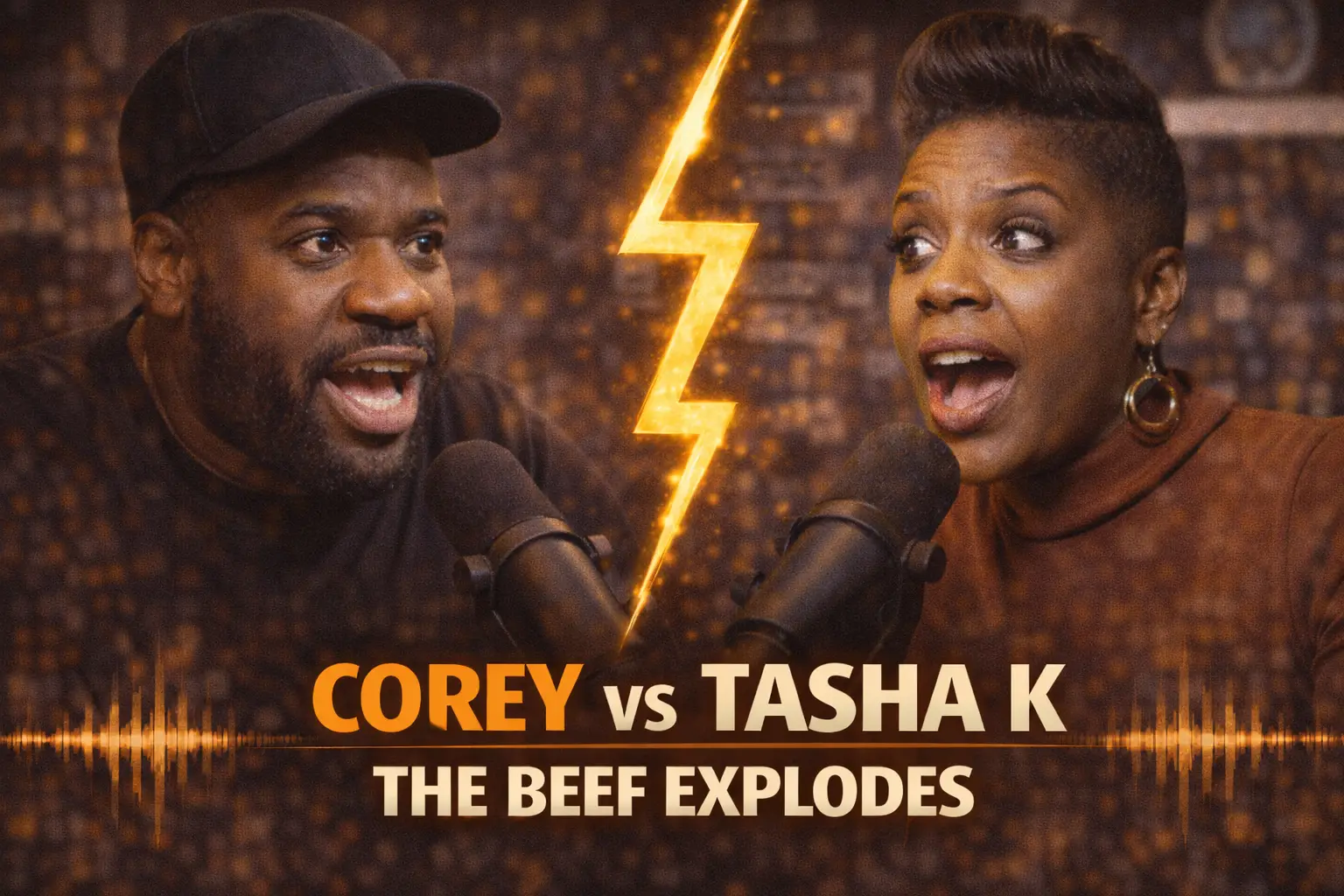
When a comedian takes aim at a YouTube blogger, the tone can flip from jokes to personal real fast. That’s the energy around the Mike’s Closet TV Corey Holcomb Tasha K conversation, after Corey Holcomb went on a heated podcast rant that included demeaning language and talk of taking legal action.
This breakdown covers what was said, how Cardi B’s past legal win keeps coming up, and why “going to war with the internet” usually ends messy for everyone involved.
What Corey Holcomb said, and why people reacted so fast
Corey Holcomb’s comments landed because they weren’t just criticism, they were aggressive and personal. In the clip discussed, he repeatedly used a dehumanizing insult toward Tasha K and framed her as someone who “lies on people all the time,” according to his rant.
A big piece of his framing was status and attention. He drew a hard line between people who are “popping” (his term for successful, in-demand creators) and those he described as outsiders who comment from the sidelines.
That dynamic is basically the engine of a lot of internet conflict: one side claims they’re being targeted for clout, the other says commentary is part of the job when you’re public-facing.
The moment insults replace arguments, the storyline stops being “who’s right” and becomes “who’s escalating.”
The lawsuit talk: threat, strategy, or both?
Holcomb didn’t just vent. He also floated the idea that he’s planning to sue, while adding that he’s “too busy” right now and is watching complaints “pile up.” In other words, the claim is not just “she lied,” it’s “I’m keeping receipts, and this could turn legal.”
The video’s host, Mike, pushes back on that posture. His take is simple: if you’re really going to sue someone, you don’t need a long speech about it every week. Legal action usually shows up as paperwork, not podcast monologues.
Mike’s bigger point is about incentives. Talking about suing can sound like a warning meant to make the other person back off, even if nothing gets filed. It’s also risky, because repeated public threats can keep the story alive and give commentators more reason to respond.
Why Cardi B’s case keeps getting pulled into this
Holcomb’s rant leans heavily on a familiar reference point: Cardi B’s legal win against Tasha K, which he describes as a consequence of harmful claims made online. He portrays Cardi B as someone who had the resources to push back in court, and he credits her for doing what others wouldn’t.
Mike also leans into that comparison, but from a different angle. He argues that suing is expensive and time-consuming, and that Cardi B is likely far busier than most people discussing the situation. So if you’re going to cite that example, you can’t also claim you’re too booked to follow through.
For readers who want broader context on the ongoing legal back-and-forth, see Billboard’s reporting on Cardi B continuing court disputes tied to the defamation verdict and TMZ’s coverage of Cardi B asking questions about Tasha K’s finances.
“War with the internet” and the attention trap
Mike’s most practical warning is that fighting online commentary head-on tends to backfire. The second you look “bothered,” you feed the cycle. The second you name the blogger again, you refresh the storyline for their audience too.
He also calls out the tone. The tough talk, the repeated insults, and the posturing read strange when the clean option is to either ignore it or handle it through formal channels.
That doesn’t mean commentary can’t cross lines. Even in Mike’s telling, he acknowledges that Tasha K has a reputation for saying “wild things.” Still, his view is that you don’t beat internet mess by becoming internet mess.
The hypocrisy question: when is a podcaster also a gossip?
One of Mike’s sharper points is the “rules for thee, not for me” vibe. Holcomb criticizes bloggers and “chatty” commentary, yet he also runs a long-running podcast where he gives opinions on public figures.
Mike frames it as a credibility issue: if you talk about people for hours each week, it’s hard to claim you’re above the same culture you’re complaining about. The difference, in his mind, isn’t the act of commenting, it’s the tone, the targets, and whether the claims are grounded.
He also flags a practical consequence: if you repeatedly attach yourself to a celebrity dispute (in this case, Cardi B vs. Tasha K), you can end up looking like you’re chasing a headline instead of protecting your own lane.
LA club talk, status talk, and where this goes next
The rant also veers into lifestyle flex territory, with claims about who can get into “popping” clubs in LA and Miami, plus broader commentary about people trying to attach themselves to bigger names. It’s a familiar script: gatekeeping as a way to underline who matters in the scene.
Mike’s closer is what you’d expect from a YouTube commentary format: questions for viewers, a request for comments, and a push toward other videos on his channel. He tees up more coverage involving Corey Holcomb and other creators, suggesting this isn’t a one-and-done topic.
If you want to keep up with Mike Turner Jr.’s updates outside YouTube, the video description points to his Mike Turner Jr. Instagram and the channel’s Mike’s Closet TV Instagram. There’s also the merch site, Mike’s Closet Co. store.
Conclusion
This clash is less about one insult and more about a pattern: public figures, public commentary, and what happens when someone tries to “respond” instead of recalibrate. Mike’s read is that legal action should be quiet and direct, while endless ranting just keeps the machine running. If Holcomb really plans to sue, the next step won’t be another speech, it’ll be a filing. Until then, the internet will do what it always does: clip it, remix it, and keep it moving.
Learn more about Pulse of Fame and our editorial team. Want to weigh in? Join the conversation in the Pulse of Fame community forum.
Related: Explosive Claims About Erika Kirk’s NYC Orbit: Next Models, Real Estate, and Rom