By Petty Pablo | Lead Social Analyst
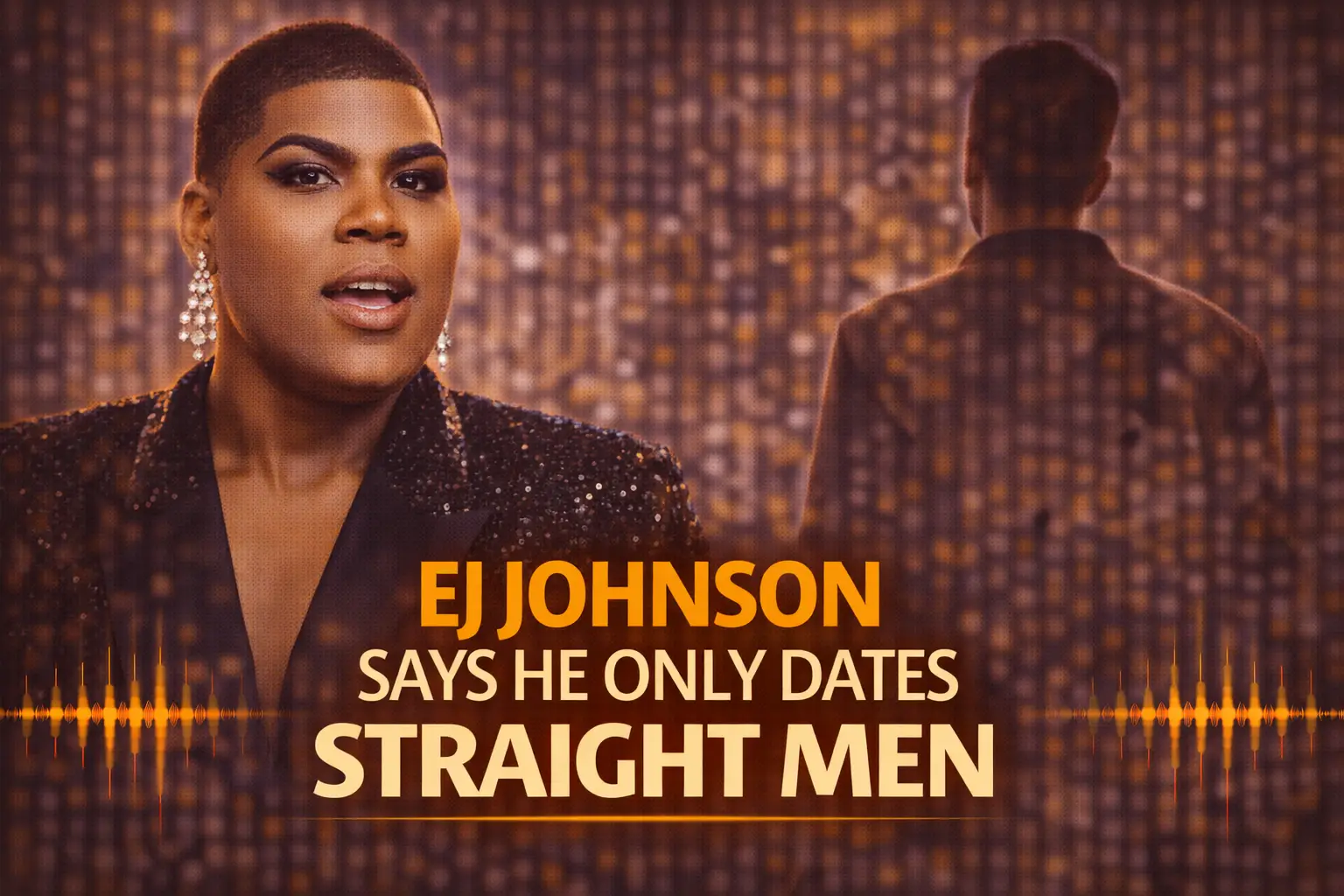
A social media viral clip of EJ Johnson, Magic Johnson’s son, saying they “only date straight men” has been bouncing around timelines like it was designed for discourse. And in a way, it was, not as bait, but as a reminder that different communities use the same words in very different ways. Armon Wiggins’ take on EJ Johnson‘s comments lands in that middle zone: part reaction, part translation, and part media literacy for anybody watching from the outside.
Shoutout to Carlos King and the EJ Johnson interview that sparked the chatter
Armon opens in classic YouTube energy, “What’s popping everybody,” then quickly gives props where he thinks they’re due. He calls Carlos King, host of Reality with the King, “the Godfather,” not because Carlos is above critique, but because he reliably books conversations that turn into more conversations. That’s the whole engine of creator culture: one strong interview becomes a week of commentary, clips, think pieces, and reaction videos.
Armon also adds a small bit of grace for Carlos’ perspective. He notes Carlos’s coming out at 25, so he wasn’t raised inside every corner of the same scene and slang. In Armon’s words, that means giving him “a little wiggle room” when the conversation gets hyper-specific.
EJ Johnson, known from Rich Kids of Beverly Hills and described by Armon as having been “off the grid” for a while, shows up with a big personality and a polished presence. Armon also points out a fun detail that frames his tone: EJ is a Gemini, with a birthday just a day after Armon’s.
- The Armon Wiggins Show on Apple Podcasts
- The Armon Wiggins Show on Spotify
- Back to the Streets on Spreaker
A few quick facts Armon highlights before the internet zooms in on one line:
- The interview landed well overall, then one quote went viral.
- EJ references a past TV storyline where EJ and a sister liked the same guy.
- The clip that traveled most was essentially: “I don’t attract gay men and I’m not attracted to gay men.”
EJ’s statement, what he actually said (and why it went viral)
In the interview Armon references, EJ Johnson doesn’t just drop a headline and move on. They explain the environment piece, the social cues, and the practical realities of their dating life from their point of view.
EJ’s logic, as quoted in Armon’s recap, centers on two claims:
First, EJ says the venues many people assume would be “their” spaces don’t match their dating pool. The line is blunt: they don’t go to gay clubs because “the men that I attract are not there.” EJ also describes feeling “waved off” in those spaces by gay men, like, “hey girl,” and an implied message that EJ isn’t “in here like the rest of us are.”
Second, EJ frames the attraction as consistent over time, saying it’s “always been” the case that the men who approach them are what many would consider straight guys, including men who have dated women for most of their lives. EJ adds that embracing more femininity now only sharpens that dynamic.
Armon admits he came in ready to be harsher. Based on what he heard secondhand, he expected EJ to sound like they were talking down to women, acting newly confident after weight loss, and giving what Armon calls a “nose in the air” vibe. After watching, his read softens. He still clocks some edge and some defensiveness, but he also calls EJ entertaining and charismatic.
For extra context on the original conversation Armon is responding to, here’s the longer interview on Carlos’ channel: Carlos King’s interview with EJ Johnson.
Why straight audiences hear that quote differently
Armon doesn’t attack viewers who react with, “If a man dates a man, he’s gay.” He says he gets why it sounds simple in black-and-white terms, because that’s how most mainstream culture has been taught to talk about it.
His bigger point is about translation. A lot of the language, tone, and categories that grew inside queer spaces are now mainstream entertainment. That means people overhear an internal conversation without the same dictionary.
When ballroom and queer slang becomes mainstream content
Armon’s “lightbulb moment” is that urban gay culture now sits inside everyday hip-hop and pop conversation. He describes it as a shift where everyone has the mannerisms and catchphrases, even if they don’t share the same lived context.
- Mainstream culture adopted the cadence and slang (tea, shade, “what’s tea,” “you ate that”), so the style travels faster than the context.
- Those phrases came from communities in the black community that built their own spaces after being pushed out of families, churches, and “respectable” rooms. Ballroom culture became both shelter and language lab.
- Once the mainstream borrows the fun parts, it also tries to police what it finds uncomfortable, sometimes exposing internalized homophobia. Armon uses debates over certain slang terms as an example of that push-pull.
For readers who want the broader history behind how ballroom culture influenced popular music and media, this overview helps: AAIHS on house-structured ballroom culture.
The real conflict isn’t always the quote, it’s the missing context people don’t realize they’re missing.
Decoding Armon’s framework: “gay boys” vs “trade” (as he describes it)
Armon spends most of the video translating one specific idea: EJ saying “I don’t date gay men” isn’t meant as a moral ranking, it’s a category difference inside certain queer conversations.
He pushes viewers to stop decoding the situation at the most surface level. In his telling, the community uses different buckets for presentation, social spaces, and who tends to pursue whom.
How Armon talks about EJ’s identity
Armon acknowledges that discussions around gender identity are changing fast, even inside the community. He notes that EJ refers to not wanting to be boxed into “he,” “man,” or “gay,” and instead leans into “they” pronouns. Armon says he’ll respect that framing, even if his personal instinct is to read EJ as a gay man who presents femininely in a gender non-conforming manner, perhaps aligning with gender fluid or non-binary expressions.
He also tries to separate “identity” from “dating market,” because the viral quote is about who approaches EJ and where that happens. Armon’s bottom line is that EJ’s dating pool, as EJ describes it, doesn’t hang out in the same spaces where Armon expects to meet potential partners.
Where the men are, according to Armon
Armon paints this as a geography and lifestyle issue, not just a label issue. He argues that the men EJ attracts tend to be straight-identifying, masculine-presenting, and more likely to be found in straight clubs than in gay nightlife hubs.
He also makes a blunt comparison to help straight women understand the dynamic: if a man is drawn to EJ’s feminine presentation, Armon suggests that man’s “type” overlaps more with women than with masculine men.
To make the translation clearer, here’s how the clip plays in three different “languages”:
| Lens | What “I don’t date gay men” tends to mean |
|---|---|
| Mainstream straight framing | Any man who dates a man is gay, full stop |
| Armon’s community framing (as described) | “I don’t date masculine men who identify and socialize as gay in gay spaces” |
| EJ’s personal framing (as described) | “My dating pool isn’t in gay venues, and the men who pursue me don’t identify that way” |
That table doesn’t solve every contradiction, but it explains why the same sentence causes three different reactions.
The downside Armon flags: when “preference” turns into a pattern
Armon doesn’t romanticize the dynamic. He says the attention EJ and other feminine-presenting people receive from straight men can come with limits, especially if the interest is driven by novelty, fantasy, or a private thrill rather than public commitment.
He also notes that some people change how they present, or pursue body-affirming choices, because they want stability and not just attention. Armon frames that as a trade-off people weigh when they’re trying to move from being desired in private to being claimed in public, distinguishing this from transgender identities focused on full transition.
Armon also makes a broader cultural claim about how common this can be in certain cities within the black community, especially places with big nightlife scenes. He name-checks Atlanta, Houston, Dallas, and Charlotte as examples, and says you’d be surprised how many “regular guys” perform traditional masculinity publicly while living on the down low privately.
For more reporting around how EJ’s interview landed across entertainment media, see: Essence on EJ Johnson’s Carlos King interview and Yahoo’s write-up on EJ Johnson competing with straight women.
Timeline of events (as described in Armon’s video)
- Armon opens with high energy and praises Carlos King for creating interviews that drive conversation.
- He introduces EJ Johnson, son of Magic Johnson, notes EJ has been less visible lately, and mentions their shared Gemini timing.
- Armon highlights the viral moment, EJ saying they don’t attract or date gay men.
- He explains EJ’s reasoning, including avoiding gay clubs because that’s not where EJ’s dating pool is.
- Armon shares he initially planned to come down harder on EJ based on hearsay, then softened after watching.
- He zooms out to talk about queer and ballroom slang going mainstream, and how that creates misreads.
- Armon breaks down the idea of different categories of men (as he describes them) and why this reads differently inside the culture.
- He ends by asking viewers to comment, subscribe, and keep the conversation going.
What we know vs what’s speculation
| Category | Details |
|---|---|
| What’s stated in the video | Armon says EJ told Carlos King, a reality TV producer, they don’t date gay men, and that EJ prefers men found in straight spaces. Armon also claims queer slang has gone mainstream and is often policed once adopted. |
| What’s alleged (attributed claims) | Armon alleges many straight-identifying men live on the down low, dating feminine-presenting people while keeping a straight public image, and he describes this lifestyle as common in certain cities and age groups. |
| What’s speculation | Any assumptions about specific individuals’ private lives, motivations, or relationship status beyond what Armon and EJ describe. Armon offers patterns and interpretations, not verified data. |
Join the convo and stay connected
Armon ends the way a creator should, he invites discussion without pretending everyone will agree. The whole point is translation, not conversion.
A few prompts that match the spirit of the video:
- Did Armon Wiggins’s “two dictionaries” framing make the quote clearer?
- Straight men, does mainstream culture borrow slang without keeping the context?
- Would you watch a deeper breakdown of how these labels work in real life?
You can keep up with Armon on Instagram updates from The Armon Wiggins Show and Armon Wiggins on X. He also plugs LuxeLifeManifestations on YouTube and mentions a Bali trip community check-in via Discord. Business contact in the description is The Armon Wiggins Show email. (He also links an item on Amazon: LuxeLifeManifestations product link.)
Conclusion
EJ Johnson, Magic Johnson’s son, quote went viral because it sounds like a contradiction in mainstream terms, but Armon’s point is that it’s not meant to be decoded on one layer. His breakdown is less about arguing labels and more about showing how context changes meaning, especially when underground culture becomes pop culture. If you’ve ever watched a clip and felt like everyone else heard a different sentence, this is that moment, just louder.
Learn more about Pulse of Fame and our editorial team. Want to weigh in? Join the conversation in the Pulse of Fame community forum.
Related: Viral Pastor Asking for Tax Returns: AI or Real? What This Clip Says About Churc