By Petty Pablo | Lead Social Analyst
Incoming Opinion’s live is messy, loud, and very online, but the point she wants viewers to take away is simple. She says Dani revived an old conflict with selective screenshots, public photos, and missing context, then tried to frame the story.
Why IO says Dani reopened the story in a misleading way
IO’s first major complaint is about photos and deleted context. According to her, Dani showed pictures that were pulled from an old public Instagram account, not privately sent in the way viewers were being led to believe. That distinction matters to IO because she frames it as proof that the presentation was designed for impact, not balance.
She also claims Dani deleted parts of earlier direct messages and only showed the portions that supported her argument. In IO’s version, that is the whole issue. It is not simply that old material got discussed, it is that the material was allegedly curated before it reached the audience.
That complaint fits a theme that shows up across this creator ecosystem. People do not just fight over what happened. They fight over who gets to assemble the record. Once screenshots start traveling, the person holding the sequence often gets the first advantage.
IO ties this to older frustrations as well. She revisits past creator conflicts, mentions earlier Discord drama, and suggests that some people who once wanted private help now act as if they were never involved. Her read is blunt, history is being rewritten in real time.
She also talks about an older Discord sweep and lingering bad blood from that period. In her telling, some loyal supporters got removed, people felt slighted, and those resentments never fully left the room. That background is important because IO is not treating the current dispute as brand new. She is presenting it as the latest round in a longer pattern of suspicion, private talk, and public spin.
The bigger message is about framing, not just one set of screenshots
As the live goes on, IO widens the lens. Dani is the immediate target, but IO’s real argument is about motive and narrative control. She repeatedly suggests that Ahmad wanted chaos, wanted her at odds with other creators, and benefited when old disputes were dragged back into public view.
That idea lines up with a broader pattern in tea-channel culture. If you follow this kind of coverage, the audience rarely stops at the headline. They compare dates, clips, voice notes, call logs, and side comments until the timeline becomes the main event. A basic tea channel explainer helps explain why these spaces operate that way, while an earlier Blacktea Sector breakdown shows how often these fights turn into disputes over sequencing instead of one single act.
IO also keeps returning to legal talk, especially a March 30 date she references like a pressure point in the story. She says posts, clips, and images are being saved and added to a larger record. Whether anything formal comes from that is outside what the stream proves, but in her telling, Dani is making the situation worse by continuing to post.
The clearest takeaway from this section is not “who won.” It is that IO believes the story is being shaped through edited fragments, and she wants the audience to slow down and look at order, not just outrage.
This is also where the live gets especially personal. IO mocks the idea that she should be quiet because others are discussing her in members-only spaces. She says people send her clips anyway, so privacy in these circles is mostly an illusion.
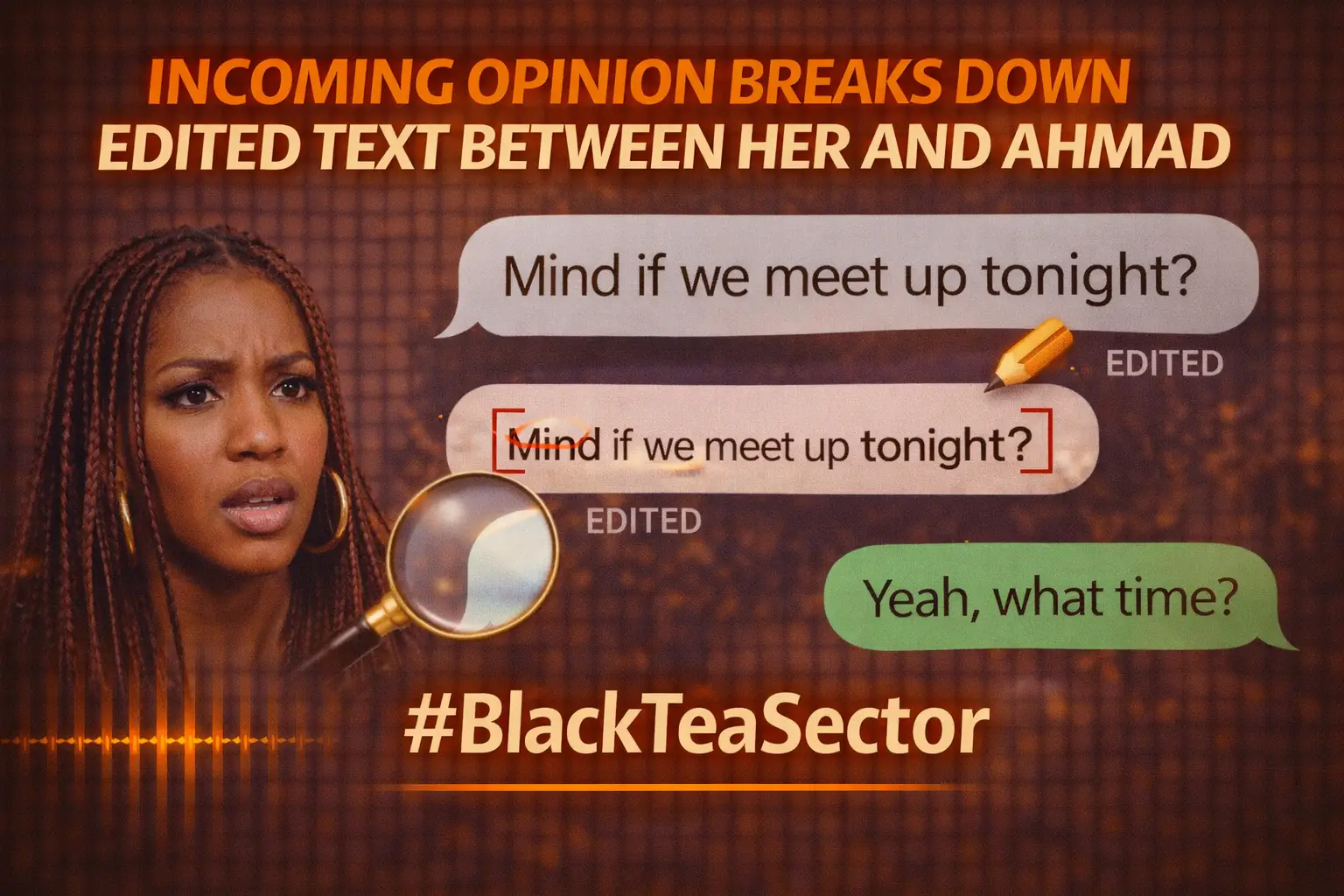
The edited text breakdown starts with flirting, routine check-ins, and mutual interest
After a long stretch of commentary, IO gets to the part viewers were waiting for, the texts. Her reason for reading them is straightforward. If Dani is going to present the exchange as one-sided or suspicious, IO wants to show the early stage as mutual, warm, and fast-moving.
She says the connection began after a panel-related moment in January. From there, according to the messages she reads, the tone turns flirty very quickly. Good morning texts, compliments, jokes about their shared birthday and Libra connection, and repeated plans to talk by phone all show up early.
What IO says the early messages show
IO uses the first batch of texts to make three points.
- The contact was mutual: she says both sides were responsive and eager to talk
- The tone was openly flirtatious: compliments and affectionate language appear early
- The calls were frequent: she says he often called first, sometimes across multiple phones
She reads messages where he compliments her voice and appearance, says he enjoys talking to her, and checks in throughout the day. She also points to FaceTime calls as proof that the connection was not based on mystery or deception in the way later critics suggest.
Just as important, the messages are not all romance. A lot of them are ordinary. They talk about weather, live panels, politics, shopping during streams, station head conversations, and small daily updates. That detail matters because IO wants to show a real rhythm, not a dramatic burst followed by silence.
The everyday details matter more than they seem
The live lingers on small things, snow outside, missed calls, grocery runs, business meetings, and panel gossip. At first that can sound random. It is not random in IO’s framing. Those little details help her argue that the connection was steady and normal for a while.
She also highlights money mentions. According to her, he sent money without her pressuring him (not accurate), including funds tied to errands, hair appointments, weed, and trip-related items. She uses that to push back on any claim that she was chasing him for support. In her version, he volunteered, offered, and planned ahead.
Airbnb messages matter for the same reason. IO says lodging screenshots were sent before the visit, which she presents as proof that the trip was not some last-minute misunderstanding. She wants viewers to see planning, anticipation, and interest from both sides.
All of this supports her larger claim that the later story gets flattened when people skip the early phase. Strip away the buildup, and a complex situation starts to look like a simple cautionary tale. Her live is built to resist that simplification.
Where Tremaine, group drama, and Discord start to change the story
The texts do not stay romantic for long. Soon, other names enter the frame, especially Tremaine, Sammy, and people in Discord spaces. This is where IO argues the story got tangled in YouTube politics.
According to the messages she reads, the man involved told her he was trying to “fall back” from another creator relationship or dynamic, but that the other side kept calling and texting. IO uses missed-call screenshots and follow-up texts to argue that he felt pressured, frustrated, and misrepresented.
She also says he worried about what was being said about him in group settings. At several points, she reads messages where he allegedly complains that private business was being shared with strangers and that he was being made to look desperate or overly attached. In IO’s telling, this is a key hinge in the whole storyline. The conflict was no longer just about two people. It had become social, performative, and vulnerable to retelling.
That is why Discord comes up so much. IO treats those spaces as leak-prone rooms where half-finished narratives harden fast. Someone says one thing in private, someone else paraphrases it publicly, and then the crowd starts treating fragments like a full record.
In this corner of YouTube, private messages rarely stay private for long. What changes is who posts first, and what they leave out.
That emphasis on leakage and sequence mirrors a lot of the background around this saga. Time and again, the dispute returns to the same question, who said what first, and where did it travel next?
The visit and fallout are where the tone completely changes
By IO’s own reading, the mood shifts hard once the in-person visit enters the story. She references travel planning, an Airbnb, airport updates, store runs, and arrival messages that suggest excitement before the meetup. Then, after the visit, the texts become colder and more defensive.
She reads messages saying the other person no longer exists to her, that everything is deleted, and that both sides should move on without mentioning each other again. She says she blocked him, wanted the membership canceled, and tried to treat the situation as finished.
That is where the next dispute begins. According to IO, he later reframed her calls and reactions as threats or harassment. She strongly rejects that. Her position is that later contact came after he kept discussing her in chats and Discord, despite an understanding that both sides were supposed to stop.
She also says there was a truce call involving key people, and she argues that the full audio would shift how viewers read everything that followed. That call is not released in this live, so it remains a claim, not proof. Still, IO treats it as central evidence that the public story is incomplete.
The fallout messages themselves are rough. The exchange turns personal, bitter, and ugly. Neither side looks polished in that portion of the story. Even so, IO’s point is not that she was calm the whole time. Her point is that anger after a breakdown is being rebranded as something more sinister once the timeline gets trimmed.
Here is the sequence as she describes it:
| Stage | What IO says happened |
|---|---|
| Early January | First direct messages begin after a panel-related interaction |
| Mid January | Flirting, repeated calls, FaceTime, and daily check-ins build momentum |
| Mid to late January | Discord and creator politics complicate the connection |
| Late January | Travel and Airbnb planning suggest the visit was arranged in advance |
| Early February | The in-person meeting happens, then the tone changes sharply |
| After the visit | Blocking, arguments, and accusations replace the earlier intimacy |
| Public fallout | Dani and others revisit the story, which IO says strips out key context |
The point of this table is not to verify IO’s claims. It is to show how she wants the audience to organize the story.
Why this live is really about narrative ownership
On paper, this stream is about old texts. In practice, it is about authorship. IO is trying to retake control of a story she believes was edited against her (her version ommited some texts).
That explains why she promises more screenshots, a fuller video edit, and even additional photos, though she also says she will not release everything. It also explains the repeated frustration with members-only clips, reposted commentary, and people who, in her view, act like neutral observers after helping shape the narrative behind the scenes.
She also leaves viewers with a simple motto for the day, protect your energy the way you protect your phone battery. It is a small line, but it fits the larger mood. She wants to look busy, resilient, and harder to corner than her critics expected.
The final read on IO’s text breakdown
IO’s “Dani Still Going?” live is loud, repetitive, and sometimes exhausting, but its core messy and not easy to spot. She believes Dani helped revive an old dispute with edited evidence and missing context, while she insists a fuller call record and fuller message chain would change the audience’s read of the story.
The claim does not ultimately holds or not, the strongest takeaway is still about framing. In this slice of YouTube, the person who controls the sequence often controls the narrative, at least until someone drops a fuller set of receipts.