By Petty Pablo | Lead Social Analyst
A lot of names get pulled into the broadcast, including JR, Ahmad, Incoming Opinion, Rotten Roots, Tremaine, Cleo, Mel, Sean, and others in the same YouTube orbit. As with most creator disputes, many of the claims here are allegations made on-stream, not confirmed facts.
JR, financial digs, and the “catfish effect” become the first big target
The conversation escalates, focusing intensely on JR and his Youtube partner. Dani scrutinizes their public image, highlighting perceived inconsistencies in their narratives. This shift marks a more personal and complex dynamic in the live stream.
A major part of her argument centers on money. Dani repeatedly references a claim that a heat bill problem came up and that JR allegedly did not step in financially. She uses that point to question the strength of the relationship and to suggest that the public image being sold online does not match what was happening behind the scenes. She also makes repeated jokes about brand names, designer talk, and who was actually paying for what.
The broader point underneath all of that is performance versus reality. Dani is not only insulting them. She is trying to argue that flashy presentation, status language, and selective storytelling can fall apart once off-platform details enter the chat.
That is also where her “catfish effect” framing lands. She jokes about older photos, inconsistent images, and mismatched presentation, then turns that into a running label for the whole situation. A viewer named Keela gets a shoutout for naming that theme in the chat, which shows how much Dani likes crowd participation when she feels a bit has landed.
She also takes aim at public identity, including whether someone has shown themselves clearly on camera, whether pictures are current, and whether online personas are being curated too carefully. Some of the phrasing is excessive, but the strategy is clear. Dani wants viewers to question not just what people said, but how they packaged themselves while saying it.
She goes even further when she brings up a mugshot and says a privacy complaint followed after she posted it. Her claim is that the complaint itself confirmed she hit a nerve. That becomes part of her wider case that some people can dish out exposure talk, but get uncomfortable when the same scrutiny comes back toward them.
The same section includes a readout of a police report that Dani says involves Brandy and a Lansing incident tied to a parking-ticket dispute. She uses that report to argue that identity questions and denials do not hold up once records and images line up. Because the stream is presenting her interpretation, that point still sits firmly in the category of what she alleges, not a confirmed broader conclusion beyond the document she reads from.
Dani says the real battle is over receipts, recordings, and who frames the story first
That is where recordings become central.
Dani openly explains that she records calls when she no longer trusts the person involved. She frames that as protection learned from years in this YouTube space, especially during what she calls the “Hunger Games” era of creator conflict. Her logic is blunt. If people lie, revise their tone later, or hide what they said, a recording becomes the only thing that stops the story from being reshaped after the fact.
She claims that she had conversations aimed at calming things down, including a truce effort involving Ahmad and, later, Tremaine and Cleo. In her telling, she tried to keep information private at first, and she is frustrated that others later acted as though no truce had ever been attempted. She also says she had key information before the broader public did, but did not immediately dump it all online.
That leads to one of the clearest themes in the entire broadcast:
Dani is arguing for sequence over snapshots. Her position is that even real receipts can mislead when dates, context, or missing messages are removed.
This is also the point where she addresses doxing and “unmasking” attempts. According to Dani, other creators tried to expose her and failed, then wanted to downplay the attempt because the details were wrong. She rejects that logic. In her view, a failed exposure attempt still reveals intent, and private videos being deleted later does not erase what was said.
The stream also includes a side discussion about business trust. Dani argues that anyone operating a business in the same online space should think carefully before acting recklessly with personal information. She does not say JR gave out someone’s details directly in the specific way others were claiming. Instead, she says someone associated with doxing culture becomes hard to trust with any private information. That distinction matters because she is trying to separate suspicion from a direct accusation.
The Ahmad and Incoming Opinion storyline is where Dani says the timeline really turns
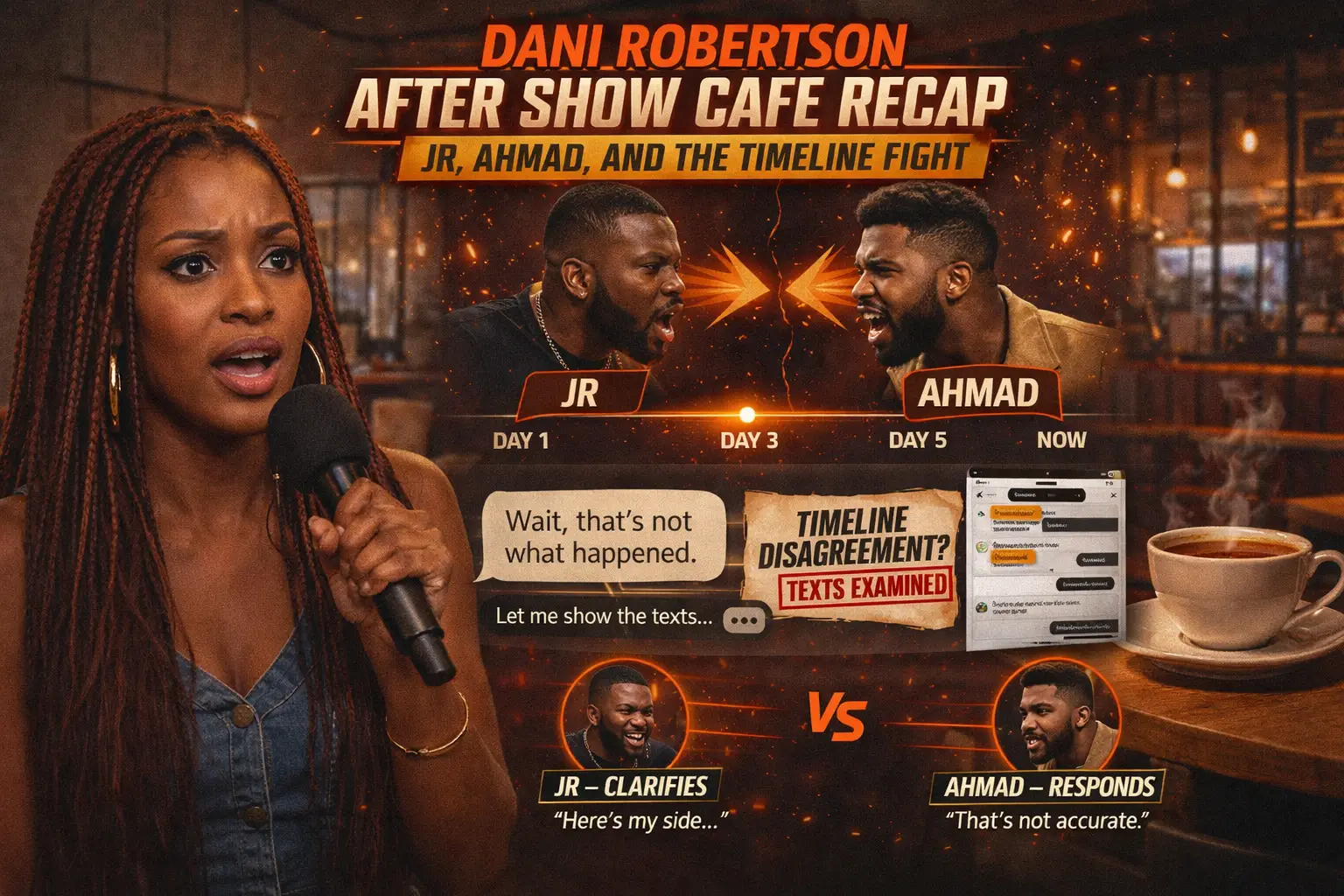
The biggest narrative section of the live centers on the relationship arc involving Ahmad and Incoming Opinion. This is the part Dani wants viewers to treat as a timeline dispute, not a simple morality tale.
According to her breakdown, the beginning was mutual. She says the messages showed flirtation, calls, emotional intensity, and fast-moving intimacy. Dani repeatedly claims that the public version put out elsewhere made it look like a one-sided pursuit from the start, while the fuller message trail showed a very different opening phase.
Then, in her telling, everything changed after the in-person meeting.
Dani says Ahmad was in town for business and met up while he was already there, which she uses to push back against any idea that the whole trip was planned as an all-in romantic visit. She also says Ahmad described feeling misled by photos and by how much was shown on FaceTime. Those are his claims as presented in the live, and Dani clearly sides with the idea that the in-person mismatch changed the tone of the relationship.
From there, she says the texts and call logs show rejection, repeated attempts at contact, and emotional fallout. Dani insists this is the part that was minimized or cut out when others told the story. She says viewers were not shown enough of the “I love you” messages, not shown enough of the imbalance in tone, and not shown enough of the calls that followed after things cooled off.
Her position is not that Ahmad behaved perfectly. She says both sides handled parts of the aftermath badly. Still, her central claim remains consistent: the later public version softened his rejection and sharpened her victim framing.
To make that easier to scan, here is the sequence as Dani describes it.
Timeline of events as described in the live
- She says a privacy complaint followed after she posted a mugshot image tied to someone in the dispute.
- She argues that some people tried to expose her but failed, and that deleting videos later does not erase the attempt.
- She says she records calls when trust breaks down, because clipped retellings are common in this YouTube space.
- She claims she got information from Ahmad very early, around the first week after the in-person meetup.
- Dani says she initially wanted a truce and tried to keep the matter under wraps rather than dumping everything online.
- She argues that Incoming Opinion kept going live with a version of the story that left out key messages, dates, and call patterns.
- She says the early messages showed mutual flirtation, quick emotional escalation, and strong interest before the meetup.
- According to Dani, the in-person meeting changed everything, with Ahmad allegedly losing interest afterward.
- She claims the post-meetup phase included repeated calls, hurt feelings, and a public effort to retell the situation in a more favorable light.
- Later in the live, she moves into side conflicts involving Rotton Roots, Sean, Tremaine, Cleo, Mel, avatars, and camera visibility.
- She ends by promising to keep matching escalation with escalation, including more live responses and more recorded material if needed.
The takeaway from her version is simple. She wants viewers to read the story as early mutual interest, a bad in-person shift, and then a war over who got to explain that shift first.
Avatars, camera challenges, and Rotten Roots become the next layer of the fight
Dani does not stop at the Ahmad and IO dispute. She widens the frame and starts talking about how people operate in the sector more broadly. One of her repeated complaints is that too many creators rely on pictures, cropped clips, and partial visuals instead of clearly showing themselves on camera.
She draws a rough line between what could be called full avatars, picture avatars, and creators who have actually “cammed up” live. AT2 and Queen Tulsa are used as examples of people who have shown up clearly on camera, while others are treated as selectively visible. Dani’s point is not just appearance. It is credibility. In her view, if a creator wants to judge everyone else’s presentation, then that creator should not hide behind old photos, angled clips, or partial visuals.
That conversation leads directly into Rotten Roots, whom Dani describes as deeply strategic, highly fake, and always trying to set others against her. Dani says Rotten Roots plays both sides by defending people in one breath and shading them in the next. She also claims recorded calls show that privately friendly talk and publicly supportive talk are not the same thing.
Her theory of Rotten Roots is pretty specific. She says Rotten tries to keep YouTubers pointed at Dani, uses other people’s momentum for content, and then turns on those same people when they stop serving that purpose. She frames Rotten as someone who wants everyone else to take the visible shots while she benefits from the fallout.
This section is chaotic, but it still serves Dani’s larger thesis. In this corner of YouTube, she argues, alliances are loose, platforms overlap, and public support often comes with side motives attached. That is why she keeps circling back to old recordings, message timing, and earlier private conversations. To Dani, those details show which friendships were tactical and which narratives were built after the fact.
Dani closes with a warning, more lives, more recordings, and no full hand shown
By the end, Dani is very clear about her operating style. She says she does not unload everything at once. She says she keeps files, builds storage, holds some material back, and only releases certain recordings when she believes there is a reason to prove a point. That final section is full of chess language, escalation language, and warnings that she will answer a live with a live if she feels pushed.
There is also a final return to JR. Dani argues that his best move would be to stay out of a dispute between women, and she criticizes what she sees as selective bravery, plenty of energy for creator conflict, not enough for other targets she thinks warranted it more. Again, the language is sharp, but the point is about positioning. She sees him as entering the fight at the wrong angle and getting pulled into a storyline that makes him look weaker, not stronger.
For supporters, that ending probably feels like a promise. For critics, it probably feels like another escalation. Either way, the live closes on the same note it began with, not calm, not resolved, but fully committed to the idea that Dani will keep contesting the record.
Official links referenced in the video description
Note: This article discusses commentary from a publicly available video. Claims described are attributed to the speaker(s) and are not presented as confirmed facts.
Conclusion
“Days of Our Lies” is messy, excessive, and often hard-edged, but its purpose is consistent from start to finish. Dani is trying to reclaim authorship of the story by arguing that screenshots without sequence can turn into public truth far too quickly. Whether viewers agree with her or not, the strongest takeaway stays the same: in this slice of YouTube, the timeline usually decides the narrative, at least until somebody drops a fuller set of receipts.