By Petty Pablo | Lead Social Analyst
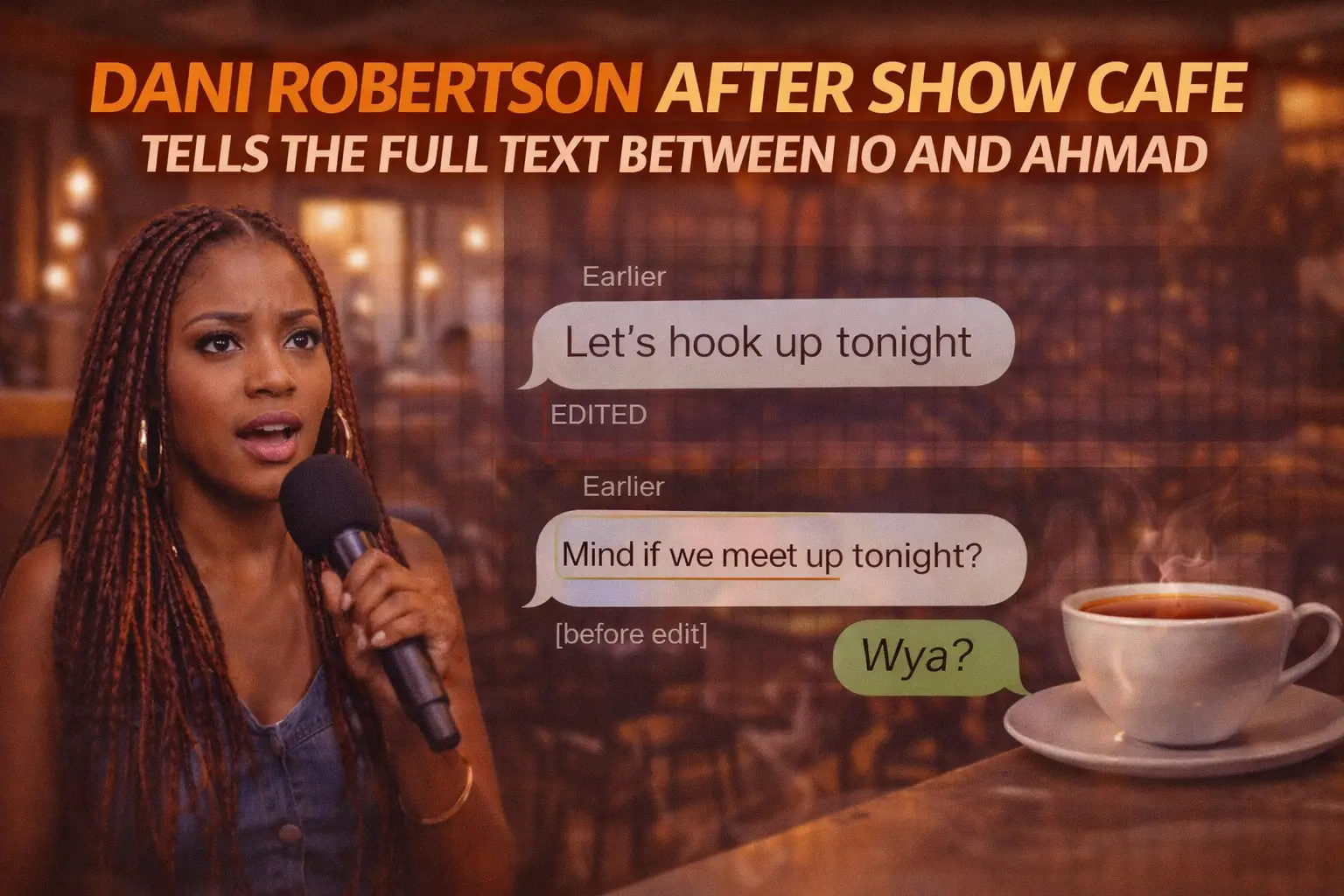
If Part 1 set the table, Part 2 came in with the full stack of screenshots, side commentary, and running theories about who shaped the story first. The big takeaway was timeline over snapshots. In this live, Dani Robertson argued that the public version of the Ahmad and Incoming Opinion saga falls apart when key dates, missing messages, and sequence are put back in place.
She also made a second point just as clearly. In her view, this was never just about a few dramatic screenshots. It was about who pursued whom, what changed after the in-person meetup, and whether later public claims matched the private messages.
Why Dani says the public story was edited before it reached viewers
A major theme in the stream is Dani’s claim that the competing version of events was curated. She repeatedly argues that the screenshots shown elsewhere were cropped, missing dates, and stripped of context. In her telling, the issue is not that messages were shown at all. The issue is that only the parts helpful to one narrative were shown.
That framing lines up with one of the strongest ideas running through this whole creator dispute: the person who controls the order of events often controls the meaning of the story.
Dani also says people were trying to play victim after allegedly attempting to expose her private information on a previous live. She claims a name, city, and other identifying details were presented publicly, but that the information was wrong. Her point is that a failed attempt is still an attempt, even if the details were inaccurate.
From there, she widens the lens. This is no longer just a personal disagreement. It becomes a receipts dispute, a framing dispute, and a motive dispute all at once.
Dani’s core argument is simple: if the evidence is incomplete, then even real screenshots can still tell a misleading story.
She also makes it clear that she believes other creators wanted viewers to accept one side without hearing the rest. That is where her tone sharpens. In this live, she rejects the idea that the audience should judge the situation from a few clipped moments. She wants the saga read as a sequence, not a headline.
That theme also echoes broader commentary in this space. Across this dispute, both Dani and IO, in very different ways, keep circling back to the same issue: timeline is the real battleground.
The early text messages show fast intimacy and constant contact
Once the stream settles into the actual text review, the mood changes from hype to pattern-building. Dani starts reading through January messages that, according to her, show a quick progression from casual contact to heavy flirtation, frequent calls, and daily check-ins.
The messages she highlights include good morning texts, comments about missing each other’s voices, references to listening in on other lives, and repeated back-and-forth throughout the day. There are also several moments where she pauses to note the tone, especially when the messages become more suggestive or emotionally intense.
Her read on the early phase is that the connection was clearly mutual at first. She does not present the beginning as one-sided. In fact, she leans hard in the opposite direction, saying the texts show eagerness from both sides.
A short timeline makes her point easier to follow:
| Period | What Dani says the messages show |
|---|---|
| Early January | First contact and growing off-platform attention |
| Mid January | Flirting, regular calls, good morning texts, and stronger emotional tone |
| Late January | More talk about seeing each other, plus overlap with group drama and other creators |
| End of January | Financial requests, invoices, and travel-related conversation |
| Early February | Chicago meetup, Airbnb stay, and a sharp shift in tone |
| After the meetup | Hurt feelings, anger, repeated contact, and public fallout |
Her commentary is especially pointed around the “I love you” messages. She notes that those declarations appear early, and she repeatedly points out that they do not seem to be matched with the same energy in return. She treats that mismatch as a warning sign in hindsight.
She also zeroes in on the same-birthday language and the affectionate nicknames. In her telling, that kind of fast emotional escalation matters because it makes the later crash easier to understand. What starts as intense attention can turn into resentment very quickly once expectations fall apart.
JR, Termaine, and public relationship optics complicate the story
One of the more interesting layers in the stream has less to do with romance and more to do with public presentation. Dani says the private messages suggest one dynamic, while the public image around JR suggested another.
According to her reading, Ahmad appears confused at points about whether IO and JR were truly broken up, because public behavior still looked couple-like. Dani treats that as a serious context issue, not a side note. If someone says they are single in private, but their public interactions suggest something else, it changes how later messages get read.
She also keeps returning to the Termaine angle. Early in the text sequence, she says there are signs that IO wanted clarity, distance, or a fall-back arrangement involving Termaine. Later, according to Dani, the messages flip and become more about whether Ahmad is speaking to Termaine again.
That reversal is central to her framing. She reads it as evidence that the conflict is not a simple story of one person being chased. Instead, she presents it as a triangle of shifting loyalties, group politics, and mixed signals.
This is where the stream starts to feel less like a one-on-one dispute and more like a creator-sector map. Dani is not just reading messages. She is trying to show how personal conversations, public branding, private group dynamics, and creator rivalries all collided at once.
In that sense, her larger point resembles another recurring theme from related coverage: in tea-channel culture, arguments rarely stay about one act. They become disputes about sequence, motive, and who got to frame the first draft.
The meetup fallout is where Dani says the whole story turns
The biggest pivot in the live comes when Dani reaches the early February meetup. She says the texts leading up to it show clear anticipation. There is affectionate language, travel coordination, and repeated references that suggest both sides expected a close in-person meeting.
Then the tone shifts.
According to the messages she reads, the post-meetup phase includes hurt feelings, annoyance, emotional distance, and eventually a string of angry exchanges. Dani repeatedly highlights one set of messages in particular, because she believes they reveal the real emotional direction of the fallout.
In those messages, IO reportedly says things like her feelings were hurt, that she would leave in the morning so she would not be an annoyance, and that they could move forward as if they had never known each other. Dani treats that section as highly revealing because it clashes with later public framing.
Her central inference is that the in-person meetup changed everything, and that the messages after it read more like rejection fallout than unprovoked pursuit from the other side.
Dani adds her own interpretation of why the meetup may have gone badly. She references Ahmad’s claim, already circulating in the wider discourse, that the photos and FaceTime presentation created one expectation and the in-person meeting created another. She presents that as his account, not a confirmed fact, but clearly treats it as part of the explanation for the sudden cold turn.
That is also why she keeps emphasizing the photos. In this live, she argues that the image trail looked inconsistent, and she suggests that the inconsistency helps explain the disappointment he later described.
The later messages get darker, more chaotic, and harder to defend
After the meetup section, the text trail moves into open hostility. Dani reads messages that she says show repeated attempts to contact Ahmad, frustration over whether he was speaking to others, and growing anger about being discussed in private or public spaces.
She also reaches the part where both sides appear to trade deeply disrespectful insults. Dani’s treatment of this section is fairly direct: she says both of them were foul, both said ugly things, and neither side comes off well in that stretch.
Because the messages include offensive language, personal attacks, and remarks about family members, the cleanest summary is also the simplest. The exchange became toxic. What had started as flirtation turned into grievance, accusation, and retaliation.
Dani puts special weight on a few later details:
- Broken-heart signals: She points to messages and emojis that, in her reading, suggest emotional hurt rather than indifference.
- Emergency contact attempts: She highlights calls and urgent texts as signs that IO still wanted control over how the story was being told.
- Fear of outside conversations: She repeatedly notes the concern over whether Ahmad was talking to Termaine or others.
- Requests for silence: She emphasizes the repeated demand not to speak publicly, which she says clashes with how the situation later played out.
Her interpretation is blunt. She believes the messages show that the emotional damage landed harder on IO than she later admitted publicly.
At the same time, she does not let Ahmad off the hook entirely. She acknowledges that he made the situation public by sharing private material outward, and she says that decision helped turn a private dispute into permanent content.
Dani’s PSA argument comes down to one narrow point
Late in the live, Dani turns to the much-discussed PSA from Ahmad. She argues that some people are trying to use that statement as a total reversal, when in her view it is much narrower than that.
Her reading is that the PSA only addresses one issue: responsibility for private material becoming public.
She says it does not amount to a full retraction of how he felt, nor does it erase his earlier complaints. In her version, the PSA is an apology for the leak, not a blanket apology for every claim, every feeling, or every part of the fallout.
That distinction is a big deal in her framing because she believes others are spinning the PSA as proof that the whole case collapsed. Dani says it proves much less than that.
Here is the easiest way to read the categories she lays out:
Timeline of Events
- Dani opens with a long intro song, member shoutouts, and an explanation that she was organizing a large PDF and screenshot set.
- She says this stream continues Part 1 and directs viewers to her backup channel for the earlier segment.
- She accuses opponents of trying to expose her private information and then acting like victims after it failed.
- She argues that the competing receipts were cropped, missing dates, and stripped of context.
- She reads January messages that she says show strong mutual flirtation, frequent calls, and fast emotional escalation.
- She highlights early declarations of love and points out that the energy did not always appear to be equally returned.
- She says public behavior involving JR created confusion about relationship status during the same period.
- She frames the Termaine issue as a recurring point of tension before and after the main connection developed.
- She moves into late January and early February messages involving invoices, money requests, travel, and meetup planning.
- She argues the Chicago meetup changed the tone sharply and that post-meetup messages show hurt feelings and rejection.
- She reads later messages that become openly hostile and says both sides exchanged ugly remarks.
- She closes by arguing that Ahmad’s PSA only apologizes for making the matter public, not for every prior claim or feeling.
What We Know vs What’s Still Disputed
| Category | Details |
|---|---|
| What’s stated in the video | Dani says she reviewed a large message archive, believes other receipts were edited, reads January and February texts, and argues the post-meetup messages show hurt feelings and rejection. |
| What’s alleged | She alleges there was an attempted doxxing effort against her, that certain screenshots shown elsewhere were selective, and that the PSA is being misrepresented as broader than it is. |
| What’s still disputed | Whether the full unedited record would support Dani’s conclusions, how accurately each side described the meetup, and what the complete context would show about later calls, voicemails, and public discussion. |
The table is the cleanest summary of the live’s larger problem: there are plenty of screenshots, but the fight is really about framing, not just possession of receipts.
What this Part 2 recap really says about the broader YouTube dispute
By the end of the stream, Dani’s message is consistent even when the live itself gets chaotic. She wants viewers to see the Ahmad and IO conflict as a timeline dispute, not a one-label morality play. In her telling, the sequence matters more than the slogans.
That is also why she spends so much time on order, overlap, and what changed after the meetup. She is not asking the audience to judge one screenshot. She is asking them to follow a chain: first contact, rising intimacy, public confusion, in-person disappointment, then fallout.
She also uses the stream to draw a broader line in the sand. Near the end, she says she is done with creators hiding behind her during their own battles and then acting bold later. That turns the live into more than a relationship recap. It becomes a warning about platform politics, private alliances, and the cost of joining someone else’s dispute.
The final lesson, at least from her side, is hard to miss. Don’t cherry-pick receipts. Don’t expect the audience to stop at one side. And if a creator story goes off-platform, there is always a chance it comes back online as content.
In short, Part 2 is messy, sharp, and sometimes excessive, but its through-line is clear. Dani believes the texts show mutual interest at the start, a collapse after the meetup, and a public retelling that hid the emotional direction of that collapse. Whether readers agree with her or not, the strongest takeaway is still the same: in this corner of YouTube, sequence decides the story.