By Petty Pablo | Lead Social Analyst
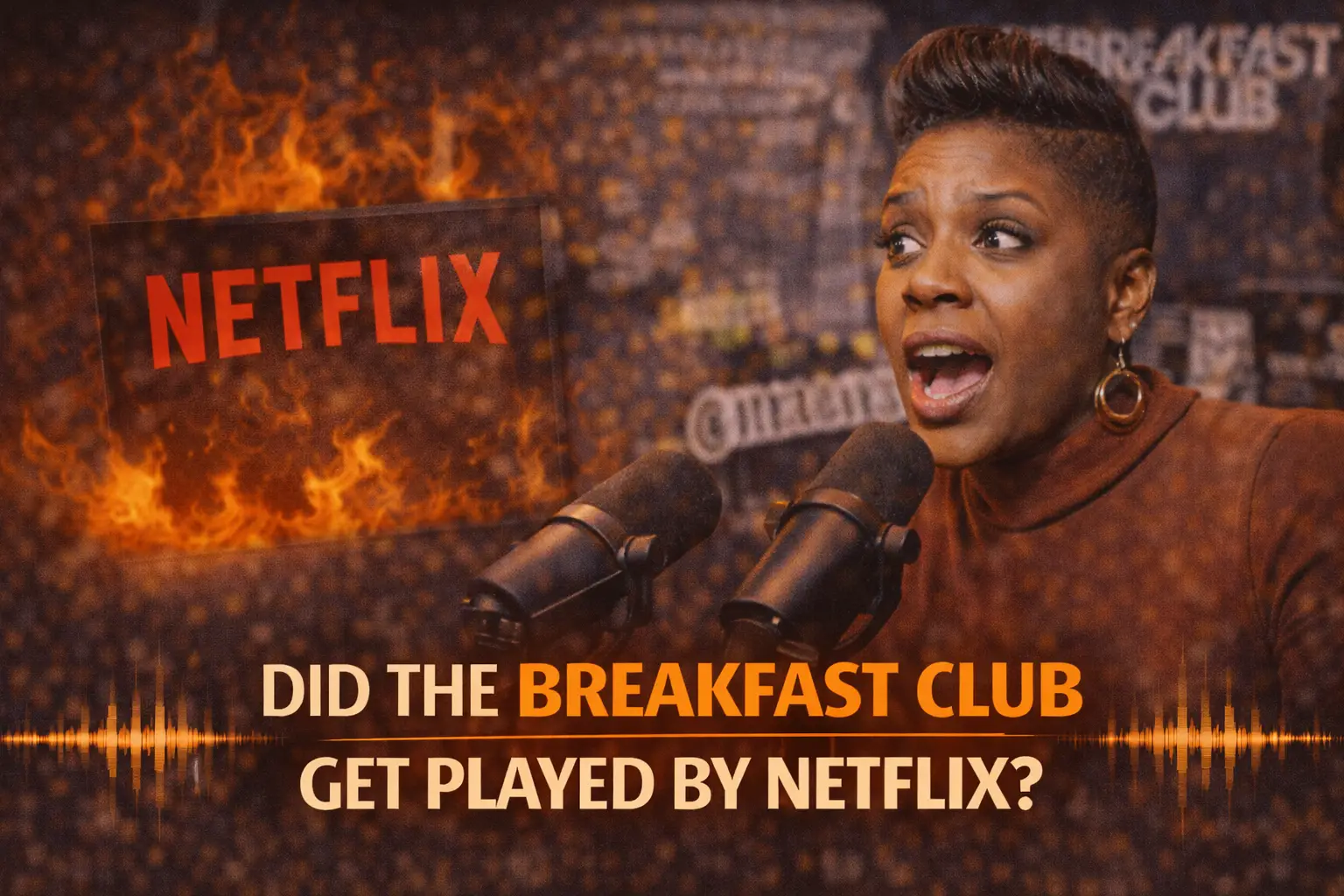
Her core claim is simple: people said she “lied” about contract changes around The Breakfast Club, yet she argues the details now back up what she originally reported, just with clearer framing.
“Did I lie?”: Tasha K says the contract chatter got reframed
Tasha K opens with a victory lap and a rebuttal. According to her, the early narrative painted her as “misinforming the public,” but she insists the information came from a source who regularly feeds her accurate industry tips. In her view, the confusion came down to wording: she says she was told contracts were not renewed, and later learned it happened in a specific way that still supports the “not renewed” bottom line.
She also suggests a counter-story was “planted” to discredit her. Then she tightens the point: now that she says she has all the details, she claims critics can’t fairly label her reporting as made up.
The Netflix deal, as she tells it, wasn’t a $200 million signing
Next, she challenges the viral number. Tasha K claims The Breakfast Club did not sign a traditional $200 million contract. Instead, she describes a Netflix arrangement as an exclusive licensing setup routed through iHeart, not a fresh, standalone mega-deal for the hosts.
She frames it like this: Netflix licensed a set of iHeart podcasts, with The Breakfast Club positioned as one of several selected properties (she says it was #5 among the picks). In that version, iHeart “traded” or transferred exclusivity, and Netflix controls how and when episodes drop.
Black Effect Network: her criticism is about ad money and “pennies”
Tasha K then pivots to Black Effect Network, tied publicly to Charlamagne Tha God. Her commentary isn’t subtle: she claims creators on the network are underpaid, even saying people told her their compensation is less than what “welfare checks” would provide.
Her bigger argument focuses on ad economics. In her telling, ads run against creators’ content, but the creators don’t see a fair share of the revenue those ads generate. That imbalance, she argues, lets the parent brand use creator performance as proof of value while paying the talent a fraction.
The framing here is less about “hating” and more about who owns the upside when a show grows.
Netflix exclusivity and the social media blackout problem
One of the most concrete issues raised is exclusivity. Tasha K points to comments from Jess Hilarious (called “Just Hilarious” in parts of the video) describing a new reality: once the show moved to Netflix, fans built on YouTube felt “neglected,” because Netflix allegedly wanted the content locked down, with no parallel social presence.
Tasha K argues that creates a scramble for replacement content. She claims Jess responded by pushing a separate series, “Jess’s Thoughts,” on Instagram. She also alleges Jess lost control of a prior concept, “Jess with the Mess,” after giving up IP rights in the iHeart ecosystem, meaning she can’t steer something she created before joining the show.
Why she thinks the audience shift doesn’t work for a talk-first brand
Tasha K’s central theory is that the deal misunderstands the product. A daily, news-driven talk show thrives on friction, feedback, and fast clipping. Netflix, in her view, is built for sit-back viewing, not real-time argument and community back-and-forth.
She also claims the move failed to “soft roll” the audience to a paid platform. In other words, if a fan base is trained on free, interactive viewing, it won’t automatically follow to a controlled environment where commenting and sharing are limited. She says you can see the pushback in the comments, with viewers simply refusing to migrate.
“Global platform” claims vs her Mexico test
To underline the risk, Tasha K shares an anecdote: while traveling in Mexico, she tried to access The Breakfast Club on Netflix and says it didn’t appear. Her takeaway is that Netflix may be global, but licensing still controls what appears in each country.
In her view, that shrinks reach. Instead of benefiting from a broad, open platform, the show may end up boxed into a narrower market, rebuilding awareness from scratch. She adds another warning: Netflix, she argues, will drop experiments that don’t perform quickly.
Censorship irony, marketing limits, and the DEI angle she alleges
Tasha K repeatedly returns to control. She claims the show can’t even market freely, suggesting hosts must wait until Netflix approves promotion, which clashes with the show’s “trending news” identity.
Then she adds a sharper allegation: Netflix wanted an “urban” property in the package for optics, especially after public criticism about how Black talent is paid. In her telling, other larger podcasts in the deal were “major white podcasts,” while The Breakfast Club filled the representation slot. She also claims no other Black Effect podcasts made the Netflix move, which she treats as telling.
Conclusion
Tasha K’s read on the Netflix move is blunt: exclusive control can cost a show the very feedback loop that made it powerful. Whether viewers follow, ignore it, or complain loudly, her larger point is that platform changes aren’t just distribution, they’re a full behavior reset. For a talk show built on immediacy, that’s not a small bet. If anything, this storyline shows how fast “big deal” headlines turn into a debate about who really owns the audience.
Learn more about Pulse of Fame and our editorial team. Want to weigh in? Join the conversation in the Pulse of Fame community forum.
Related: Joe Budden on The Breakfast Club Netflix Backlash (MarcusatWork Media Breakdown)