By Petty Pablo | Lead Social Analyst
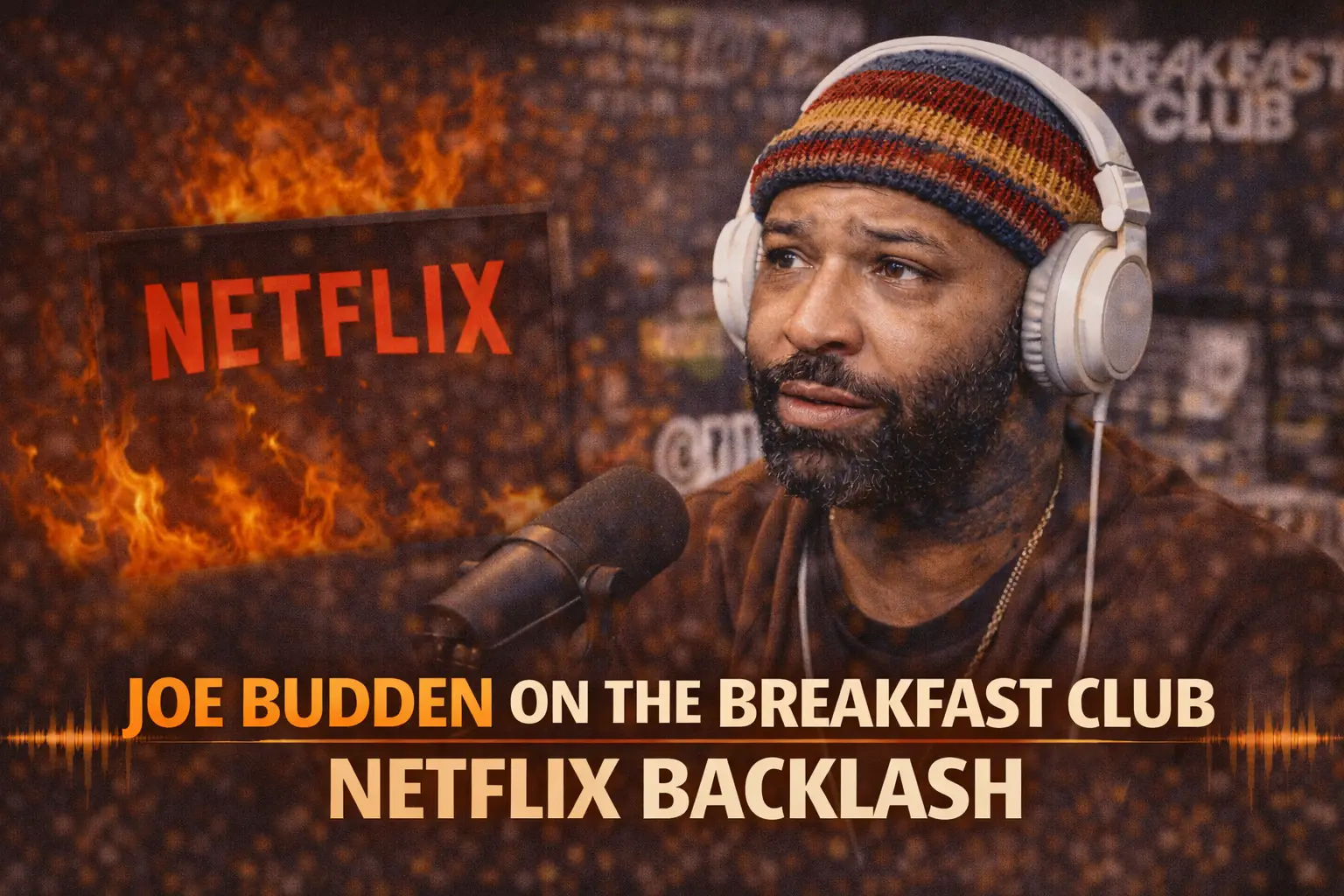
The chatter around The Breakfast Club moving to Netflix isn’t just “fans hate change” noise. The core issue is distribution versus community, and what gets lost when a show leaves the place where its audience actually lives.
In the MarcusatWork Media Joe Budden Breakfast Club discussion, the panel keeps it pretty simple: the deal might come with a check, but it also comes with friction, especially for viewers used to YouTube clips, comments, and daily habits.
- Jess Hilarious says YouTube engagement dropped hard after The Breakfast Club’s Netflix deal.
- The biggest flashpoint is exclusivity, Netflix reportedly wants full episodes and discourages YouTube clips.
- Joe Budden and the panel focus on what fans lose, mainly comments, algorithm discovery, and daily routine viewing.
- Netflix is “premium” territory, so podcasts can look smaller in that bigger pond, both culturally and visually.
- The conversation keeps circling back to one lesson: ownership and control decide how much say talent has.
Jess Hilarious lights the match with a simple complaint: the fans feel cut off
Jess Hilarious sets the tone by saying the show’s YouTube engagement is down, calling it “trash” since the Netflix move. Her bigger point isn’t analytics for sport, it’s audience psychology. The fanbase that grew with the show on YouTube now feels neglected, because Netflix, as she describes it, wants the full episodes exclusively and doesn’t want clips floating around on YouTube.
That creates a weird new assignment for the team: if the main product can’t feed the socials, they have to invent side content just to stay present elsewhere. Jess frames it like a workaround, and jokes she’s got it handled with new segments (including a “Just Hilarious Thoughts” type idea), but the underlying issue stays the same. The old pipeline, show to clips to comments to community, got disrupted.
Joe Budden’s immediate concern: you can’t “upload” community to Netflix
Joe Budden’s first reaction is basically a content-creator reflex: how do you keep engagement when you leave YouTube? He points to how creators build places for fans to gather, whether that’s YouTube, Patreon, or other channels where the audience can talk back.
He describes it as having “places to commune,” places that feel like family, and that’s not fluffy language, it’s product design. If fans can’t react, joke, argue, or co-sign in real time, the relationship cools off. Joe also admits he doesn’t know The Breakfast Club’s internal numbers, but he says Jess’s point still makes sense.
The fear isn’t just lower views; it’s losing the feeling that the audience belongs in the room.
Why Netflix can feel “off” for podcasts, even when the deal is real money
A major theme in the discussion is that Netflix and YouTube serve different moods. People open YouTube to browse, stumble into clips, and follow subscriptions. Netflix, on the other hand, is where many viewers go with intention, usually for movies and series, not a daily talk show rhythm.
The panel also uses a clean analogy: it’s like going to a familiar fast-food spot for sushi. You might do it once out of curiosity, but it’s not what the place is known for, so it feels slightly misaligned.
That’s where the “big fish, small pond” idea flips. On YouTube, The Breakfast Club is a heavyweight. On Netflix, it’s surrounded by high-budget premium content, and it can start to feel smaller, even if the show itself didn’t change.
The two practical complaints: video quality perception and losing the comments
Beyond vibes, the panel points to two very specific viewer gripes.
First, quality perception. Some viewers reportedly feel the podcast looks “low-budget” next to Netflix titles. The conversation floats a possible reason: Netflix plan tiers. If someone isn’t paying for higher-tier resolution (like 4K), the video may be downscaled, which changes how it reads on a big TV.
Second, the comments are gone. Multiple people say they watch YouTube with the comments in mind, sometimes going straight there first to see the temperature. On Netflix, that back-and-forth disappears, and so does the quick social proof that tells you, “This moment matters.”
Timeline of Events
- Jess Hilarious posts that YouTube engagement has dropped since the Netflix deal announcement.
- She says Netflix exclusivity limits full episodes and reduces YouTube clipping.
- Joe Budden reacts by focusing on lost engagement and community signals.
- The panel debates incentives, repeatedly landing on “it’s a check.”
- They compare YouTube’s browsing habits to Netflix’s intention-based viewing.
- They raise concerns about video quality next to premium Netflix content.
- The discussion ends with an ownership debate and a question to viewers: will you follow the show to Netflix?
What We Know vs What’s Speculation
| Category | Details |
|---|---|
| What’s stated in the video | Jess Hilarious says engagement dropped and fans feel neglected, the panel says Netflix exclusivity limits YouTube presence, commenters and community features are described as a big loss, and Netflix viewing habits differ from YouTube. |
| What’s alleged | That Netflix specifically “doesn’t want any clips” on YouTube, and that the show’s engagement is meaningfully worse because of the deal (the panel treats it as plausible but doesn’t show data). |
| What’s speculation | Netflix adding a YouTube-like community/comments feature, the exact business goals behind using The Breakfast Club as a test case, and the long-term brand impact if the audience doesn’t follow. |
Ownership is the real subtext, and the panel knows it
Once the talk shifts from platforms to power, the panel gets blunt. If you don’t own the show, someone else can decide where it lives, how it’s clipped, and what kind of relationship you’re allowed to have with your audience. One person uses an iHeart-to-Netflix type scenario to make the point: you might be trying to build grassroots, then the distribution partner changes the whole plan.
Still, they also admit why people take the deals. Some talent wants the turnkey setup, a clean bag, less stress. Others want control, even if it means more work. The panel sums it up like rent versus ownership, and that framing sticks because it’s not moralizing, it’s just math.
Note: This article discusses commentary from a publicly available video. Claims described are attributed to the speaker(s) and are not presented as confirmed facts.
The Final Verdict
This Netflix backlash isn’t only about where The Breakfast Club streams, it’s about what gets traded away when a show leaves YouTube’s built-in feedback loop. The panel’s takeaway is consistent: money solves one problem and creates another, especially when exclusivity blocks clips, comments, and casual discovery. If the show finds new ways to keep fans feeling included, the move can stabilize. If not, the audience may treat it like a different product, even if the microphones are the same.
Learn more about Pulse of Fame and our editorial team. Want to weigh in? Join the conversation in the Pulse of Fame community forum.
Related: Corey Holcomb vs. Tasha K: What Sparked the Latest Blowup, and Why a Lawsuit Got