By Petty Pablo | Lead Social Analyst
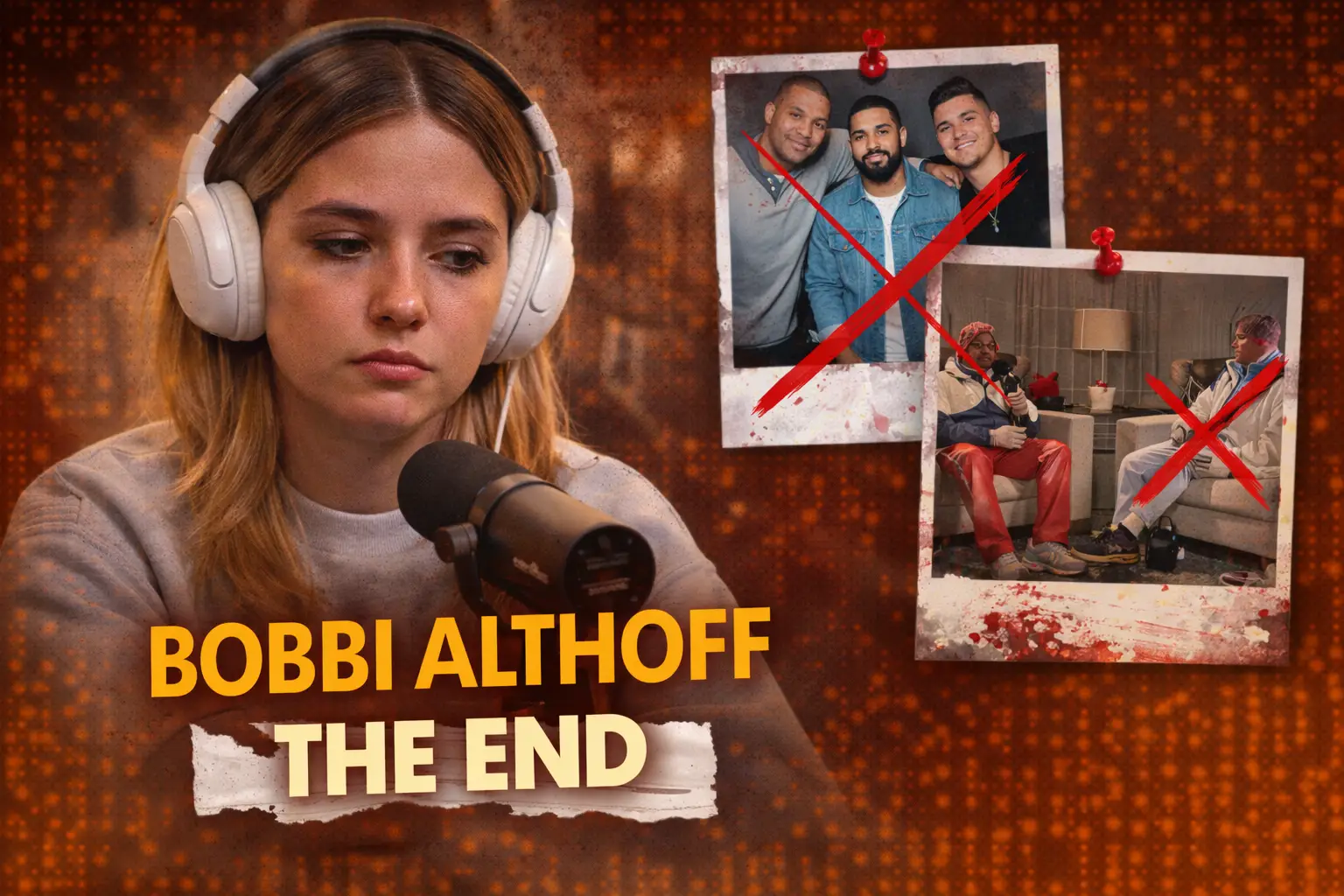
In JAMARI’s video, Bobbi Althoff is framed as a creator stuck between two versions of herself: the deadpan interviewer who went viral, and the more “pleasant” host she tried to become after the backlash. The problem, according to the commentary, is that neither lane is paying off right now.
The “pump fake” quit that turned into a rebrand
A few months before this video, Bobbi flirted with the idea of quitting the internet, presenting it like a dramatic goodbye. In JAMARI’s retelling, it played like a pump fake, a moment where she “admitted” the falloff, only for the next move to be a fresh rollout.
Her quote sets the tone: “this podcast started off um just with a girl with a dream to make more money. I didn’t know I would fall off as quickly as I did.” The line lands because it’s blunt. It also frames the whole arc as a business story first, and a creative story second.
That’s where Not This Again comes in. The video describes the “I’m done” moment as a setup to usher in a new show, with bigger guests and a reset button. On paper, that’s a clean play: stop the bleeding, change the packaging, and try again. In practice, the video argues that the audience already clocked the strategy, which made the comeback feel less like reinvention and more like a rerun.
If you want the wider context on the reunion episode rollout, coverage like Dexerto’s report on the Drake reunion captures how much attention that single guest booking pulled.
The Drake reunion: big views, awkward clips, and who wore the jokes
The relaunch centerpiece was Drake. JAMARI’s video paints the episode as an attempt to bottle the same lightning that first took Bobbi mainstream. The banter still had the “in bed” weirdness and the intentionally uncomfortable rhythm, including the little musical bit:
“I don’t like the sound of this.” “What are you singing?” “Can I Shazam this?” “No, I just made that up.”
There’s also a moment where Bobbi references online chatter about her body, saying: “People also say that I got a BBL, right? They call me BBL Drizzy.” In the video’s framing, the problem isn’t whether the rumor is true (it’s treated as chatter), it’s that the episode’s most shareable moments weren’t “iconic Bobbi.” They were Drake getting laughs at her expense.
One example the video highlights is Drake’s backhanded compliment about her looks and age: “You’re cute. They don’t think you look 40 in the face.” Another string of clips centers on him pushing buttons about her personal life, including the much-discussed decision to interview him on her child’s first birthday. Drake jokes, “Leaving on your daughter’s first birthday was a slapper,” then adds that the child won’t remember now but might later when watching the interviews.
The most uncomfortable beat in the recap is a “superhero name” exchange that veers into an inappropriate answer, followed by Drake shutting it down and steering her to redo it. JAMARI’s point is simple: the clips that traveled weren’t flattering, and the viral energy didn’t convert into “new era” momentum.
In short, the interview pulled views, but the video argues it didn’t generate the kind of positive buzz that actually rebuilds a creator’s standing.
For more mainstream recap coverage of the reunion narrative, Podtail’s listing for “Not This Again” provides an outside snapshot of how the new show was positioned.
After the “humiliation ritual” narrative, the output slowed to a crawl
JAMARI describes the Drake episode as a kind of public stress test, then claims the months after have been quiet. The phrase “Hawk Tuah 2.0” shows up as a comparison point: a creator who gets hot fast, then struggles when the moment passes.
The only notable pop, per the video, was an interview with Kevin Durant a couple months later. Even then, JAMARI frames it as more about Durant’s rarity as an interview guest than Bobbi’s pull. The clip included an easy laugh line when Bobbi asks if he’d date someone with kids:
“Would you date someone with kids?” “How many kids we talking?” “Like six.” “Hell no.”
In the commentary, that’s positioned as a “solid” from a friend, not a sign of a thriving format. JAMARI also suggests Durant has a business interest in Bobbi’s continued presence, calling her an “industry plant” (an allegation in the video, not a confirmed fact).
What stands out more is the release pace. JAMARI claims the new show has landed at roughly one episode every couple months, which is a tough cadence for a hype-based podcast. In the same breath, the video says only five episodes have dropped, and two were later deleted due to poor performance.
That combination creates a loop: fewer uploads mean fewer chances for a breakout clip, which then justifies fewer uploads.
The “nice Bobbi” pivot, the Prime sponsorship, and why the vibe felt off
To her credit, JAMARI says Bobbi appeared to adjust her approach. She reportedly tried to drop the dry, rude, sarcastic edge and show up more open with guests. There’s a small example in the recap where a guest mentions concerts, and Bobbi’s tone leans more conversational than confrontational.
Still, the video’s critique is that the new “refined” energy reads as under-prepared. The commentary describes the interviews as boring and poorly researched, with little added value beyond the guest’s presence. In other words, if the guest isn’t a rare get, the episode doesn’t have much to hold it up.
Then there’s the sponsorship optics. JAMARI calls out an apparent tie-in involving Logan Paul and Prime, mocking it as “Pisswater Prime” and comparing the pairing to a gross bathroom metaphor. The point is less about the product itself and more about how the association reads to viewers already primed to clown the show.
A quick way to summarize the video’s framing is this:
| Era (as described in the video) | What worked | What stalled |
|---|---|---|
| Viral deadpan peak | Clips felt shocking and novel | The bit got predictable |
| “More pleasant” pivot | Less backlash bait | Fewer views, fewer moments |
| Relaunch with megaguests | Big initial attention | Clips didn’t flatter the host |
The Season 2 trailer: self-aware jokes, then a quiet delete
One of the sharpest parts of JAMARI’s video is the breakdown of Bobbi’s Season 2 announcement trailer. In the skit, she lists the exact headlines people drag her for: her first marriage falling apart, being labeled a bad person for missing her daughter’s first birthday, and not knowing whether she and Drake are still friends.
Another line in the trailer hits like a confession disguised as comedy: “Do you remember how well I was doing 2 years ago? … And now you feel irrelevant. … I am obsolete.”
The video also notes a moment where Bobbi says she watched a long YouTube breakdown of her own falloff: “I watched a 45-minute video on YouTube about my falloff.” The skit then lands on the core idea: her “unlikable character” used to pull millions, but when she tried to be nicer, the views faded.
The trailer’s thesis is that she’s returning to the old persona because “nice Bobbi” doesn’t move numbers. JAMARI interprets it as her choosing the deadpan Funny Marco-style energy again, because it’s the only proven hit.
Then comes the detail that makes it sting: JAMARI claims the trailer was removed after only pulling around 10,000 views in a couple of days. He connects that to an older admission from Bobbi where she said she deletes low-performing posts because she doesn’t want a visible history of failing.
That’s not just a content choice, it’s a psychology tell.
Comment sections, heavy filters, and the cost of playing a character online
JAMARI spends a lot of time on Bobbi’s relationship with online backlash. In one interview he references, he says a huge chunk of the runtime was about haters, comment sections, and how criticism lands day to day.
Bobbi mentions filtering her comments aggressively, saying she blocks certain words, including “ugly,” “Botox,” and “filler.” Meanwhile, JAMARI contrasts that with his own approach, where he reads feedback even when it’s harsh because it feels “real.”

Photo by Markus Winkler
The video also revisits the “daughter’s first birthday” critique, with Bobbi defending the decision and saying people treat it like proof she’s a bad mom. JAMARI’s angle is that she wasn’t built for the volume and repetition of internet judgment, especially when the jokes get personal.
At the same time, the video points out a contradiction: Bobbi also admits the haters keep her trending. She jokes that when it gets too quiet, she starts looking for where the hate went, because silence signals a falloff.
Another thread in JAMARI’s recap is her habit of pigeonholing critics into one type of person. In multiple interviews he cites, she claims her haters are conservative men, or people in the military, or religious, and she tells guests their fans overlap with her critics. Whether that’s true or not, the video treats it as a coping mechanism, a way to make the noise feel easier to dismiss.
Then there are the emotional swings. JAMARI references a TikTok-style voiceover where Bobbi says she’s not giving weight to opinions that “don’t matter,” followed by a separate clip where she cries into her phone about comments accusing her of being passed around.
The video’s underlying point is that viral fame doesn’t just test your content, it tests your nerves.
The return to deadpan: can it work if everyone sees behind the curtain?
By the end, JAMARI questions whether going back to the “meaner” character can save the show. Bobbi herself, in the clips he uses, says she got insecure because people called the persona rude. Later, she realized that persona is what grew her page, so “normal” moments get cut.
JAMARI’s pushback is that the foundation was always shaky. He frames Bobbi’s rise as a moment built on viral clips, big guests (like Drake and Lil Yachty), and the novelty of awkward silence. Once audiences “peek behind the curtain” and see the human cost, the same bit can feel less fun.
He also compares Bobbi’s arc to “Hawk Tuah,” arguing that at least that creator seemed more self-aware about why the internet cared, and rode the wave until it crashed. With Bobbi, he suggests she struggles to accept how her early interview style shaped her reputation, especially since she frequently asked male guests if they’d hook up with her.
The video ends with a prompt: would you rather be Bobbi or Hawk Tuah, and can Bobbi ever get the flame back?
For readers tracking the broader “are they cool again?” narrative around Bobbi and Drake, The Blast’s write-up on Drake addressing the feud reflects how much the relationship story itself became part of the content.
Conclusion: the internet wants a character, but it punishes the person
JAMARI’s video paints a clear dilemma: Bobbi Althoff’s viral persona brought the spotlight, but the spotlight also turned the comment section into a daily scoreboard. If she plays nicer, people scroll. If she plays meaner, the backlash ramps up. Either way, momentum doesn’t come back just because you announce a new season.
If you want more creator commentary from the channel behind this breakdown, you can follow JAMARI on JAMARI’s Twitter and JAMARI’s Instagram, check out the JAMARI merch store, or watch uploads on the JAMARI Clips YouTube channel. For business inquiries, the video description lists a contact at jamaripartnercontact@gmail.com.
Learn more about Pulse of Fame and our editorial team. Want to weigh in? Join the conversation in the Pulse of Fame community forum.
Related: The Au Pair, the 911 Call, and a Virginia Home That Became a National Mystery (2