By Petty Pablo | Lead Social Analyst
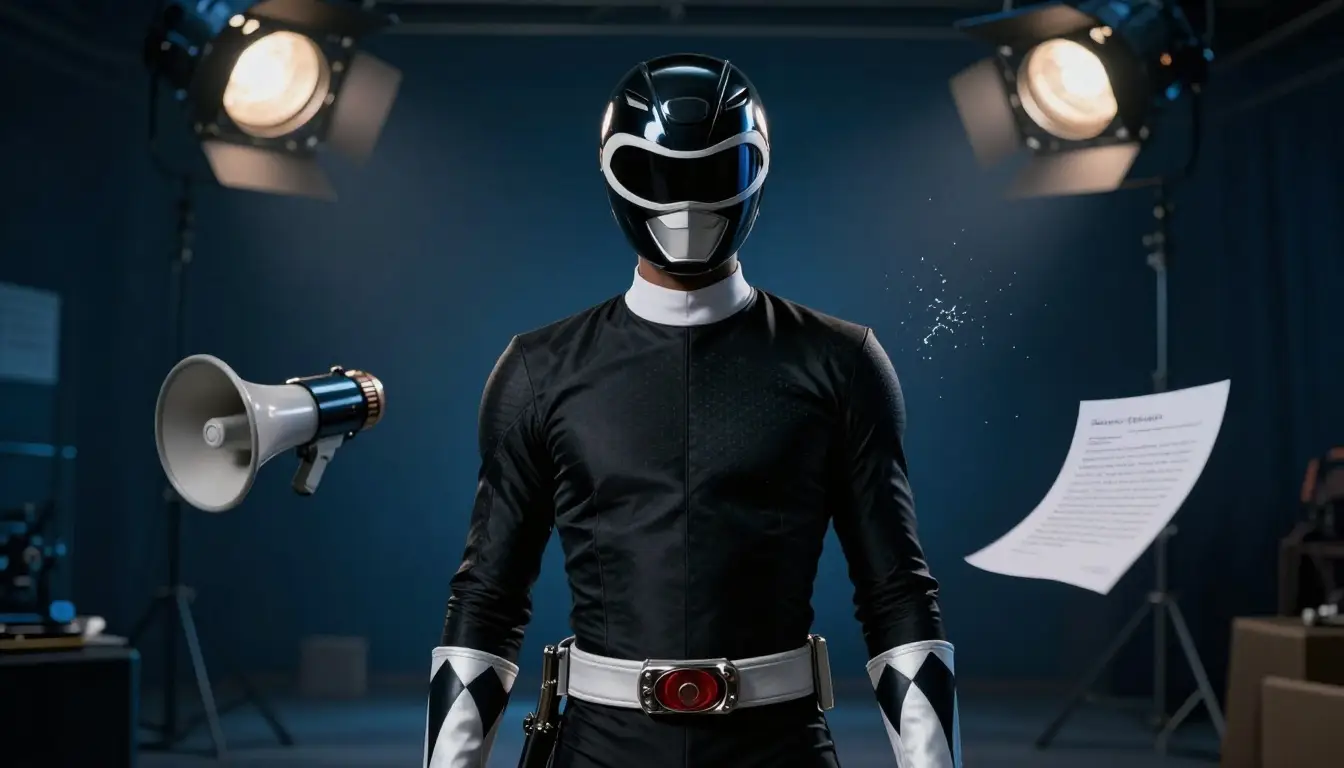
A lot of people grew up thinking Mighty Morphin Power Rangers was pure after-school joy: bright suits, goofy monsters, and that “teamwork makes the dream work” energy. Walter Jones, the original Black Power Ranger (Zack Taylor), says the vibe behind the scenes didn’t always match what kids saw on TV.
In a candid sit-down, he talks about breaking barriers on live-action TV, allegedly low pay on a mega-hit, and why three original Rangers walked away right as the franchise was turning into a global money machine.
Breaking barriers as a live-action superhero
Walter Jones doesn’t just describe his role as another TV gig. He frames it as a real shift in who gets to be seen as the hero. He says he was the first Black superhero on live-action TV, while also noting that Robert Townsend’s Mantis aired two weeks earlier. Either way, he views the moment as bigger than a costume.
As a kid, he says he watched shows like The Little Rascals and noticed how limited the options were if you wanted a character who looked like you. He brings up Buckwheat as the only person on that show who resembled him, and he didn’t want that to be the only reference point. So when Power Rangers hit, he felt proud that kids could see someone with a fun, positive presence and think, “That’s my guy.”
Representation that didn’t feel like a lecture
What stands out is how he describes the impact without turning it into a speech. He’s not claiming he carried the whole franchise. He’s saying the energy mattered.
He talks about being a face kids could connect with, not just Black and brown kids, but everybody. Zack’s charisma, his dance-based fighting style (his “hip-hop kido” flavor), and the confidence all landed in a way that felt natural, not forced.
The through-line in his story is simple: visibility is powerful when it comes with joy.
For more context on Jones’ broader comments about the role and why he left, see Complex’s interview on his Power Rangers exit.
The pilot episode that didn’t impress his Detroit family
Before the show turned into a pop-culture stampede, Walter took the pilot home to Detroit to show his family. Their reaction was… polite. He says they basically hit him with: “That’s all right. You stay at it. Something’s going to work out for you.”
He remembers them being confused by the whole concept: putties, morphing, and even Rita Repulsa’s footage, where the mouth movement didn’t match the voice. Instead of a “you made it!” moment, it was more like a family watch party where everybody side-eyes the screen, then tries not to hurt your feelings.
Multiple redos before Fox picked it up
According to Walter, the pilot got reworked two or three times before it finally got pitched to Fox and landed a pickup. The early plan was 40 episodes, which already felt huge for a working actor. Then the engine really started running, and the episode count grew beyond that.
That detail matters because it sets up the whiplash: they were grinding through a schedule that felt intense even before they understood how massive the brand would become.
The money talk: low episode pay on a billion-dollar hit
Once the show hit, it hit everywhere. Walter says the producer came down and told them they were the number one kids’ show in the world. He remembers sitting next to Austin St. John (the original Red Ranger) and thinking, “Wait, did he say the world?” He didn’t even realize how widely the show was airing.
Then came the other shocker: the franchise allegedly made $1 billion in its first year, while cast pay didn’t reflect anything close to that level of success. Walter says they eventually made $1,200 an episode, but that wasn’t the starting point. He describes the early rate as about half of that.
Here’s the pay snapshot as Walter describes it:
| Episode Pay (Walter’s account) | Context |
|---|---|
| About half of $1,200 | Early episodes, non-union situation |
| $1,200 per episode | Later rate, still far below what he felt was fair |
The takeaway from his story is that success didn’t change the deal fast enough. Even after more episodes and a second season raise, he says it still wasn’t close to union standards.
Toys, games, and “not a dime”
The part that stings for fans is the merch. Walter says they received nothing from action figures, video games, or toys. He talks about parents camping outside Toys “R” Us because products were selling out before the show even aired.
He also makes a simple math point: if each original Ranger got even 1 percent of merchandise tied to a billion-dollar year, that would have created long-term wealth. Instead, he says, toys still come out that resemble his character, but the financial upside never reached the cast.
For broader background on the franchise’s darker behind-the-scenes stories, there’s also TheGamer’s roundup of Power Rangers facts and controversies.
Why Walter Jones left: the union line and the movie contract problem
Walter frames his exit as a line in the sand. He says the show should’ve gone SAG (Screen Actors Guild) because union minimums exist for a reason: to stop productions from lowballing talent when the money is clearly flowing.
He describes early red flags as immediate. When the cast got the first contracts, he says they were warned that anyone who tried to negotiate would be replaced. For new actors, that’s a heavy threat because you’re choosing between fairness and the chance of a lifetime.
Later, the pressure point became the movie deal. Walter says they were offered contracts for three movies, non-union, and the pay for the first film was under $20,000. In his view, that number didn’t match the scope of a studio-backed project.
The walk-off: who left, who stayed, and what could’ve changed
Walter says three original Rangers walked off: himself (Black Ranger), Austin St. John (Red Ranger), and Thuy Trang (Yellow Ranger). He also names the Rangers who stayed: David Yost (Blue), Amy Jo Johnson (Pink), and Jason David Frank (Green Ranger, later White Ranger).
He believes the outcome could’ve been different if everyone stayed united with one legal team. In that scenario, he argues, the production would’ve had to negotiate because the movie couldn’t move forward the same way without the core cast.
He doesn’t attack the actors who stayed. Instead, he frames it as a human decision under pressure. Some people don’t want to “rock the boat,” especially when the show is already winning.
His sharpest business point lands clean: a small slice of a giant pie could’ve kept the chemistry intact and the fan trust strong.
Losses that changed the Power Rangers story forever
Even with the money drama, Walter’s tone shifts when the conversation hits the cast members who are no longer here. He keeps it respectful, but he doesn’t sanitize the emotional weight.
Thuy Trang, the original Yellow Ranger casting, and the tribute
Walter says the first Yellow Ranger cast member was Audri Dubois (he identifies her as Latina). He describes her as a tough, tomboy martial artist who brought a fearless energy to the group. After she was let go (Walter says she asked for more pay), the show cast Thuy Trang as the Yellow Ranger.
That change created an awkward visual pattern in pop culture history: the Black actor as the Black Ranger and the Asian actor as the Yellow Ranger. Walter says it was coincidental, but he recognizes why people clock it.
He describes Thuy as sweet, funny, kind, and instantly lovable to kids. After the cast changes, he says she pursued film work and appeared in The Crow. Later, she passed away in a car crash. He notes that the franchise finally paid tribute to her in Netflix’s Power Rangers Once and Always, building the story around avenging her character.
Jason David Frank, mental health, and the public image trap
Walter also speaks about Jason David Frank, calling him positive in public while also sharing that he struggled privately. He says Frank was bipolar and dealt with depression, and that he and Frank had an honest friendship with ups and downs.
Walter mentions encouraging Frank to share some of his feelings with fans, including through poetry, because so many fans deal with similar issues. He references a YouTube piece where Frank portrays multiple versions of himself in a meeting, with one empty chair representing suicide, and a line about being glad it wasn’t present that day.
Later, Walter says Frank passed away by suicide. For more on Jones’ public comments about the role and its meaning, see People’s coverage of Walter Emanuel Jones speaking about his casting.
The grind fans didn’t see: cheap gear, long days, and real stunts
Walter doesn’t act like the job was always glamorous. He talks about how taxing the schedule could be, with production moving fast enough to shoot multiple episodes in short windows.
Some days, the work was basically: stand in the Command Center, talk to Zordon, and act like the stakes are sky-high while staring at a tape mark on a wall. He says a script reader, not the final Zordon voice, read lines on set. That kind of day can feel like a loop, especially when you’re also tracking wardrobe changes and episode continuity.
Then there were the days he loved: fights.
“Hip-hop kido” and superhero creativity
Walter says fight days were exciting because he could invent movement that felt true to his character. He describes learning from stunt performers and building sequences that weren’t obvious at first glance.
One example he shares is a moment where he wanted to swing around a tree branch and kick a putty from behind. He could do it physically, but it was too slow for camera timing. So a stunt performer suggested a hidden push to speed up the move, keeping the illusion clean while still demanding real strength.
Injuries happened, but he says nothing severe, mostly strains. Training stayed constant: martial arts, kicks, throws, and gymnastic flip patterns.
Life after Zack Taylor: acting runs, Comic-Con love, and new music
After leaving, Walter says his name value helped him audition and book new work. He calls himself a “real actor” who always pursued the craft, not someone who stumbled into fame by accident.
He points to Space Cases on Nickelodeon as a standout because it paid well and gave him a fun new lane. He also mentions later work like Malibu Shores with Aaron Spelling (which he says had a rough time slot), plus guest roles across shows like Family Matters, Sabrina the Teenage Witch, CSI, and The Shield.
He also talks about typecasting. In his view, leaving earlier made it easier to be seen as more than one character, while longer-tenured Rangers sometimes got locked into that identity.
Comic-Cons, three generations of fans, and “happy energy”
Walter describes Comic-Cons as one of the best parts of his career now, because the fan base spans generations and countries. He tells a story about a father meeting him, then returning the next day with his son. The kid ran up, shouted “Zack,” and hugged him like meeting a real-life hero.
That’s the magic people forget when they reduce the franchise to memes and nostalgia. It’s a feel-good brand, and he still treats it that way.
New projects: Trey Emanuel and War Dogs on BET+
Walter says he’s releasing music under the name Trey Emanuel, partly to avoid mixing adult music themes with the kid-friendly Power Rangers image. He mentions a six-song EP in progress, with two songs already out and more on the way. He names tracks including “Dance” and “Walk in the Park,” describing themes like having fun all night and pushing forward while ignoring haters.
On the acting side, he plugs a film called War Dogs on BET+ and says he has more projects coming, including a new movie shoot scheduled for March. He also shares where to find him on social media (Instagram, TikTok, YouTube) under Walter E. Jones.
Conclusion: what Walter Jones’ story changes for fans
Walter Jones’ account turns a feel-good childhood franchise into a grown-up lesson about money, power, and what “opportunity” can really cost. Still, he doesn’t sit in bitterness. He keeps circling back to being grateful for the work, the fans, and the role-model impact that lasted decades.
If anything sticks, it’s this: the Black Power Ranger wasn’t just a character in a suit. He was a cultural marker, and according to Walter, he paid a price for that spotlight.
Learn more about Pulse of Fame and our editorial team. Want to weigh in? Join the conversation in the Pulse of Fame community forum.
Related: Sober People Are Being Arrested Nationwide for DUI (Even When Tests Say Zero)