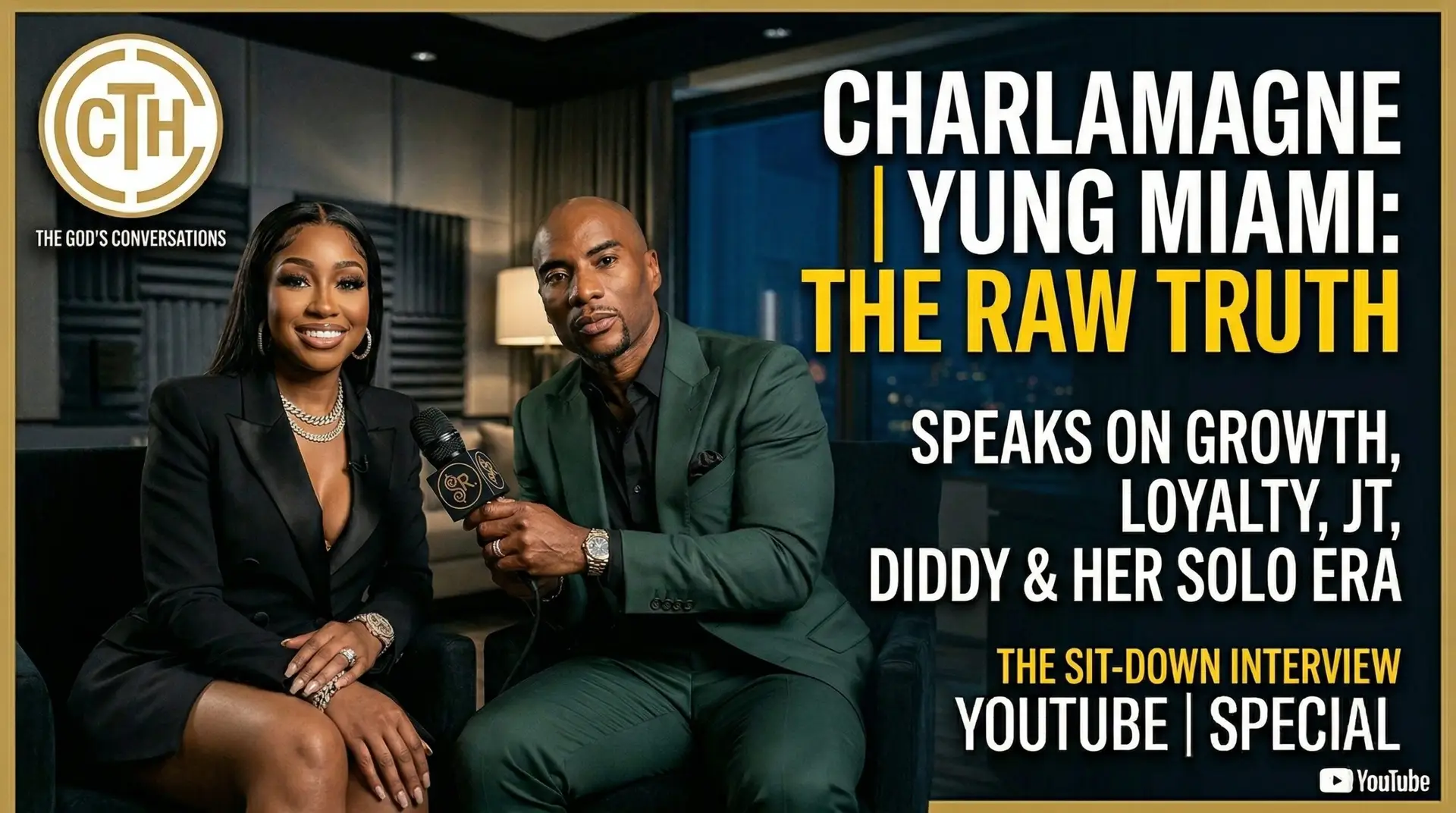
Across a long, candid conversation with Charlamagne tha God, loyalty and growth stood out as central themes while she touched on money, motherhood, grief, her City Girls history, Caresha Please, City Girls dynamics with JT, and the cost of being too visible online. The clearest takeaway was simple, she wants control of her story back heading into her solo era, even if that story is still messy in places.
- Yung Miami said her famous “$100 million net worth man” comment was more aspirational than literal, and rooted in wanting support, stability, and a partner on her level.
- She confirmed the Caresha Please podcast is not gone, but she’s looking for the right home and wants a deeper, more intentional season three.
- She said being tied to Diddy during a period of public controversy hurt her brand, cost her money, and changed how she views trust.
- Her relationship with JT sounds strained, but not dead. She framed the City Girls split more like a divorce than a permanent ending.
- The interview’s real theme was growth and authenticity, not reinvention. She isn’t pretending the old version of herself never existed.
This interview felt like narrative cleanup, not image rehab
From the start in the Yung Miami Breakfast Club sit-down, the tone was warm but direct. Charlamagne tha God pushed, Miami answered, and both understood the real subject was public perception amid the social media backlash. That is why even the lighter moments, like her joking about wanting a man with a $100 million net worth, landed differently this time.
She clarified that the number itself wasn’t meant as a hard rule. Still, the idea behind it was real. She likes nice things, she wants a hardworking man, and she wants someone who can match her pace. In context, the line sounded less like fantasy and more like biography. She grew up in Opa-locka, helped hold down family responsibilities early through her Miami come-up, and learned fast that provision is not a theory when you’ve had to play adult before your time, especially with motherhood as a key motivating factor.
That same lens shaped her comments about fame. She argued that today’s female rappers are too accessible, and that constant access strips away mystique. Her Michael Jackson comparison made the point neatly. In her view, fans used to know stars for the performance. Now they know the police report, the group chat fallout, the personal drama, and the 911 call.
“Being misunderstood forever” scared her more than starting over solo.
That may have been the cleanest line of the whole interview. It explained why she kept returning to the gap between who she says she is and who the internet thinks she is, fueling the ongoing social media backlash.
Her solo era is really about control, and so is the Caresha Please pause
Miami made it clear that Caresha Please podcast still matters to her. She even doubled down on the idea that she can be a version of Oprah, just one shaped by her own audience and voice. When Charlamagne floated Black Effect as a possible home, she didn’t close the door. She said she wants the right partner, the right setup, and the right timing for this new era.
That timing issue is key. She doesn’t want to be everywhere at once. In her view, part of what made the show work was scarcity. People wanted more because they couldn’t get too much of her at one time. That’s a smart read on celebrity in 2025. Constant content can build awareness, but it can also flatten the brand.
She said the same thing about reality TV. The BET reality series excited her at first, then disappointed her once she saw the staged reality. She wanted something raw and real. What she got, according to her, was a format that could turn selective soundbites into a whole storyline.
That tension runs through the whole interview. She wants freedom, but not overexposure. She wants openness, but not surveillance. She wants to be funny and impulsive, but she also knows those instincts have cost her before.
Her music career shows the same recalibration with Quality Control Music’s support and echoes of her City Girls roots. She said she’s getting back to records that feel natural to her, especially the Miami bass energy heard on songs like “F Them Kids” and “What’s Up in Dade County.” On “Dade County,” bringing in Trina, Trick Daddy, and Rick Ross wasn’t random. It was regional lineage, old-school radio energy, and hometown pride in one move. She also spoke warmly about Trina’s guidance, both as an artist and as a woman learning entrepreneurship and finessing the industry.
Loyalty, Diddy, and the price of public association
The most delicate part of the interview centered on Diddy. Miami did not dodge the topic. She addressed why she referenced him in music, why she wrote a letter supporting his character, and why she still felt entitled to tell her own story from her own point of view.
Her core argument was consistent with her philosophy of loyalty and growth. According to Miami, the person she knew treated her well, supported her growth, and seemed changed from the version the public was judging amid his legal issues. She said she could only speak to her direct experience, not to matters she says she did not witness.
That answer will satisfy some people and frustrate others. Still, it was strategic in one important way. She did not try to relitigate public allegations. She framed her support as personal testimony, not universal defense.
She also admitted the association with Diddy hurt her in practical terms. She said she lost deals, money, and relationships because of the social media backlash. That moved the conversation out of gossip and into brand damage. In other words, this was not just about online chatter. She said it hit real life.
The fallout seems to have hardened her view of trust in her personal life. She said she trusts God and her kids, and not much beyond that, placing accountability with them above all. Cold? Maybe. But in context, it sounded less like posturing and more like somebody adjusting to repeated disappointment.
JT, City Girls, grief, and the parts of life that don’t pause for fame
Miami’s comments about JT were among the most revealing. She described the City Girls bond like a marriage, deep love, shared history under P and Coach K at Quality Control Music, public tension, and no clean emotional exit from the City Girls breakup. She stressed that they are real friends, not just former co-workers, which is why the City Girls breakup with JT hurt so much.
She suggested prison changed JT, not in a cartoonish way, but in the way serious absence changes anybody, echoing the “Free JT” chants from fans during her legal issues. She connected that observation to her own family experience, since her mother also served time. That part of the interview felt especially grounded. She wasn’t diagnosing JT. She was saying time away shifts people like JT.
At the same time, she didn’t sound closed off. She said they may need therapy to really talk things through because right now each side just points fingers in the City Girls breakup. That’s one of the more mature reads in the whole conversation, especially amid the drama seen with other female rappers. Not every split needs a livestream. Some need a mediator.
Her grief showed up elsewhere too. She admitted she hasn’t really sat with everything she’s been through because she’s been too busy surviving, working, and defending herself in public. Charlamagne tha God warned that unprocessed trauma tends to come due. Miami’s answer was blunt, she doesn’t want to deal with it right now.
Motherhood sharpened that section of her personal life. She spoke about raising her son after the loss of his father, worrying about the missing male presence in his life, and checking on him emotionally even when he stays quiet. She also said he heard parts of her album and liked songs including “News Flash” and “Take Me to Chanel.” She skipped the more adult material for him, which said plenty by itself. Notably, she also said JT still has a loving bond with her son, a bright spot amid the challenges of motherhood.
Timeline of Events
- In the Yung Miami Breakfast Club interview, Yung Miami opened joking with Charlamagne, then clarified her “$100 million man” remark as more aspirational than literal.
- She said the Caresha Please podcast is on pause while she looks for the right home and partner for season three.
- She explained why overexposure bothers her and why staged reality TV did not feel authentic enough for her.
- She reflected on growing up in Opa-locka, helping raise siblings, and learning adult responsibilities early.
- Miami described her current phase as a freeing solo era after years of carrying City Girls and family obligations.
- She discussed her music career, song choices influenced by Trina, her Miami sound, and why “Dade County” mattered artistically.
- Charlamagne asked about Diddy, and Miami explained her public support as based on her own experience.
- She said ties to that situation affected her deals, money, and relationships in real life.
- She described the City Girls breakup with JT as painful but not final, and said she and JT may need therapy to repair things.
- Near the end, the conversation turned to change, faith, and whether people are allowed to grow past old versions of themselves.
What We Know vs What’s Speculation
Here’s the cleanest way to separate confirmed discussion from internet guesswork.
| Category | Details |
|---|---|
| What’s stated in the video | Miami said she wants the Caresha Please podcast back under the right conditions, felt reality TV was too staged, wants more control over her image, and sees herself in a new era of her music career with a freer solo phase. |
| What’s alleged | Miami claimed her association with Diddy affected her personal life, costing her brand deals, money, and relationships, touched on finessing the industry, and said the version of him she knew appeared changed. Those are her personal claims from the interview. |
| What’s speculation | The exact future of City Girls following the City Girls breakup, whether a JT reconciliation is close, and how much this interview will shift public opinion amid social media backlash are still unknown. |
A related point also surfaced elsewhere in her media run, including Caresha’s Tales, a recent Caresha Please podcast episode recap and broader interview takeaways from XXL, with talks of P and Coach K underscoring hurdles for female rappers. Still, this Breakfast Club conversation stood out because it sounded less rehearsed and more reckoning-driven.
Note: This article discusses commentary from a publicly available video. Claims described are attributed to the speaker(s) and are not presented as confirmed facts.
The Final Verdict
Her Breakfast Club appearance worked because it was not polished into lifelessness. It was careful, but not sterile. She framed her solo era as a move toward authorship, not escape, and that distinction gives the whole interview its shape.
The larger takeaway from the Yung Miami Breakfast Club interview is simple. Loyalty and growth, rooted in authenticity, motherhood, and accountability within her personal life, only matter if the audience believes they are real, and right now Miami is asking for room to prove that in her new era in public. Whether people give her that room is another story.
📊 ANALYTIC METRICS
Culture Shock Level: Hot Take — the kind of story that keeps culture commentary thriving
Clout Consequences: Shifts the conversation and gives every platform something new to chew on
Mess Scale: 7/10 — layered enough to keep everybody watching what happens next
Standout Quote: “The culture moves fast, but the receipts always catch up.”