By Petty Pablo | Lead Social Analyst
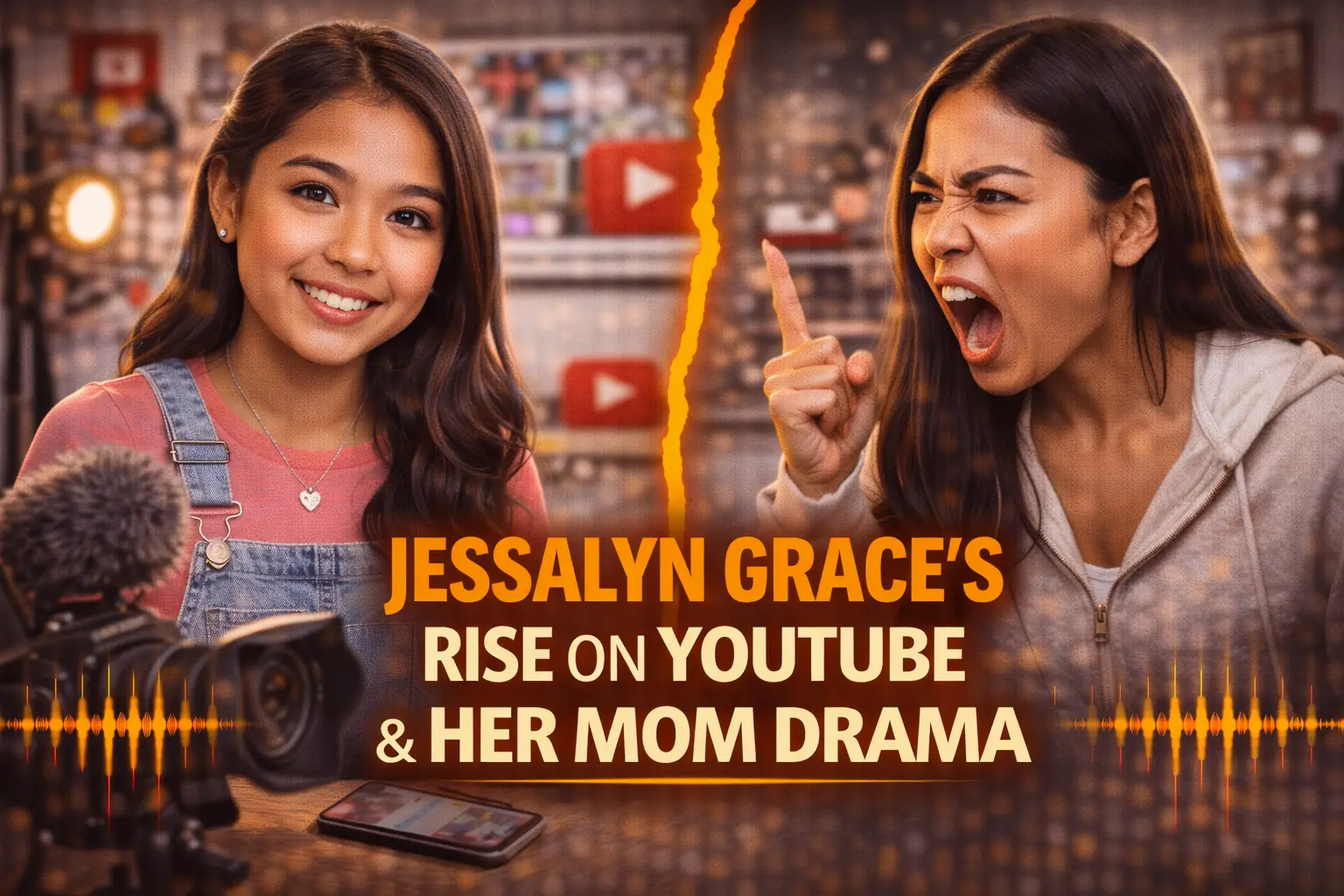
When a kid becomes the brand, the money, and the mortgage payment, the line between parenting and production can get blurry fast. In a recent episode, Aba N Preach react to creator Jessalyn (also referenced as “Jesseline”) Grace, who says her mother controlled her childhood channel, spent the earnings, and later deleted her content after she left home at 18.
This story isn’t just “family drama for the timeline.” It’s a case study in power, narrative control, and what happens when childhood labor looks like “content.”
Jessalyn Grace’s rise on YouTube, and the moment the archive disappeared
Jessalyn says she started uploading in 2016 after getting permission to create a channel, often referred to as “Jesseline Grace.” With her mom’s help, she posted consistently, and she claims the channel reached 1.5 million subscribers by 2018, when she was around middle-school age. Aba and Preach pause on that milestone for a reason: fame at 12 or 13 hits different, especially when the adult in the room isn’t just supervising, but also steering the whole operation.
Her most explosive claim is about control after the fact. She says her mother logged into the account through a device that still had access (an old iPad tied to the account) and wiped every video, including uploads that weren’t even about the conflict. In Jessalyn’s framing, that wasn’t just petty; it allegedly removed a portfolio and income stream. She also describes herself now as a self-supporting college student with no financial help from the parent who allegedly benefited from her work for years.
The reaction commentary keeps circling the same pressure point: when the content is your childhood, the channel is not just an app, it’s your résumé, your assets, and your receipts.
If you want additional context on the broader online chatter, this topic has also been discussed outside the reaction clip, including a separate YouTube upload titled “Another Child Influencer Calls Out Her Mom… Jessalyn Grace”.
What Jessalyn says happened behind the camera (and why it mirrors child actor problems)
Aba and Preach don’t treat this as a standard “my parents don’t get me” storyline. They frame it through the logic of labor and protections, because the dynamics Jessalyn describes sound less like family chores and more like an unregulated production set.
According to Jessalyn, her mom allegedly controlled:
- what she posted,
- what she said on camera,
- how she looked while saying it (down to facial expressions).
She claims mistakes were met with yelling, and she describes being fed lines shortly before filming, then criticized if she didn’t perform them “right.” She also alleges verbal abuse, plus instances of physical aggression over the years. The key theme is not a single bad day, but an ongoing system: content gets made, the adult holds authority, and the kid learns that love, safety, and approval are conditional on performance.
Aba and Preach connect that to why child performer rules exist in traditional media. When a minor is the product, the incentives can flip. The parent is supposed to protect the child first, but the child’s output can become what pays for the whole family. Once that happens, the adult’s “best interest” can quietly start sounding like “keep filming.”
The uncomfortable truth is structural: when a kid becomes the income, the kid’s needs will eventually compete with the revenue.
That’s why their commentary keeps returning to safeguards. Not because every parent-manager is a villain, but because the system is designed to trust parents, even when money creates conflicts.
“Show respect by posting”: punishment, compliance, and the content treadmill
One of the grimmer details in Jessalyn’s account is how discipline and content allegedly blended together. She says arguments often ended in grounding, sometimes for months. Then she makes a claim that reframes how viewers might interpret her old uploads: she alleges the only way to reduce punishment was to post YouTube videos as a sign of “respect.”
That dynamic matters because it re-labels the content. A “back-to-school haul” or a cheerful vlog can read as normal creator stuff to an audience, while allegedly functioning as forced labor behind the scenes. It’s the cleanest trick in influencer culture: the camera only captures the result, not the coercion.
Aba and Preach react to this like adults who’ve seen the pattern across family channels. When kids are heavily featured, viewers are often told it’s wholesome, everyone’s happy, and the child “loves doing it.” But if a minor’s access to freedom, social life, or basic peace at home is tied to uploading, consent becomes hard to measure.
Jessalyn also claims her mother later deleted both of her channels despite knowing they were her only sources of income. In that telling, control didn’t stop when childhood ended; it simply changed forms. Instead of directing the shoot, the alleged move was to remove the distribution.
This is also where the conversation gets practical. The hosts keep hinting at the same solution: you can debate vibes all day, but finances don’t run on vibes.
Money, luxury spending, and the question everyone wants answered
Jessalyn’s money claims sit at the center of the dispute. She says she didn’t understand what she earned as a child, what the on-camera items cost, or why designer goods kept appearing. She alleges only a fraction of her earnings went to savings or a college fund, while the rest allegedly funded her mother’s spending habits.
She points to screenshots (described in the video) that suggest an extensive handbag collection, and she mocks the idea that money was available for luxury purchases but not for her long-term stability. Aba and Preach don’t verify the screenshots, but they treat the pattern as familiar: visible consumption paired with unclear accounting.
Then the storyline escalates. Jessalyn also claims her mom spent heavily on a large wedding while having an affair, and that the person involved was present. The hosts react with disbelief at the optics, not as confirmation, but because it’s a sharp example of how quickly “family brand” can collide with messy adult decisions.
Still, the reaction lands on a grounded point: if you’re judging fairness, you don’t start with who talked slick on Instagram. You start with the books.
Here’s the standard they suggest, in plain terms:
| Question | Why it matters |
|---|---|
| How much did the channel earn? | Establishes the real scale of child labor and profit. |
| Where did the money go? | Shows whether the child benefitted long-term. |
| What was saved in the child’s name? | Separates parenting from spending. |
| What expenses were business-related vs. lifestyle? | Clarifies what “supporting the channel” really meant. |
Their bottom line is simple: numbers don’t lie, and any split that leaves a child-creator with “nothing” at 18 raises questions, even if the parent did real work managing and filming.
Text messages, a pageant post, and how narrative framing changes the meaning
A big part of this video is about receipts, especially text messages. Jessalyn describes a period where she was seriously sick for about two weeks, with symptoms including fainting, fever, and difficulty eating. She claims her mom stayed angry with her during that time, and the fight, according to Jessalyn, centered on something that sounds small but signals something larger: an Instagram caption.
In the clip, she shares that her mom was upset because Jessalyn didn’t thank her in a post tied to “Miss Lao San Diego,” described like an introduction or pageant-related caption. The directors allegedly asked for specific photos and a caption about her experience. Jessalyn’s position is that it wasn’t a tribute post, it was a requested blurb. Her mother’s position, as presented in the reaction, reads like: why aren’t you crediting the person behind your success?
Aba and Preach clock the deeper issue: arguing with your kid over social media praise is a symptom, not the disease. It’s the logic of branding in a family relationship. If the parent sees the child’s public image as something the parent built, then the parent may feel entitled to public credit, public deference, and control over the public story.
The hosts also react to the tone of the messages, calling them manipulative in parts, particularly where guilt and obligation are emphasized over the child’s health. Even without repeating insults shown in the texts, the vibe they highlight is familiar: “You should’ve known,” “You don’t value me,” “After seeing me cry…,” the kind of emotional accounting that can trap a kid into apologizing for not mind-reading.
At the same time, the hosts note a fairness issue: partial screenshots can shape perception. When more context appears later (through the mother’s response), the framing of certain conversations shifts.
The move-out story, the alleged mallet incident, and the mother’s public response
Jessalyn describes the breaking point as a late-night conflict that started over a missing curling iron. After a day of searching, the iron was found broken in her sister’s closet, and Jessalyn says her mother’s anger escalated. Jessalyn alleges that during the argument her mom slapped and shoved her, then grabbed a wooden mallet-like tool and tried to swing it at her. She says she left home at 18 without announcing it, and she frames the weeks after as her mom trying to make her life harder.
Her mother, Kelly Anne (as named in the video description), later posts a statement and responds point-by-point, according to the reaction. In her rebuttal, she claims:
- Jessalyn “ran away” at 18,
- she stayed silent at first to protect her daughter’s public image,
- Jessalyn was not the only source of income,
- she (the mother) managed, filmed, and edited content while caring for the family,
- allegations of an affair are false,
- and certain screenshots were shared without full context.
One of the strongest “context” moments involves messages about Jessalyn leaving. The mother shares a longer thread (as shown in the reaction), and the hosts note that Jessalyn’s initial explanation in that message focuses heavily on relationship heartbreak involving a boyfriend named Andrew. Aba and Preach argue that if the mom read the situation as “teen relationship crisis” rather than “I’m leaving because the household is unsafe,” her initial reaction might track differently.
They also discuss a separate dispute about a car. Jessalyn alleges her mom posted her in front of a BMW bought with Jessalyn’s earnings, while also saying Jessalyn wasn’t allowed to drive. The mother’s response claims the restriction came from school parking permit issues and trust concerns tied to behavior. In other words, both parties position the same fact (a car) as proof of different things (control vs. responsibility).
The reaction doesn’t “solve” the conflict. It highlights what internet disputes often are: competing edits of the same footage.
Timeline of Events
- 2016: Jessalyn says she starts a YouTube channel (“Jesseline Grace”) with her mother’s help.
- 2018: Jessalyn claims the channel reaches 1.5 million subscribers.
- Over multiple years: Jessalyn alleges strict control over content, plus verbal and sometimes physical abuse.
- During her teen years: Jessalyn claims she didn’t understand earnings, savings, or spending tied to the channel.
- 2021: Jessalyn alleges her mother left her father and claims an affair (disputed by the mother).
- After high school: Jessalyn says she plans to attend UC Berkeley, and alleges her mother tries to limit her independence.
- Late incident: Jessalyn alleges a confrontation escalates into physical aggression, including an attempted strike with a wooden mallet-like tool.
- Age 18: Jessalyn says she leaves home; the mother publicly frames it as running away.
- Afterward: Jessalyn alleges her mother deletes her channel videos; the mother responds publicly but does not (in the reaction clip) appear to directly deny deleting content.
What We Know vs What’s Speculation
| Category | Details |
|---|---|
| What’s stated in the video | Jessalyn claims she grew a large YouTube channel as a minor, her mother tightly controlled production, and she later left home at 18. Aba and Preach discuss the screenshots and messages shown in the reaction video and comment on how context changes perception. |
| What’s alleged | Jessalyn alleges exploitation, mismanaged earnings, verbal abuse, physical aggression, and that her mother deleted channel videos. She also alleges major spending choices, including a costly wedding and an affair. The mother alleges Jessalyn misrepresented messages, wasn’t the only provider, and that certain behavioral issues justified restrictions. |
| What’s speculation | Viewers inferring exact dollar amounts, legal violations, or definitive intent (for example, whether a parent acted out of greed vs. control) without financial records or independent verification. |
Where Aba N Preach land: it’s bigger than one family
The hosts end up in a careful place. They don’t dismiss Jessalyn’s claims, especially the parts about being a teen with a massive platform and unclear access to the money. They also flag moments where framing looks selective, like when a longer text thread changes what the mom’s reaction seems to respond to.
Yet the cultural takeaway stays consistent: family content can create an incentive problem that normal parenting isn’t built to handle. A kid’s channel can pay bills, buy cars, and fund lifestyles, while the kid still has the least power in the room. That imbalance makes “trust me” a weak standard.
They also point out something telling in the mother’s phrasing (as presented in the reaction): the idea that she “neglected” her own channel to build her daughter’s. That line reads like resentment leaking through the PR voice, even if the mother believes it’s fair.
The clean resolution they gesture toward isn’t a viral dunk. It’s documentation.
If you want to explore Aba N Preach beyond this episode, the creator’s official pages include their Spotify artist profile and their Aba N Preach Patreon page.
Conclusion: the real “receipt” is the ledger
Jessalyn Grace’s story, as discussed by Aba N Preach, sits at the intersection of family, fame, and finances, which is exactly where things get messy and expensive. The internet will argue tone and text messages forever, but the long-term question is simpler: did the child who did the work receive fair, protected benefit from it? If the answer is unclear, the system failed, even if everyone insists their intentions were good.
The public doesn’t need to pick a team to learn the lesson. When childhood becomes content, the rules should be as serious as the money.
Source video referenced in the reaction: original Jessalyn Grace video link shared by Aba N Preach
Learn more about Pulse of Fame and our editorial team. Want to weigh in? Join the conversation in the Pulse of Fame community forum.
Related: Losing Friends After Losing Weight: What Aba N Preach Reveals About Health, Curv