By Petty Pablo | Lead Social Analyst
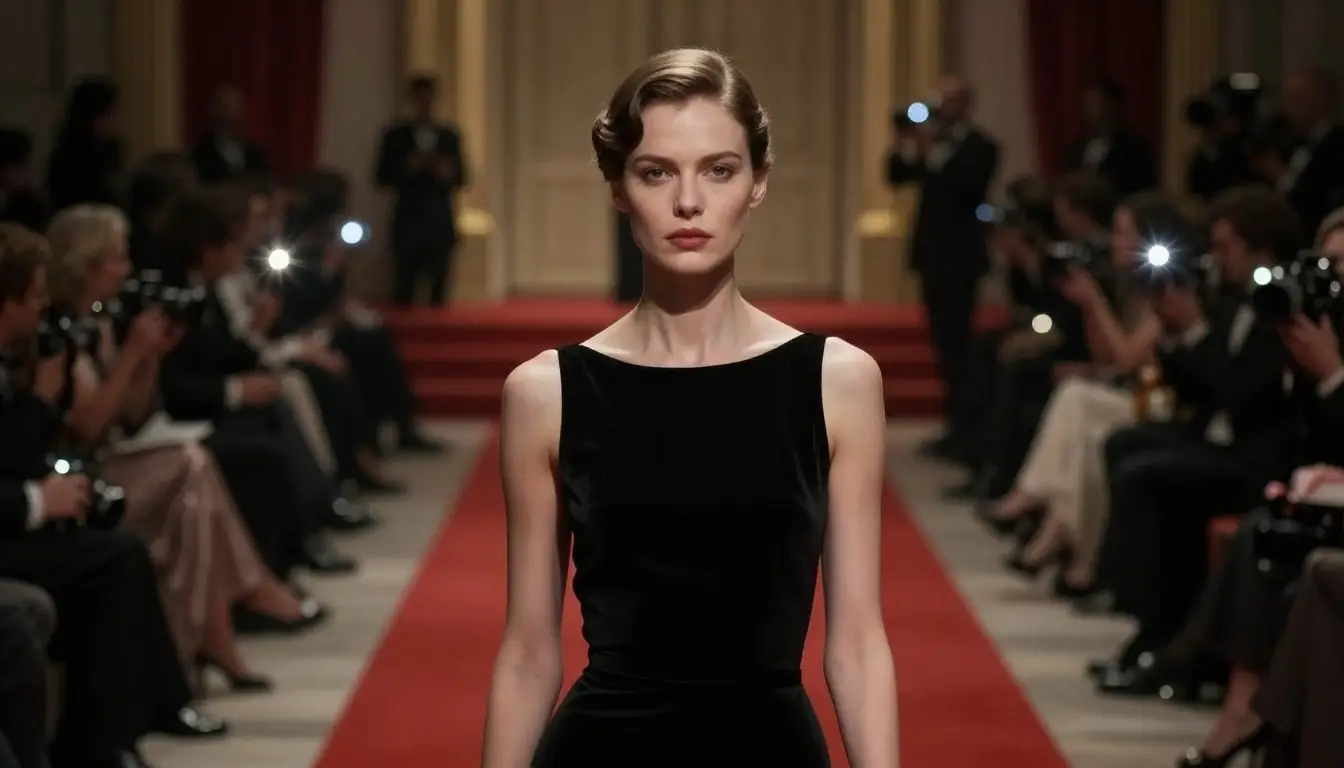
Something’s shifted in the way thinness is being sold right now, and it isn’t subtle. The look trending across red carpets and “wellness” interviews isn’t just slim or toned, it’s visibly depleted. Think hollow cheeks, sharp collarbones, and bodies that read less “fitness” and more “frailty.”
The bottom line is uncomfortable but clear: when a culture starts treating clinical signs of malnutrition as a vibe, it doesn’t stay contained to celebrity styling. It spreads, because that’s how aspirational marketing works.
The “malnutrition aesthetic” and the body cues people can’t unsee
The video’s core argument is that we’re watching a new (or maybe recycled) beauty ideal take over, one that glamorizes what health professionals would often flag as red signs. It’s not “snatched,” it’s not “clean,” it’s not “disciplined.” It’s the aesthetics of scarcity, packaged as luxury.
A key moment comes from Jess, who says she has a master’s in nutritional science and is currently doing her dietetic internship. Her point is simple: some of the features being praised online overlap with what clinicians assess in real practice.
She describes the clavicle area first. In her words, you’re “not supposed” to see the entire clavicle and the acromion process (the bony point near where the shoulder meets the clavicle) so sharply. She frames that prominence as a clinical marker of malnutrition, meaning the body may not be getting enough nutrients, or enough of the right ones.
Then she points to another cue clinicians look for during a nutrition-focused physical exam: temporal wasting. That’s the “sunken temple” look, where muscle loss around the temples creates a hollowed area that can be felt and seen. Jess describes palpating that area, and she calls a sunken appearance a serious sign in many cases, especially when it’s pronounced.
In other words, the video isn’t saying, “Don’t notice bodies.” It’s saying: notice what we’re being trained to praise.
A few takeaways the video stresses about these visual cues:
- They can signal muscle wasting, not just “being lean.”
- They can indicate restriction, not balance.
- They don’t reliably map to health, even if they photograph well.
- They can come with long-term harm, especially when normalized as a goal.
The cultural trick is that malnutrition can be styled. Great lighting, luxury fabric, and a confident pose can make almost anything look intentional, even when the underlying reality is less glamorous.
Why celebrity bodies become public business, whether we like it or not
There’s a standard rebuttal anytime this topic comes up: stop commenting on women’s bodies. The video doesn’t dismiss the spirit of that critique, but it draws a harder boundary around celebrity culture itself.
Celebrities don’t just have bodies, they monetize them. Their job often includes selling an image as an aspirational product, through magazine covers, beauty campaigns, endorsement deals, and televised red carpets built for commentary. The whole machine invites the public to look, compare, and buy.
The video frames this as a marketplace. The body is the centerpiece, and the consumer is sold proximity to it:
Buy the lipstick, get her lips.
Buy the routine, get her glow.
Buy the workout, get her waist.
That’s why the “none of your business” argument doesn’t fully hold in an industry that runs on public consumption of appearance. From fashion magazines to brand collaborations, celebrity culture has long treated the body as a billboard.
The video pulls an older example to make the point: Twiggy, the iconic model whose nickname was tied directly to her thinness. That framing wasn’t accidental, it was branding. It also set a tone that fashion and entertainment kept repeating for decades, with only brief pauses when “curves” or “strong” became marketable.
There’s another reason silence isn’t neutral. If nobody names what’s happening, the standard keeps drifting. The video’s warning is basically this: when visible depletion gets praised, the culture quietly resets what “normal” looks like. Then millions of girls and women internalize the gap as a personal failure, not a manufactured standard.
Ignoring visible signs of malnutrition in the name of politeness isn’t neutral, it lets the standard move into more dangerous territory.
That’s the strategic lens here. This isn’t random. It’s a system that prints money off insecurity, and it works best when everyone pretends not to notice the cost.
The 1990s and 2000s didn’t disappear, they just got a new filter
If you grew up in the tabloid era, the video’s tone probably feels familiar. It includes a clip from Chelsea, who calls herself a “2000s diet culture survivor,” and her story lands because it’s painfully ordinary for that time.
She says her first diet started around age 12, using the Special K diet. Her daily intake, as described, was two snack bars and one bowl of cereal. She ties the body ideal in her head to the media she consumed: tabloids at the grocery store, magazines like 17 and Teen Vogue, and the Kate Moss-style template of “tiny” and “bony.”
She also mentions getting SlimFast in sixth grade. That detail matters because it highlights how early the programming started. There wasn’t a need for social media to create comparison. Print culture did the job just fine, and it did it loudly.
The video pairs Chelsea’s account with other familiar memories people share from that era: searching for Victoria’s Secret model diets as a kid, fearing puberty because weight gain felt like failure, and the obsession with “thigh gap workouts,” a phrase that now feels like a time capsule and a warning label.
The point isn’t nostalgia, it’s pattern recognition. The video argues that what we’re seeing now is textbook starvation repackaged as “wellness” and “aesthetic,” with new tools and newer language. The pressure didn’t go away; it got better branding.
Hollywood’s bone-thin moment, and the names being pulled into the storyline
From there, the video turns to recent celebrity examples that, in the creator’s view, illustrate how far the look has swung.
Emma Stone’s BAFTA appearance is described as concerning, with sharply pronounced collarbones, a noticeably reduced frame, and facial fullness replaced by a hollowed look. Kelly Osbourne is also called out as appearing gaunt, alongside her mother Sharon Osbourne. The video claims Sharon has said she went too far with weight loss drugs, and it uses that as part of a broader point about how fast the “shrinking” trend has become normalized.
The video also mentions Oprah, framing her weight loss as culturally loaded because of what she represents. The argument isn’t that Oprah “needs” anything, she’s a symbol of influence, wealth, and access. Yet, even with all that, thinness still reads like an additional form of status.
That same idea carries into the Serena Williams mention. The video underscores her historic career (including 23 Grand Slam titles) and argues that even a body built by elite performance isn’t protected from thinness pressure, especially when weight loss medications enter the chat and become something to promote.
On the modeling side, the video references Bella Hadid. It cites a 2022 Vogue cover story quote where she describes using a calorie-counting app and packing a small lunch (she mentions raspberries and a celery stick). It also recalls the viral moment where Gigi Hadid tells her mother she feels weak from dieting, and her mother suggests eating a couple of almonds and chewing them well.
If this all sounds bleak, that’s the point. The video frames it as a “thin epidemic” with glamour lighting, where the public sees results but not the daily restrictions that produce them.
For one example of how this conversation shows up in mainstream coverage, see People’s reporting on Kelly Osbourne’s comments about getting more criticism for being fat.
“Wellness” talk that’s really just restriction with better PR
One of the video’s sharper observations is about language. “Dieting” has bad branding now, so the culture sells the same behaviors under softer terms: wellness, fasting, clean eating, discipline.
The video highlights celebrity soundbites that normalize eating as little as possible while still calling it health. Some of the examples include eating dinner early, intermittent fasting, having soup or bone broth for lunch, and using coffee to blunt hunger in the morning.
It also references a clip from Kimora Lee Simmons’ show, Back in the Fab Lane, where someone says “You look healthy,” and the response implies “healthy” equals “fat” in that house, said as a punchline.
“I do a nice intermittent fast.”
“Sometimes I try to just drink coffee in the morning.”
“Healthy means fat in this family.”
The video’s argument is that this isn’t just casual chatter. It trains audiences to hear hunger as a problem to solve, not a signal to respect. Even worse, it frames deprivation as moral achievement, which is how harmful body standards stay sticky.
The real cost, from nutrient gaps to lawsuits, and why systems love a hungry audience
The video doesn’t stay in the realm of vibes. It connects the aesthetic to real consequences, especially when extreme restriction meets weight loss medications.
One claim it raises is that clinicians are warning some patients using GLP-1 medications can become functionally malnourished when they aren’t eating enough to meet nutrient needs. It also notes a reported uptick in scurvy being discussed in relation to restrictive intake, pointing to coverage about weight loss drugs and scurvy concerns.
Then there’s the legal backdrop. The video says thousands of lawsuits have been filed in federal courts over alleged side effects linked to GLP-1 drugs, including severe gastrointestinal complications, with stomach paralysis named as an example. For a snapshot of that landscape, it points viewers toward a GLP-1 lawsuit tracking overview.
The larger cultural claim is that we’re celebrating the “after” photo and ignoring the trade-offs. In the video’s framing, the risks range from organ damage and heart failure to muscle wasting, hair loss, and bone density loss. It also stresses that eating disorders carry the highest mortality rate of any psychiatric disorder, which is why treating starvation as an aesthetic isn’t just irresponsible, it’s dangerous.
To explain how diet culture keeps people locked in, the video references writer Da’Shaun Harrison and includes an excerpt about how dieting can demand harm in the name of weight loss. The piece cited is “Diet Culture & Weight Loss Programs Are a Scam” by Da’Shaun Harrison, and the video ties that idea to the way “cheat day” and “guilty pleasure” language trains people to distrust their bodies.
It also connects this to power. The video argues thinness works as control, especially for women, because it keeps attention locked on self-surveillance. Counting almonds doesn’t build community. Feeling weak doesn’t fuel resistance. That’s not an accident, it’s a feature of a culture built by industries that profit when women stay dissatisfied.
The video frames the “patriarchy” plainly as institutions, not a mystery villain: media companies, fashion houses, ad firms, pharmaceutical interests, Hollywood studios. A “corporate boardroom” decided the template; everyone else has been negotiating with it ever since. For more of Harrison’s framing on how coercive body standards can operate socially, the video also points to “Body F*scism” by Da’Shaun Harrison.
Rejecting starvation as style, even when the rollout looks glamorous
The video closes with a calibration that matters: some of the celebrities being discussed may be dealing with trauma, mental health struggles, or other pressures that contributed to weight loss. The culture still doesn’t have to clap for the outcome.
That’s the line the creator draws. You can acknowledge the forces, name the incentives, and still refuse to treat emaciation as aspirational. You can also critique a standard without turning individual women into targets, because the real engine here is systemic.
In the end, the video’s message is blunt: starvation isn’t beautiful, and calling it an aesthetic doesn’t change what it does to a body.
Ashley Viola also invites viewers to share how this trend has affected them, from the 1990s and 2000s to now, and encourages engagement through subscribing and supporting her work on social platforms and Patreon.
Conclusion
This “malnutrition aesthetic” isn’t just a celebrity storyline, it’s a marketing signal. When thinness becomes a kind of currency again, the culture starts paying for it with silence, denial, and disguised restriction. The most honest response isn’t panic, it’s clarity about what’s being sold and who benefits. If there’s one takeaway worth keeping, it’s this: a look that requires depletion will always come with a bill.
Learn more about Pulse of Fame and our editorial team. Want to weigh in? Join the conversation in the Pulse of Fame community forum.
Related: From K-Pop Trainee to Idol Debt: HYOKEY’s Hoki on What 8 Years Really Paid For