By Petty Pablo | Lead Social Analyst
When a creator says “I’m done,” the internet hears, “Set a timer.” In Incoming Opinion Part 9, IO shows up with her signature anthem, a stack of allegations to answer, and one main point she repeats in different ways: the timeline is the only thing that doesn’t get tired, doesn’t get emotional, and doesn’t forget.
This episode centers on IO reacting to a video conversation that includes Ahmad L describing a brief Chicago meetup and what he frames as escalating contact afterward. IO’s response is blunt, highly personal, and structured like a rebuttal, with money screenshots, call claims, and repeated insistence that key details are being edited or reframed to paint her as the aggressor.
Ahmad L’s Chicago meetup story, and IO’s point-by-point pushback
The central tension comes from two competing narratives:
- In the audio being discussed, Ahmad L describes meeting IO after online conversations, a short Chicago meetup during a trip he characterizes as tied to business, and later contact he frames as harassment, including talk of being scared and considering legal steps.
- IO rejects that framing and says the story is being shaped to make her look reckless, needy, or threatening, while downplaying what she calls his ongoing online behavior after they allegedly agreed to stop speaking.
IO is not subtle about what she thinks is happening. She claims Ahmad L is lying, that the “story” changes depending on the audience, and that edited screenshots are being circulated to create the impression she initiated or escalated everything. She repeatedly returns to one question: if he truly felt unsafe, why would he keep inserting himself into spaces where she appears?
The “business trip” claim vs IO’s “he came for me” claim
According to the audio being played, Ahmad L says he told IO he had a business trip and wanted to see her, then planned a meetup around that schedule. IO disputes the framing and argues he was eager to come specifically to see her, and that their messages (which she says she will share later) show planning and excitement that do not match a detached “work trip” vibe.
IO also says he pushed for attention, wanted her to go live, and wanted more visible association with her online. In her view, that context is important because it changes the motive from “neutral meetup” to “visibility chase.”
The FaceTime and “catfish” talk, and why IO says it doesn’t add up
A repeated point in the audio is Ahmad describing feeling surprised by how IO looked in person, and implying the photos were older or misleading. IO’s response is that they FaceTimed for long stretches, more than the “two times” she says he claimed, and that it is unreasonable to suggest someone can hide their face during hours of video calls.
She also brings in witnesses. IO references Rich and later brings Rich on, saying he saw her on video and spoke to her during the period in question. Her argument is not “trust me,” it’s “the timeline includes other people.”
The money, the heat, and why receipts become the storyline
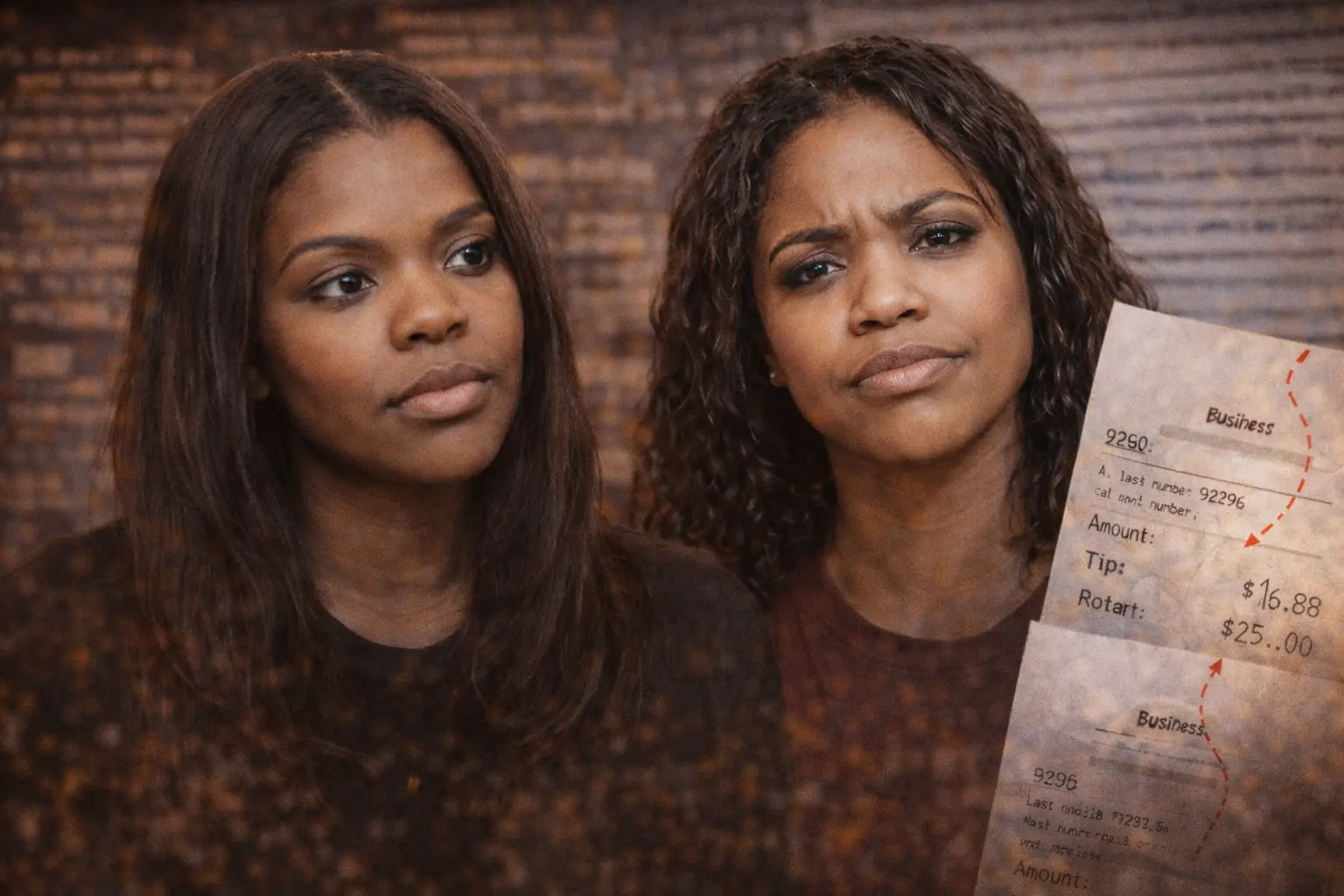
Money is one of the most concrete threads in the dispute because both sides mention it. In the audio, Ahmad describes sending money for the heat situation and money for supplies like cannabis and alcohol. IO says the heat issue was brief, she paid the invoice first, and he later reimbursed part of it. She also posts a Cash App screenshot during the stream to counter what she says is a minimized version of how much he sent.
This is where the sector’s broader “receipts culture” shows up. When personal conflict turns public, the argument often collapses into numbers because numbers feel provable. IO leans into that, not because she says money equals motive, but because she believes it exposes inconsistent storytelling.
To keep it clear, here’s the dispute in a simple side-by-side based on what’s said in this video:
| Claim being discussed in the live | IO’s response in Part 9 (as stated) |
|---|---|
| The Chicago trip was mainly business, and the meetup fit inside it | She argues messages show eagerness to come see her, and that “business trip” is being used as cover language |
| FaceTime happened “twice,” and he couldn’t clearly see her face | She says there were many long FaceTimes, and that the “couldn’t see” framing is not credible |
| She was too intoxicated to drive, or was highly impaired | She denies it and says she left on her own, drove safely, and spoke to Rich during/after leaving |
| She slept in a bunk bed at the Airbnb | She says there were multiple sleeping options, and she would have chosen a hotel before that |
| He felt unsafe, including fear she might have a weapon | She argues he later kept tracking her online, which she says contradicts genuine fear |
| He sent $400 for supplies and $500 for heat | She acknowledges those figures were mentioned, but says more context and receipts exist |
The takeaway is not who “won” the table. It’s that IO treats every contested detail as part of a larger framing fight.
IO’s timeline strategy, why she keeps saying “the order of events matters”
Across this series, IO’s consistent theme is that the sector runs on sequence. In Part 9, she repeats the idea that screenshots and short clips can lie by omission, while a dated timeline is harder to bend. She says that’s why she wants to show full call records (not just device call logs that can be edited) and full message threads.
This aligns with a broader pattern in the storyline around IO, Tremaine, and Kleo that viewers have seen across multiple parts: when people disagree on motives, they argue the timeline as the closest thing to an objective witness.
What IO says happened before Chicago
IO recounts frequent calls, texts, and FaceTimes, and claims Ahmad initiated much of it. She also says their dynamic included flirtation, regular check-ins, and strong interest from him. IO frames this as important because it challenges the later “I barely knew her” posture she believes he adopts in public.
She also claims he was highly tuned into the sector, understood how content spreads, and still chose to bring a personal conflict to creators and communities. That’s one of her sharpest criticisms: she argues he knew what doing that would trigger.
What IO says happened in Chicago and the moment she left
IO describes arriving late to the Airbnb, spending the first night talking and smoking, then a growing sense that the vibe shifted as alcohol, irritability, and arguments entered the picture. She says the “big blowup” did not happen inside the Airbnb the way the audio implies. In her telling, the major argument escalated during her drive home after she left.
She also insists she did not “chase” him. Instead, she claims she left because she was done, and she says she has call and message evidence that doesn’t match the narrative that she was desperately trying to hold on to the situation.
Rich as the timestamp anchor
A major credibility move IO makes is tying her exit to a timestamped call with Rich. When Rich appears on the stream, he agrees he spoke with her during that period, and he describes her as upbeat and not distressed, which IO uses to support her claim she was happy to be leaving rather than spiraling or threatening.
IO’s argument is not subtle: if her mood, behavior, and calls don’t match the “unstable aggressor” picture, then the story being circulated is built to serve a purpose.
Harassment vs response, and why “restraining order” language keeps popping up
Part 9 sits inside a larger sector pattern: once a conflict gets messy, people start using legal language as a pressure tool. IO talks about “restraining order” chatter, “threats” claims, and what she sees as an attempt to label her first so the audience locks into a role assignment.
In this live, IO repeatedly says she did not threaten Ahmad L. She also says that after an alleged agreement to stop speaking, she did not keep calling him, and that the only time she reached out later was to tell him to stop posting or talking about her in other spaces.
That distinction matters in her framing. She wants the audience to see the difference between:
- repeated contact intended to prolong conflict, and
- contact intended to stop a person from continuing public commentary.
Whether viewers agree or not, the mechanics are recognizable. In this corner of YouTube, the first label tends to stick. “Harassment,” “stalking,” “victim,” and “threats” become shorthand, and people then argue around those words instead of around what actually happened.
IO also challenges what she considers contradiction: she points out that the audio includes claims of fear and danger, yet she alleges he continued showing up in related online spaces afterward. For IO, that’s not a small inconsistency, it’s the whole case.
Tremaine, Kleo, Rose Tea, Marquita, and how IO describes the “organized” pile-on
Even though Ahmad L is the main thread, IO spends significant time widening the lens. She frames the dispute as a coordinated narrative campaign, not a one-on-one misunderstanding.
She targets multiple names (including Tremaine and Kleo) as people she believes repeated claims without verifying them, and she argues they are motivated by resentment, attention, and long-running group fallout. This echoes what’s been consistent in the wider IO saga: private group dynamics and Discord chatter become accelerants, then livestreams become courtrooms.
Discord leaks, “moles,” and why private spaces don’t stay private
IO describes screenshots being passed around, people being moved into different Discord rooms, and chatter about who is “snitching.” She claims supporters fed her what was being said about her, and she used those screenshots to confront the behavior directly.
This is the part of the story that matches the broader “receipt culture” thesis from earlier arcs: when people share a private post with the right person, it stops being private instantly. IO argues that’s exactly how her name stayed in circulation even after she says she disengaged.
Rose Tea and Marquita as narrative amplifiers (as IO frames it)
IO also turns her attention to Rose Tea and Marquita, describing them as repeating or carrying claims. She treats this as part of a pattern where a central figure feeds a storyline to third parties who already dislike the target, then those third parties treat it as verified truth.
It’s worth emphasizing, IO’s descriptions are allegations and opinion, not confirmed facts. Still, the “how it spreads” explanation is coherent: once a story becomes content, the group that dislikes you doesn’t need proof, they need momentum.
Guest check-ins, and what they add to IO’s credibility play
Part 9 includes multiple guest moments that shift the tone, even briefly.
Philly appears and backs IO on certain practical points. She discusses hearing Ahmad’s intensity early on and describes behavior she perceived as excessive. IO uses Philly’s presence as a “real time” anchor, someone who heard things as they happened.
Iris joins to express confusion about why former allies are now involved, and to share that she stepped away from social platforms for peace, which IO agrees with.
Alicia appears with her own story about uncomfortable boundaries, repeated contact, and blocking someone across platforms. IO responds supportively and uses the moment to underline a larger theme, online dynamics move fast, and people should protect their space.
Rich is a key guest for IO’s timeline argument. He confirms the call, describes IO as cheerful, and says she did not sound distraught. IO treats that as a practical rebuttal to claims that she was spiraling, threatening, or unsafe.
What IO promises next, and why she keeps saying “I’ll post it my way”
IO ends the live signaling that she intends to release more structured proof, including full texts, call records, and additional documentation. She also says she prefers doing it in an upload format rather than pulling up partial screenshots in a moment, because she believes people use selective clips to create false conclusions.
This fits IO’s long-running stance: she wants to win by sequence, not by volume. She also says she plans to pivot more toward Shorts and algorithm-friendly uploads once she feels the current round of claims is contained.
For viewers, that signals a likely next phase: a tighter, edited breakdown, with less “live chaos” and more curated documentation, at least if IO follows through.
Conclusion
Incoming Opinion Part 9 is less about romance and more about framing, IO argues that if she can prove the order of events, then the labels attached to her fall apart. She positions herself as someone who disengaged, then got pulled back in when her name stayed active in chats and side spaces. If the promised uploads include full context, this storyline will probably shift again, because the audience in this sector treats timestamps like verdicts.
Learn more about Pulse of Fame and our editorial team. Want to weigh in? Join the conversation in the Pulse of Fame community forum.
Related: Bride of Charlie Episode 6: Candace Owens Fixates on Romania, Timelines, and TPU