By Agent 00-Tea | Cultural Analyst
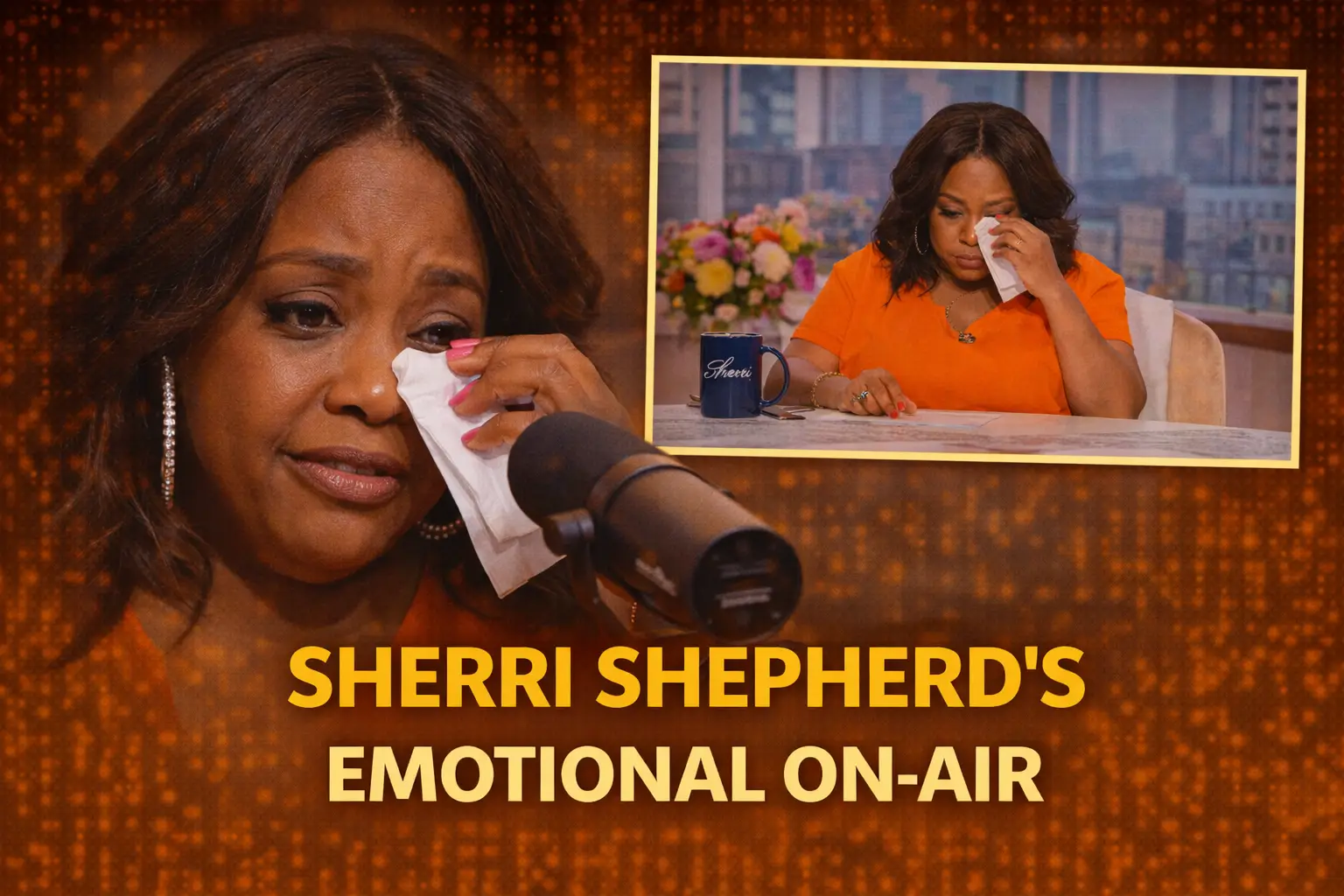
When a daytime host tears up on camera, it’s rarely just “a tough day at work.” On Rivah TV, creator Rivah Jordon zeroes in on Sherri Shepherd’s emotional remarks after news broke that Sherri wasn’t renewed for another season, and frames it as something bigger than ratings or routine TV shuffles. The show isn’t coming back. The more interesting part is what Sherri suggests without saying outright, that staying on air can come with behind-the-scenes pressure most viewers never see.
The cancellation news, and why it hit so hard
Sherri addresses the audience and her staff with a steady voice, but the message lands like a door closing: the show “has not been renewed for another season.” Rivah Jordon treats that moment as more than a business update, because Sherri doesn’t present it like a clean goodbye. She presents it like a loss.
In the video’s framing, the sadness isn’t only about the job. It’s about what that job represented, a platform she worked to build, and a space where her point of view sometimes refused to stay “safe.”
A few fan reactions Rivah highlights (and the tone many viewers recognize) tend to fall into the same bucket:
- Surprise, because cancellations still feel sudden even when rumors swirl.
- Disappointment, because daytime talk slots are hard to win and easy to lose.
- Curiosity, because Sherri’s emotion makes people wonder what happened off-camera.
For readers who want broader context beyond Rivah’s commentary, there’s mainstream coverage of Sherri’s response, including TODAY’s report on her reaction to the cancellation.
How the Tyra Banks conversation became the backdrop
Rivah connects Sherri’s tears to a separate media storm: renewed online chatter about Tyra Banks and America’s Next Top Model. In Sherri’s telling, the early-2000s reality TV era was a “wild west” where shock value often felt like the entry fee.
She lists the kind of throwback examples that make the point without a lecture: contestants eating rats on Survivor, wild stunts on Fear Factor, and judges like Simon Cowell building a brand on blunt insults. The argument isn’t that it was “right,” it’s that it was normalized, and that context matters when audiences review old footage with today’s standards.
Sherri’s on-air approach: accountability for everyone, not just one person
What stands out in Rivah’s recap is Sherri’s willingness to ask uncomfortable questions on her platform. She brought in former Top Model judges and pressed two angles at once:
- What should Tyra do now, in the middle of backlash?
- If other adults were present, why didn’t they step in when things went too far?
Rivah’s point is that Sherri wasn’t only hosting a promo stop. She was moderating the conversation like someone who knows how TV power works, and how responsibility can get passed around until nobody claims it.
“You’ll never know the battles”: Sherri’s tearful warning about TV power
The emotional center of Rivah’s video is Sherri’s quote about what it takes to keep a show on the air: people don’t understand the battles that get fought behind the scenes. She suggests there are expectations, conversations, and compromises that viewers will never hear about, yet they shape what makes it to air.
Rivah interprets that as Sherri “exposing” the vibe of daytime TV without naming names or giving specifics. The idea is that you can be “in power” on paper, with your name on the mug and your face on the billboard, but still be managed by rules that aren’t written for the audience.
To keep it practical, Rivah frames the hidden pressure like a constant weighing of options:
- Production expectations: what a show “needs” to do to survive.
- Personal integrity: what a host can live with saying or endorsing.
- Public narrative: what audiences, advertisers, and headlines reward.
That’s also where the conversation brushes up against Sherri Shepher as a brand. When a host’s identity is honesty and opinion, neutrality can feel like wearing someone else’s outfit.
The moments Rivah says made Sherri “go rogue”
Rivah argues the end started long before the non-renewal headline, when Sherri began offering strong personal takes instead of staying in pure “platform mode.”
One example is Sherri’s commentary about Megan Thee Stallion’s Vanity Fair afterparty look, where she takes an “auntie” tone and tells younger women, “Ladies, this is not it.” Rivah treats that as a risky move for daytime, because it’s not just fashion chat, it’s values.
Another example is Sherri showing empathy toward Jonathan Majors during his public controversy, which Rivah describes as going against the popular narrative at the time. In Rivah’s view, daytime TV often rewards safe consensus, and punishes hosts who sound like they’re thinking out loud in real time.
The bigger point: daytime TV has rules, even when they aren’t announced
Rivah also contrasts Sherri with an unnamed talk show that did get renewed, describing it as a place with less pushback, fewer strong opinions, and a smoother “just ask the questions” format. Whether or not that comparison is fair, it supports Rivah’s thesis: daytime rewards predictability.
Sherri’s tearful line about wanting to “open the door” and give a platform to people who look like her lands here, too. She’s describing aspiration and mission, while also hinting that mission can come with trade-offs.
Rivah’s takeaway is clean: Sherri didn’t sound like someone who simply lost a job. She sounded like someone who fought for control of her show, and lost the war even if she won some battles.
For more reporting about the cancellation itself (separate from Rivah’s commentary), see Variety’s coverage of Sherri addressing the show’s end.
Conclusion: when a host chooses truth over “easy TV”
Rivah’s video treats Sherri’s final months on air like a case study in what happens when a daytime host refuses to sand down her edges. Whether you agree with Sherri’s opinions or not, the point is that she had them, and she aired them.
If there’s a lesson for viewers, it’s this: the clean version of TV rarely shows the cost. Share your take in the comments, and if you follow Rivah Jordon’s coverage, the video also points viewers to IG @rivah_jordon and the wider Rivah TV community conversation around #SherriShepherd #MeganTheeStallion #Cancelled.
Learn more about Pulse of Fame and our editorial team. Want to weigh in? Join the conversation in the Pulse of Fame community forum.
Related: Beware of the “New Umar Johnson Scam,” According to Poetik Flakko