By Petty Pablo | Lead Social Analyst
Some breakups happen quietly. Others show up in public, on an app, on a holiday, with an audience listening. In a candid moment, Mona (better known as Dont Call Me White Girl) opened up about a Clubhouse exchange she says caught her off guard, and how she chose to handle the fallout without turning it into an internet spectacle.
The Christmas Day Clubhouse moment she says she’ll never forget
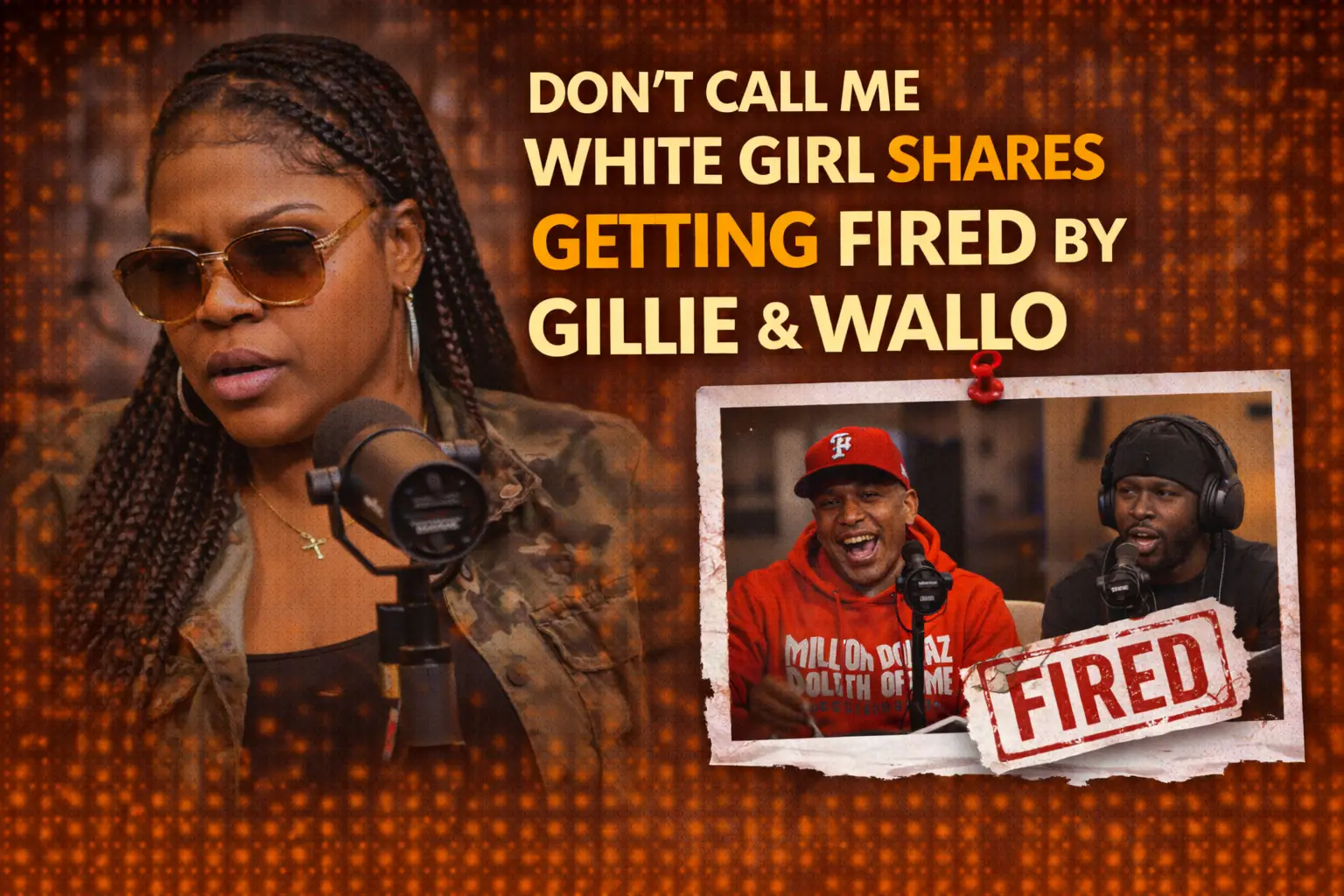
Mona says the moment is stamped in her mind like a timestamp: December 25th, when she “ran out of time” and heard commentary about her old podcast run circling on Clubhouse. According to her, someone praised her performance and asked why she stopped appearing. Then, she says, Gillie responded in a way that felt dismissive and personal.
She recalls the spirit of the reply as: “Regret it… you wouldn’t even know who she was if it wasn’t for me.” She also says he made claims about her work habits that she disputes.
Here’s what Mona says was being put on her name in that moment:
- She was late to every episode
- She got fired because of it
Her pushback is direct and simple. She says she wasn’t late to every episode, and she didn’t get fired for being late. The part that stung, she suggests, wasn’t just the story being told, it was hearing it told so confidently, like it was the only version that mattered.
Even with some context missing from the clip (and with the transcript not capturing every word cleanly), her point lands: she felt misrepresented, and she wasn’t interested in playing ping-pong with public blame.
Upset, but not online for sympathy
Mona doesn’t dress it up. She says she was totally upset, so upset she still remembers the feeling in her body. Yet her next move is what makes the story: she says she never went online to cry about it.
Instead, she describes taking the long route, keeping her public posture calm even when her private feelings were not. In interviews, she says she kept referring to Gillie and Wallo as “my brothers,” despite admitting she held resentment for years.
That choice reads like discipline more than denial. Mona frames it as survival math. She didn’t see how broadcasting pain would improve her situation, so she didn’t. No viral threads, no pity tour, no “y’all won’t believe what happened” monologue. Just quiet frustration and forward motion.
Sometimes the loudest response is refusing to perform your hurt for an audience.
Why she stayed quiet: “I didn’t see the value”
Mona’s reasoning is blunt: she says she didn’t see how speaking out would help her. Part of that comes from street codes she references, including the idea that telling certain stories publicly can feel pointless or messy. She also adds a key detail that keeps her perspective from sounding entitled: she doesn’t think they “owed” her anything.
In her telling, it would have been nice to get a direct call, or a clean ending, but she doesn’t present it as something she was guaranteed. She even notes what changed after she left: she says the show shifted into a different look, with celebrities on every episode, and she frames that as their right.
That’s a complicated kind of accountability: feeling wronged, while still acknowledging the other side didn’t have to build the platform around you. It’s not a fairytale version of industry relationships. It’s the grown version, where you can be hurt and still recognize what wasn’t promised.
North Philly lessons, and why “home” made her tougher
Mona ties a lot of her mindset to where she’s from. She says she started with Gillie and Wallo, and points out that both are from North Philly. One of them, she says, reminds her of her father, which helps explain the tough-love energy she associates with that environment.
She also shares pieces of identity that shaped how she processed everything: she describes herself as having been a “jailbird” and a felon, and notes that Gillie is Muslim, while she says she’s been Muslim her whole life. That mix of shared background and hard edges led her to treat the experience as a lesson.
The lesson she took from it
Mona says that if she could handle that kind of treatment from people tied to home, then she could handle “what people do” anywhere else, whether that’s California or Manhattan. In other words, the thick skin wasn’t theoretical, it was trained.
She extends that to internet chatter too. When people “flag” her or talk about her online, her attitude is basically: okay, what’s next? She admits she makes mistakes because she’s human, but she doesn’t romanticize being dragged for them either.
Podcast math: why she says their numbers didn’t fall without her
Mona also pushes back on a common fan storyline: the idea that once she left, the show must’ve suffered. She says people would tell her things like they stopped watching after she was gone, but she doesn’t believe it made a meaningful dent because the hosts built the brand.
To explain it, she uses Joe Budden as a comparison point. Her argument is that when a platform has a strong core audience, one personality leaving might upset some viewers, but it won’t force the host to come “fly to get” anyone back. In her view, that’s just how strong brands work.
She also adds a personal confession that’s almost funny in its honesty: she says she didn’t watch the podcast before she joined, didn’t watch while she was on it, and didn’t watch after. Podcasts weren’t even her thing, she says, until she started making one.
For listeners who want more long-form context on her broader story outside this clip, she’s also appeared in extended interviews elsewhere, including The Don’t Call Me White Girl Interview on No Jumper.
Going solo: “organized chaos,” production support, and the Laura moment
Mona says her solo podcast choice was intentional. She wanted space to speak from inside her own mind, which she describes as ADD, depressed, aggressive, and shaped by single-mom pressure. Her goal was to let listeners “walk through” those thoughts, but in a way they could actually follow. That’s where production comes in: she describes it as organized chaos, the structure that makes her fast-moving brain digestible.
She didn’t want a co-host, and she didn’t want the compromises that can come with that. Over time, she says, she often had a room full of men on the production side, and eventually one person stayed and grew into a quiet, contrarian presence that functioned like a co-host without dominating the room.
The spark for starting a podcast, she says, came from someone unexpected: a white woman named Laura, a Muslim from Wilmington, Delaware, who told her to start one. Mona says her response was simple: “What’s a podcast?” Soon after, she says she launched, within about six to nine months.
If you’re looking for where to follow the show itself, it’s listed as Don’t Call Me White Girl on Apple Podcasts.
 Photo by George Milton
The compliment in the cold that stuck with her
Near the end of her story, Mona shares a smaller moment that hit just as hard as the big ones. A salon owner once stopped her outside in winter and told her she was proud, saying that everything Mona talked about back when she’d be in the shop getting her hair washed, she’d actually gone out and done.
The twist is Mona says she assumed that woman didn’t even like her back then, because she was loud, she cursed, and she smelled like weed. Yet the praise still came, years later, in passing, like a receipt from the universe.
That’s the emotional punctuation mark on her larger point: you never really know who’s watching, and you don’t always get credit in the moment you think you deserve it.
Conclusion
Mona’s story isn’t just about getting fired, it’s about how she handled the story that followed. She says she felt hurt, denied the “late every episode” claim, and still chose silence over spectacle because it didn’t serve her. The bigger flex, in her telling, is building anyway, with structure, production, and a voice that doesn’t need a co-host to land. What’s your read: is staying quiet strength, strategy, or both?
Learn more about Pulse of Fame and our editorial team. Want to weigh in? Join the conversation in the Pulse of Fame community forum.
Related: Kai Cenat, Kevin Hart, and the “Digital Bridge” Debate: Who Needed Who?