By Agent 00-Tea | Cultural Analyst
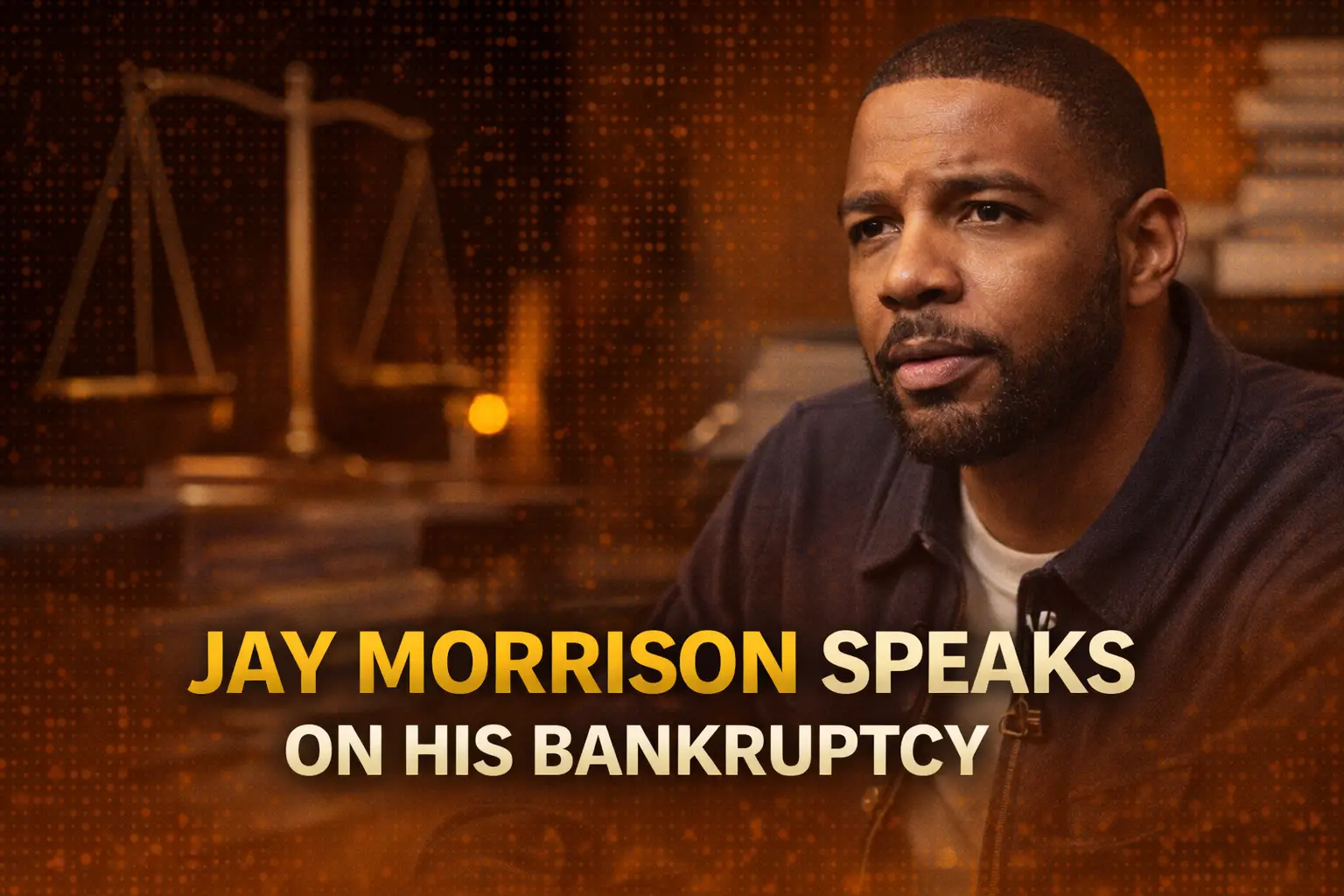
On Social Proof, host David Shands sits down with Jay Morrison to address years of online chatter around the Tulsa Real Estate Fund (often shortened to TREF or TRF), including why thousands invested, why momentum stalled, and what Morrison says he’d do differently.
Why this conversation landed so heavy
Morrison’s name has carried two stories at once: the “viral finance educator” who preached ownership and group economics, and the controversial figure tied to angry investor posts, allegations, and long-running beefs. That split is why this episode matters. It’s less about hot takes and more about hearing Morrison say, on-camera, what he claims is true, what he admits went wrong, and what he says the fund still holds today.
If you’re going to talk big about “Black Wall Street,” you have to talk just as clearly about accountability.
Where Jay Morrison went, and why he says he disappeared
Morrison says he shut down his social presence for years and went “to real life.” His explanation is personal first, business second: he felt hypocritical preaching legacy while his own household was strained. He describes prioritizing his marriage to Ernestine and rebuilding stability at home.
The episode spends surprising time on this, because Morrison connects “nation building” to family structure. Shands pushes back a bit, arguing that people can still build big things while their home life is imperfect, but Morrison stresses sustainability. For him, legacy isn’t just a public holiday or a viral clip. It’s children carrying forward the household’s mission.
That framing becomes important later, because Morrison argues the public storm didn’t just hit him. He says it hit his wife’s life, career, and reputation in a way he wasn’t prepared to manage.
How the backlash affected Ernestine, according to Jay
Morrison describes a major difference in temperament: he says he isn’t as driven by reputation, while Ernestine (an actress and public figure, per his description) is more exposed to social consequences. In the episode, Shands shares an uncomfortable real-world example: being told not to bring Ernestine to an event because she was “attached” to Morrison.
Morrison claims that social exclusion became part of their daily reality. He says Ernestine told him the accusations cost her “relationship currency” in Atlanta and limited where she could show up socially and professionally. That tension, he suggests, wasn’t just online noise. It became marriage pressure.
He also admits he didn’t have the tools or strategy to guide her through that kind of reputational crisis, especially when attacks were loud, persistent, and public.
“Court, not clout”: why he says he refused to fight online
One of Morrison’s clearest positions is that he wouldn’t trade shots online, even when he felt provoked. He argues he’s not going to be a grown man “teasing other men online,” especially with daughters who could one day see it.
Instead, he says he chose litigation. Morrison claims he filed defamation and slander actions against a key accuser and that he won, stating there’s a judgment and ongoing collection activity (he mentions garnishments and an amount owed). He also says court documents will appear in his upcoming book, The Lies People Tell.
Just as important, he tries to draw a bright line between “handling business” and “public shaming.” He says he has information he could post, but refuses to put it on social media because it’s not his style.
The accountability moment: “I dropped the ball”
Shands presses the point many viewers have repeated for years: he’s heard Morrison explain circumstances, but not consistently own mistakes. Morrison responds that he has taken accountability in some settings (like investor town halls), but acknowledges that not everyone sees every platform.
Then he says it plainly: he attempted group economics at a scale “that hasn’t been done in our lifetime,” wasn’t prepared, and dropped the ball. He apologizes, while also insisting he didn’t commit fraud or theft. His metaphor is constant: he got in the ring with something bigger than him and lost rounds.
That’s basically the emotional thesis of the episode: the fund, he says, struggled. His leadership, he admits, had issues. But he rejects the “scam” label as a lie.
How Tulsa Real Estate Fund took off fast, then hit resistance
Morrison describes a rocket launch. He says TRF went live June 1, 2018 and raised roughly $4 million in about 24 to 48 hours, then averaged around $1 million per month for a period. The plan, he says, was to raise $50 million and act like a “rich uncle” for the community, funding deals and development other lenders wouldn’t touch.
He attributes the early heat to visibility and cultural momentum, including celebrity attention and viral promotion. However, he says backlash also came immediately. Morrison claims a wave of bloggers, podcasts, and online critics labeled the fund a Ponzi scheme within the first week, and that the noise escalated quickly.
A key turning point, according to him: federal scrutiny. He states that roughly six months in, the FBI and SEC showed up, triggering an extended investigation that cost significant legal fees and disrupted operations (he describes devices being taken from staff and team stress).
He says fundraising slowed sharply after that. And because the business model relied on raising capital to deploy capital, the current turned into an uphill swim.
The $100,000 giveaway dispute that he says lit the match
A lot of Morrison’s story centers on one business partnership that went bad. He describes planning an event that included a $100,000 giveaway, with the giveaway split 50/50. In his version, the partner pushed to pre-select an in-person winner for “optics,” which Morrison says he refused.
He claims tensions rose through arguments about expenses and professional conduct, including incidents where he says the partner cursed out his team. Morrison says he ended the partnership and wanted refunds and cancellation, but the partner moved forward anyway and then publicly accused Morrison of stealing the full $100,000.
Morrison also admits his own petty moment: he says he controlled the event domain and shut it down as retaliation. He labels that decision wrong by his current moral standards.
He argues the giveaway storyline became a marketing weapon, used to pressure his associates and shake public trust in the fund. In his telling, it helped turn “online chatter” into a sustained campaign that made collaborators hesitant to be seen with him.
Timeline of Events:
- Jay Morrison says he stepped back from social media to focus on his household and marriage.
- Tulsa Real Estate Fund launches (June 2018, per Morrison) and raises millions quickly.
- Morrison says online criticism begins within the first week, including claims it was a scam.
- He claims federal investigations followed months later, increasing legal costs and operational strain.
- Morrison describes a separate event partnership dispute tied to a planned $100,000 giveaway.
- He says allegations and public pressure contributed to business boycotts and lost opportunities.
- The Legacy Center (the “Black House”) opens with major attendance, then struggles (pandemic timing and social backlash are cited).
- Morrison says the Black House was later sold (he mentions a sale around $3.7 million).
- He claims the fund stopped raising capital after legal advice, creating long-term strain.
- Morrison says he’s rebuilding “brick by brick,” while preparing a book that includes his version of events.
The money questions: pay, costs, the “Black House,” and the home rumor
Morrison states he averaged about $300,000 per year in compensation over seven years. He also says Ernestine stopped getting paid years earlier (he cites 2018 or early 2019). He claims the fund raised about $12.5 million total over roughly four years.
He also describes what he calls crushing fixed costs: escrow, transfer agent fees, audits, compliance, legal, and even mailing expenses (he mentions K-1 mailings when the structure required them).
Shands raises one of the most repeated accusations: “You bought your home with Tulsa money.” Morrison answers carefully. He says he bought property using fund capital as part of a larger land play, then bought the house portion back from the fund at a premium (he mentions $20,000 over market), returning money to the fund and granting the fund development rights on adjacent land. He says he covered the personal carrying costs and disclosed the structure.
Finally, the “Black House” question: Morrison says selling it provided needed cash as the fund hit the wire, and that they liquidated parts of the portfolio to reduce burn and restart.
What We Know vs What’s Speculation
Here’s a simple way to separate what’s stated on the episode from what’s assumed online.
| Category | Details |
|---|---|
| What’s stated in the video | Morrison says TRF raised about $12.5M over four years, faced investigations, stopped raising capital after legal advice, carried major ongoing admin costs, sold the Black House (he cites about $3.7M), and is rebuilding with remaining assets. |
| What’s alleged | Morrison describes defamation and slander by a key accuser, claims court wins and money owed, and says smear campaigns led to boycotts and lost business opportunities. |
| What’s speculation | Whether different leadership choices would have fully prevented public backlash, whether raising to $30M to $50M would have stabilized the model, and how much of the failure came from external attacks versus internal execution. |
What Jay says comes next: “brick by brick,” plus a book built for receipts
Morrison says the current plan is slower and more grounded. He describes focusing on lower costs, using strategic partnerships, and even using personal credit lines to help create deal flow. He also mentions a website for submitting opportunities (worktrf.com) and says audits and reporting remain part of what partners should expect.
Then there’s the media reset. Morrison introduces his book, The Lies People Tell, saying it’s both self-accountability and a written reference point so he doesn’t have to keep defending himself on every platform. He also describes offering free training materials through his Jay Morrison Academy funnel as a value add for people who stayed patient.
He adds one more stat meant to signal loyalty: out of roughly 15,000 investors, he claims only about 2,000 requested redemptions over the years, meaning the majority stayed in despite the noise.
Official Links Referenced in the Video Description
Note: This article discusses commentary from a publicly available video. Claims described are attributed to the speaker(s) and are not presented as confirmed facts.
Source: YouTube
Conclusion: what this episode really adds to the story
This interview doesn’t magically settle every argument. It does, however, put Morrison on record saying the quiet part out loud: he aimed at group economics, ran into forces he didn’t expect, and failed at key moments without believing he committed a crime.
For viewers, the biggest takeaway is the difference between “bad outcomes” and “bad intent,” plus how fragile trust becomes when leadership, messaging, and ops don’t move as one. The rest is what happens next: whether “brick by brick” turns into a comeback, or just a lesson the internet quotes forever.
Learn more about Pulse of Fame and our editorial team. Want to weigh in? Join the conversation in the Pulse of Fame community forum.
Related: Charlamagne Tha God on the $200M iHeart Deal, Black Effect Ownership, and Why Au