By Agent 00-Tea | Cultural Analyst
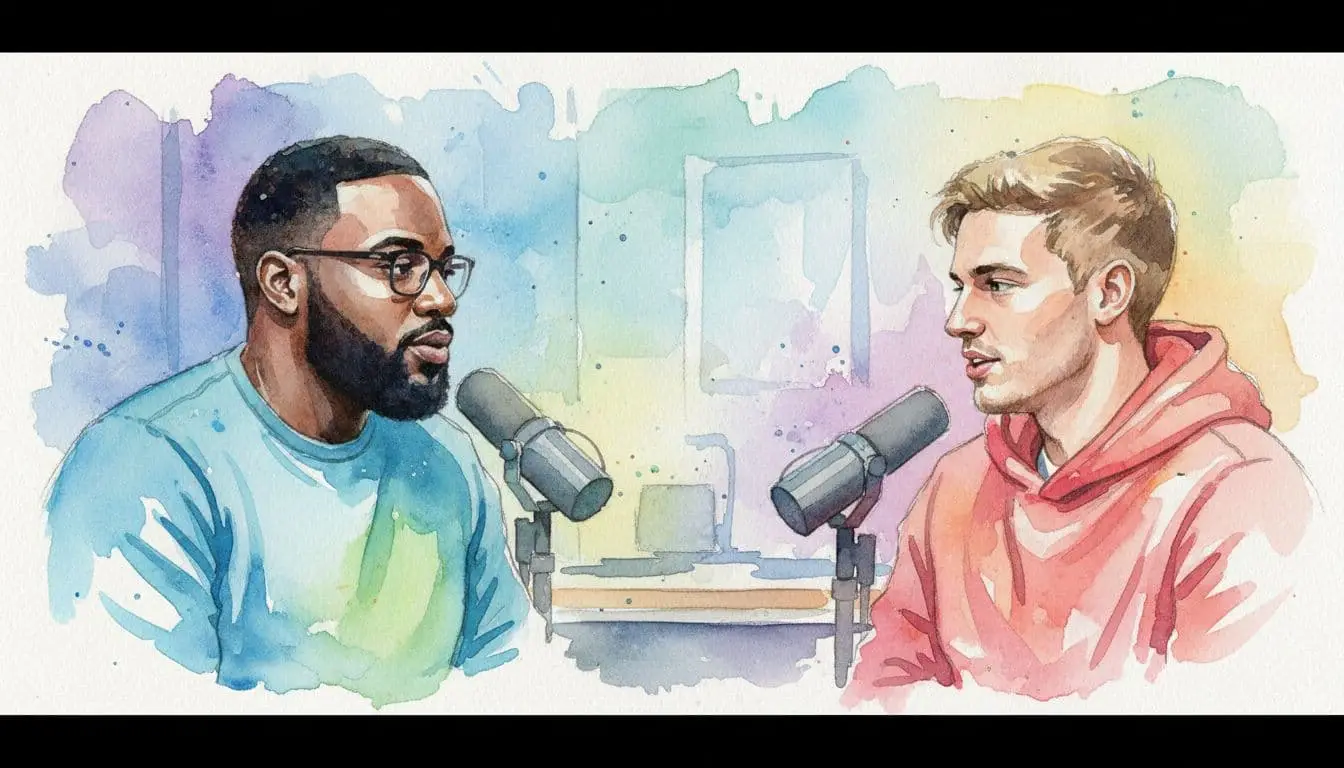
In this sit-down, Aba (of Aba N Preach) walks Sneako through his public evolution, from early scripted YouTube videos about authenticity, to pandemic-era anger, to his conversion to Islam, plus the controversies that still trail him.
The vibe is part career retrospective, part values debate, and part reality check about how messy creator “friendships” get when thousands of strangers feel entitled to your relationships.
“I miss the old Sneako,” and why he thinks people say it
Aba brings up the familiar comment section complaint: people claiming they miss “old Sneako.” Sneako’s response is blunt. The older content still exists, and he says he’s continued making things even during periods when he was banned. He compares the nostalgia to the “old Kanye” meme and argues the shift is less about format (scripted videos versus streaming) and more about politics and “red pill optics.”
Sneako repeats a line that he treats like the throughline of his career: “seek truth through funny.” He sees his earlier viral videos as a critique of hyper-self-awareness, social media posturing, and people building a persona like a Sims character. Even at 17, his “internet authenticity” angle was already there, he says, just aimed at different targets.
Aba plays an early-era clip where Sneako breaks down image curation and how people perform for attention, even when they pretend they don’t care. The content is edgy, but the core message is simple: the internet turns personality into a costume, and most people wear it without noticing.
Sneako argues that a lot of the “miss the old me” crowd doesn’t actually track his work closely. In his view, they mostly track headlines and clips, especially during years when he says bans and platform restrictions shaped what people thought he was.
For readers who want a longer version of Sneako discussing faith and public fallout elsewhere, the interview references similar themes to other appearances like Sneako on converting to Islam and being canceled.
The outsider origin story, then the pandemic switch flips
When Aba asks what Sneako was looking for early on, Sneako doesn’t go mystical. He says he was chasing “truth,” mostly because his life never fit clean categories. He describes growing up mixed-race, born in New York City, raised largely in New Haven, Connecticut, and attending a mostly white school on scholarship while living in a city with real crime around him. The result, he says, is a long-term feeling of being an outsider, not fully belonging to any group.
That personal context becomes the bridge into the “red pill” era. Aba plays a clip from the 2020 Harlem period, right before the pandemic. Sneako describes finally moving into Manhattan, then watching lockdowns hit right after. He talks about insecurity, masculinity, and the pressure young men feel when they don’t have guidance. In the clip, he also admits he has an audience of young men who treat his words like direction, which he describes as scary power.
Sneako says the bigger change wasn’t just dating discourse. The real catalyst, in his telling, was COVID policy, lockdowns, and what he saw as obvious contradictions, including what content was allowed to be discussed online. He describes getting angrier after that period, aligning it with the idea of “red pill rage,” the moment someone feels like they’ve woken up and can’t unsee it.
Patrice O’Neal comes up as a major influence, both in terms of comedy and in terms of blunt talk about relationships. Aba largely agrees that young men were lost, even if they disagree on why and what the right response looks like.
Liberal society, conservative society, and the “what are we celebrating?” fight
A big chunk of the interview turns into a values debate. Sneako criticizes what he sees as liberal inconsistency, using the trans issue as an example. Aba pushes back by saying conservatism often shows up as social restriction, and also points out the creative contradiction: liberals tend to build the spaces where art thrives, while conservative spaces often mock art as weak or “soft.”
Sneako agrees with that critique quickly and even jokes that conservatives do not tend to produce great art. The exchange is one of the few moments where they fully meet in the middle.
Then the conversation detours into a story Sneako has told publicly before about sexual degeneracy in his early 20s, including a couple-swap moment he says he regretted. He frames it as part of what a permissive environment can normalize. Aba’s counterpoint is that conservative societies still have hidden behavior, they just bury it.
From there, the real argument is about “public celebration.” Sneako says some behaviors should come with shame, not parades, because celebrating non-productive identity doesn’t inspire society. Aba responds that parades can be about safety, acceptance, and acknowledging progress after decades of open hostility.
They don’t resolve it. They just reveal what they value. Sneako prioritizes restraint and social direction. Aba prioritizes pluralism and public protection, even when he finds some expressions excessive.
Sneako’s conversion to Islam, and why he insists it isn’t a grift
When the conversation reaches faith, Sneako anticipates the skepticism. He says he doesn’t see the practical upside of pretending to believe. He even points to moments where being publicly Muslim costs him opportunities and creates extra scrutiny.
Aba brings up the “steelman” version of the grift accusation: in earlier red pill circles, Islam sometimes got treated like a masculinity aesthetic, especially in shallow conversations about polygamy. Aba argues that some influencers used that association to sound authoritative. Sneako agrees that the fixation is belittling and says most Muslims don’t live that way.
Sneako anchors his faith arc in Malcolm X. He says he read Malcolm X’s autobiography around age 10 to 12, related to the transformation, and later even tweeted (years ago) that he considered converting. He also explains why Catholicism never fully fit him, including objections to concepts like the Trinity and praying through saints, while saying he always prayed directly to God.
When Aba asks what Islam has given him, Sneako describes clarity: less fear of death, more sense of purpose, and a belief that people will worship something either God, ego, money, celebrities, or politics.
He also lists quieter practices people don’t see online: prayers (including Friday congregational prayer), charity (zakat), and personal routines he uses for grounding and protection when he’s traveling or doing public streams.
For another longform discussion in a similar lane, there’s also a podcast episode focused on Sneako’s conversion to Islam.
Haiti, “cats and dogs,” voodoo talk, and Aba’s main critique: standards of proof
The most heated segment is about Haiti. Sneako says he pushed back on a viral rumor that Haitians were eating pets in the US, and he felt abandoned by other Haitian creators who stayed quiet. He explains his personal link: his father is Haitian, he’s visited regularly (though he says it’s unsafe now), and he speaks some Creole.
Then Aba plays clips where Sneako repeats family claims that some people in Haiti eat cats in certain areas, including an alleged hangover “cure.” Sneako later calls a Haitian friend (Lens) into the conversation, who says it happens in some parts of Haiti, while also agreeing that the US viral claim was false.
Aba’s critique is consistent: repeating secondhand claims online can harden into “truth” for audiences who will never fact-check. He draws an analogy to how rumors spread in his own experience growing up around Ethiopian communities, where word-of-mouth becomes “everyone knows” without firsthand proof.
This is where Aba draws the line. It’s not “don’t talk about your country.” It’s “talk about what you can actually back up.”
They also clash on voodoo and earthquakes. Sneako references a theory that Haiti’s suffering connects to witchcraft, then Aba responds with a simple alternative: geography and tectonic plates. Sneako says he’s repeating theories and patterns he’s heard, not declaring scientific certainty. Aba argues that repeating the theory still shapes public perception, especially of places that already get reduced to stereotypes.
The conversation later touches stop-Asian-hate crime narratives too, with Sneako claiming certain patterns, Aba asking for data, and Sneako eventually pulling a Bureau of Justice Statistics-style table to argue disproportionate rates. Aba’s pushback isn’t that numbers never matter, it’s that wording matters because “majority,” “most,” and “disproportionate” all mean different things.
This is also the part of the interview that explains why online debates spiral into keyword soup. Once “Epstein files” gets mentioned, the discourse often turns into a magnet for hyper-specific, name-stacked searches. Think of phrases people toss around like “Prison Guards Epstein Tova Noel Rayshaun Jones,” not because it proves anything by itself, but because it signals how modern outrage travels through tightly packaged labels and clusters.
The Ye-related song controversy and the Nick Fuentes alignment questions
Near the end, Aba asks Sneako to reflect on the most recent blowup involving a song associated with Ye (Kanye West) and a nightclub moment that triggered bans, public condemnation, and a wave of online backlash. Sneako insists it’s “just a song,” says the punishment is disproportionate, and frames it as a protest against speech boundaries, not an endorsement of history’s worst ideologies.
Aba pushes back: repetition normalizes symbols, even if the person says it’s a joke.
That leads straight into the most politically sensitive area, Sneako’s collaborations and overlap with Nick Fuentes and “America First” politics. Sneako repeatedly frames his priority as opposing Israel’s influence in US politics (AIPAC is specifically mentioned), and he sees that coalition as the most effective tool toward that end. Aba’s central worry is different. He thinks aligning with movements that prefer a white-majority national identity creates downstream harm for Muslims, Haitians, and other minorities, even if today’s collaboration feels strategic.
They circle the same question in different forms: can you partner with someone on one issue without becoming a “useful tool” for the rest of their worldview?
They never land it cleanly, but both sides state their logic. Aba emphasizes practical consequences and political power. Sneako emphasizes coalition-building around what he sees as the biggest threat.
Art, faith, and the part of Sneako that wants to be a filmmaker
The last stretch is quieter. Aba asks about Sneako’s creative life beyond politics, including film credits, fashion interests, modeling work, and music. Sneako says art satisfies his need to create, and he still sees himself as an artist first, streamer second.
They also acknowledge a real tension: religious rules can conflict with artistic expression, especially in Western life. Sneako admits he enjoys American freedoms even when they don’t match his ideal religious discipline. He mentions a time he considered moving to Bosnia, but says he currently loves America and is still figuring out the long-term path.
Aba ends by reflecting on why he tried to approach the interview in good faith. He doesn’t claim Sneako is perfect, he just sees enough consistency, especially around unpopular positions, to avoid writing him off as purely performative.
If you want to keep up with Aba N Preach’s official ecosystem, the video description points viewers to Aba N Preach merchandise and their community Discord server.
Conclusion: a messy conversation, but a revealing one
This interview works because it shows the uncomfortable part of internet fame: your beliefs, alliances, and even your curiosity become public property. Sneako frames his life as a search for truth that eventually led to faith. Aba frames the real issue as standards, who you empower, and how your words scale once thousands of people repeat them.
The clean takeaway is simple. If creators really are more influential than politicians now, then the hardest job is not talking louder, it’s being careful about what you treat as real.
Learn more about Pulse of Fame and our editorial team. Want to weigh in? Join the conversation in the Pulse of Fame community forum.
Related: From YouTube Kid Star to OnlyFans Millionaire: Piper Rockelle’s Nightline Pivot