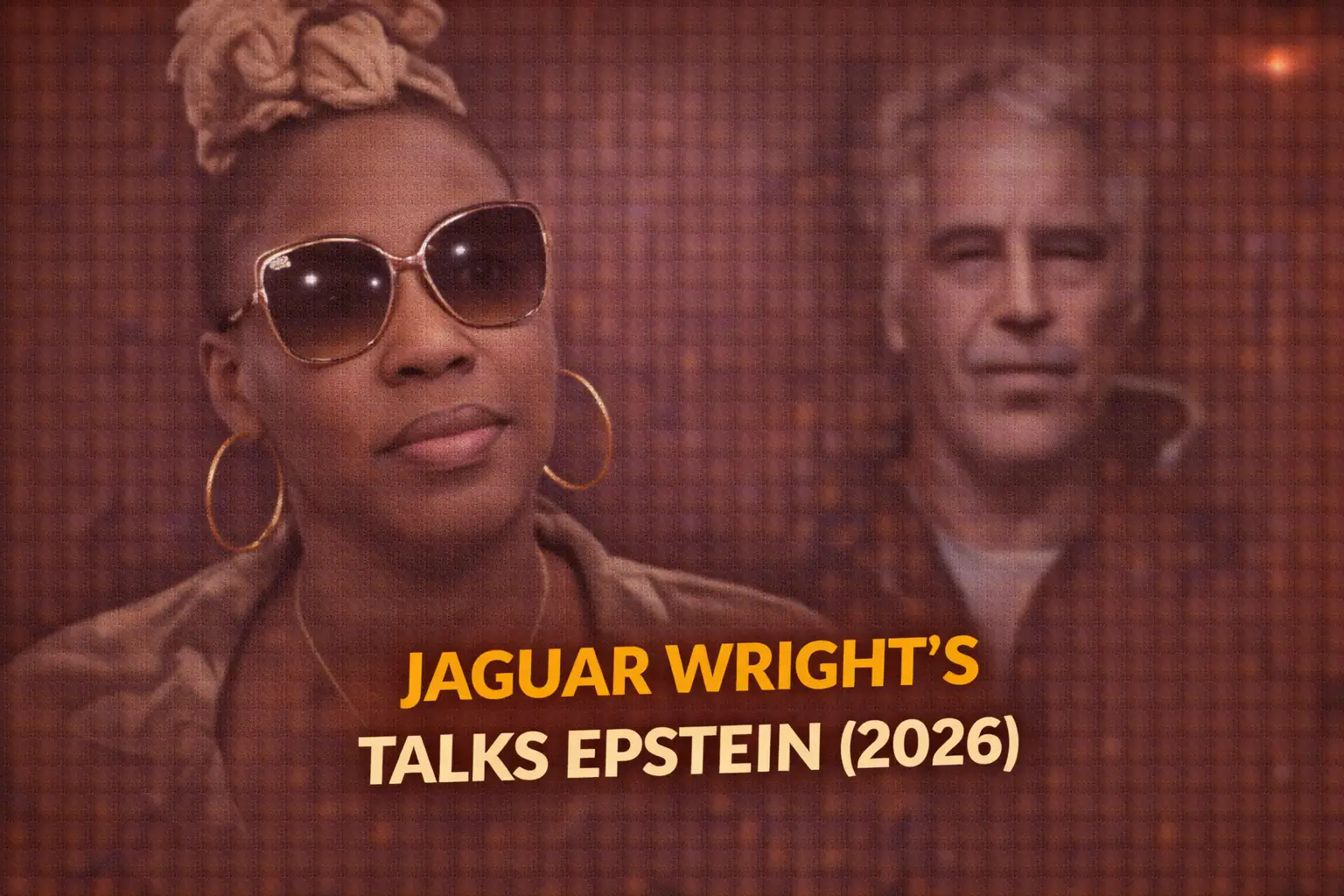
In a wide-ranging sit-down with RealLyfe Productions, Jaguar Wright frames the moment as bigger than one headline, or one famous name. To her, the real story is the machine behind the scenes, the one built to soften reputations, reroute public attention, and outlast outrage.
“How’s your mental?” Why Jaguar Wright says she’s fine, just tired of the script
By Agent 00-Tea | Cultural Analyst
Jaguar starts the conversation by pushing back on a question she says she’s been forced to answer for years: whether she’s mentally well. She describes a long history of being labeled “crazy,” including claims of being hit with legal and medical pressure, from welfare checks to multiple evaluations. In her view, the “mental health” framing gets used as a shortcut to discredit anyone saying uncomfortable things.
She doesn’t describe herself as a whistleblower or a prophet, either. Her answer is simpler and sharper: she’s Jaguar Wright, and she’s done chasing approval. The emotion she keeps returning to is not panic, or even frustration. It’s boredom. Not because the topic is small, but because she believes the public cycle is predictable: deny, mock, dismiss, then act surprised when new documents land.
That boredom is also a warning. If a story has to be repeated ten times before it’s taken seriously, who benefits from the delay?
Epstein files and the “weirdo vs decent people” framing
The conversation pivots to Epstein, and Jaguar’s main point is that the public keeps trying to turn this into a party issue. She rejects that completely. In her telling, both major political sides have had time and opportunity to reveal more, and both have failed to satisfy public curiosity.
Her bigger claim is cultural: this is not “left vs right,” it’s “weirdos vs decent people.” She argues that power circles protect their own because they can. Lawyers, private investigators, media relationships, and reputation managers create a shield that everyday people don’t have access to.
She also points to media silence as its own kind of tell. In the interview, she calls out TMZ and Harvey Levin by name, questioning why certain mentions or associations don’t get the same loud, relentless coverage.
For readers who want to look at primary sources rather than social media summaries, the Justice Department has an Epstein disclosures library posted online, including datasets and releases: DOJ Epstein disclosures library.
“Epstein and Diddy aren’t that different,” according to Jaguar
A major theme of the episode is Jaguar’s repeated comparison between the Epstein scandal and the allegations surrounding Sean “Diddy” Combs. She references Epstein’s earlier legal outcomes and argues that systems often treat the richest, most connected figures as “manageable problems,” not urgent threats.
From there, she argues the public should be asking uncomfortable consistency questions. If one case triggers mass alarm, why do similar claims in another case get treated like gossip, or content, or background noise?
Jaguar cites allegations that underage individuals were involved in claims connected to Diddy, and she expresses anger that certain lawsuits or claims did not become central in the public trial narrative. She also brings up “Little Rod” (as discussed in online coverage of Diddy-related claims) and argues that information supposedly connected to raids and filings gets selectively used.
Her broader message is less about one defendant and more about a pattern: cases can be shaped by what prosecutors highlight, what gets excluded, and what the public forgets by the time the next headline hits. For context on how viral narratives and misinformation can spread around high-profile cases, this NPR piece is a useful read: NPR report on Diddy conspiracy narratives.
Why some victims stay anonymous: fear, money, and a justice system that feels optional
When asked about “Jane Doe” connected to Epstein-related records, Jaguar refuses to dig into identifying details and makes it clear she doesn’t support exposing people who wanted privacy. Her explanation for anonymity is blunt: fear.
She describes a world where the powerful can apply pressure without ever stepping into a courtroom. People with money can hire teams to locate you, watch you, contact your job, stress your family, and drain your will to keep fighting. Jaguar mentions a case involving a victim described as autistic who, she says, faced such intense pressure that the person ultimately dismissed a lawsuit “with prejudice,” which would prevent it from being brought again.
She also points to the deterrent effect of watching high-profile cases end with punishments she views as too light. In that atmosphere, coming forward can feel like volunteering to be publicly picked apart, only to watch the system shrug at the end.
If the question is “Why don’t they just speak up?” Jaguar’s answer is that many people do not see a path where speaking up equals protection.
The list fatigue problem and why “names” are only the surface
Once the talk shifts to names connected to Epstein files, Jaguar argues that dumping a massive volume of documents can be its own tactic. Release enough pages and people get tired, distracted, or overwhelmed. She says her circle has been slowly combing through materials day by day, because a flood of information can hide key details in plain sight.
The interview touches on a mix of high-profile names and references that have circulated online, including Stephen Hawking, Elon Musk, and Bill Gates, as well as deceased figures like former NBA commissioner David Stern and Michael Jackson. Jaguar’s point is not that every mention equals guilt. Her point is that powerful ecosystems often decide which names become front-page scandals and which names get treated like footnotes.
To track court documents and public releases in a more searchable format, there are independent archives built around organizing what’s already public. Two that get referenced often in online research circles are Epstein Secrets document archive and The Epstein Island research tool. They don’t “prove” anything on their own, but they can help readers find context faster than scrolling viral posts.
Jay-Z, the Super Bowl test, and “the machine” working overtime
A big late segment centers on Jay-Z, and Jaguar’s view that he has long been treated as a protected figure. She references online chatter about whether he’s in the country and suggests a public appearance (like the Super Bowl) would be read as a signal. Still, she says presence or absence doesn’t change the core dynamic: reputation management never sleeps.
She describes Jay-Z as charming and controlled “until he’s not,” and argues that powerful people don’t move like movie villains. They blend in. They collect loyalty. They reward silence. Jaguar claims that people in the industry are conditioned to protect icons because careers, deals, and access depend on it.
The conversation also references Nicki Minaj’s public comments aimed at Jay-Z during Grammy week, with Jaguar noting that the themes sounded familiar to her, like a “same song” moment. Her bigger frustration is what she sees as selective coverage, selective outrage, and a refusal to interrogate long-running power structures until the story becomes unavoidable.
R. Kelly, timing questions, and the way stories get recycled
Jaguar and the hosts also discuss R. Kelly, including his projected release timeline and a recent book release by a woman connected to earlier public allegations. Jaguar questions the timing, not by dismissing victimhood, but by arguing that media cycles can be used to redirect attention. She also discusses how families, money, and industry access can shape whether stories go to court, disappear, or re-emerge years later as content.
Another detail she shares is seeing explicit material circulate inside studio spaces before it spread widely, which she presents as evidence that unhealthy behavior was normalized in professional music environments. It’s a harsh claim, but it supports her main argument: culture isn’t just what fans see. Culture is what insiders tolerate.
Grammys 2026, Kendrick Lamar doubts, and Jaguar’s shift away from industry validation
Jaguar says she did not watch the Grammys, only catching clips online. She briefly salutes an artist she calls “Balo” for getting recognition, while expressing discomfort about tributes and industry optics. She also mentions recent losses in the music world and criticizes how quickly online “detective” energy fades when the next trend arrives.
On Kendrick Lamar, her stance is complicated. She credits his success and impact, but questions what it means when artists call out one kind of alleged harm while staying quiet about the rest. She frames it as a larger pattern: people go silent when heat is high, then return to touring and normal promo when the moment cools.
Conclusion: “My receipts are time and reality”
Jaguar ends with a mix of warning and resolve. She says more surprises are coming, but she’s tired of being dismissed as a liar or labeled unstable. She also asks supporters to contribute to her efforts, including a legal defense fund, and directs people to her site for official info.
Her final message isn’t complicated. Don’t call someone crazy because they make you uncomfortable. Ask what’s being protected, who gets coverage, and who gets silence. In her words, time and reality are the receipts, and she believes they keep cashing.
If you want to follow the creators behind the interview, RealLyfe Productions lists official platforms in the video description, including RealLyfe Productions on YouTube and RealLyfe Street Starz on Patreon.
Learn more about Pulse of Fame and our editorial team. Want to weigh in? Join the conversation in the Pulse of Fame community forum.
Related: Surviving Epstein: Lisa Phillips on Grooming, Power, and Speaking Her Truth