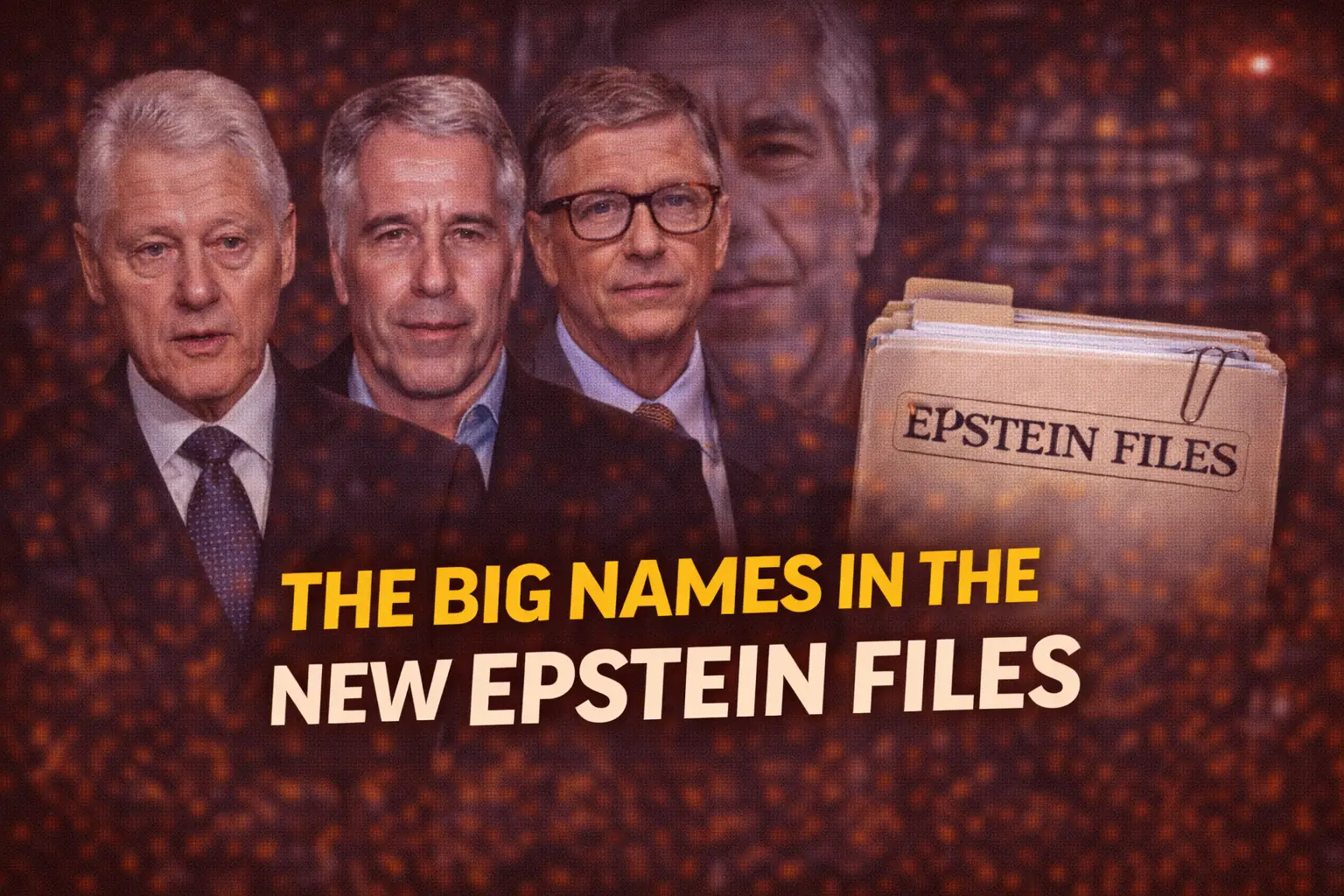
A new batch of documents has people scanning for names they recognize, and side-eyeing the government for what’s still missing.
The fight over releasing the Epstein files
By The Legal Eye
The core tension starts with a simple order from Congress: Y’all got to release those files. The Department of Justice (DOJ) response, as described, was basically: All the files? Congress: Yep.
But what the public got was not “all.” The video claims the DOJ released about 3 million pages out of 6 million, after delays and stalling. That gap matters because it changes the story from “transparency” to “selective transparency.”
The video also frames the DOJ’s public-facing justification as protection for victims. That’s a real concern in cases like this, but the speaker’s point is blunt: if lawmakers asked for everything, why is the release only partial?
If you want to track official postings tied to this topic, the DOJ hosts an “Epstein Library” style page under its disclosures section: DOJ disclosures page.
Why “only half” set people off
The video paints the withheld half as the real cliffhanger. The logic is simple: if the half that was released already includes major names and ugly claims, then the half being held back feels like it could be worse.
The speaker also suggests the DOJ posture reads like: “We already gave you something big, so let it go.” That might work in a normal PR cycle. This is not a normal PR cycle.
The demand, as presented, is not just for pages, it’s for accountability. And the size of the release (millions of pages) makes it easy for the conversation to turn into a grind: people arguing over what’s “in there” while the bigger questions sit untouched.
The big names the video says appear in the documents
The video calls out a mix of politicians, billionaires, and music stars. The key names highlighted are:
- Donald Trump
- Elon Musk
- Bill Gates (referred to as “William Gates”)
- Jay-Z
- Pusha T
- Howard Lutnick (spotlighted as a lesser-known but important name)
The speaker draws a sharp line between emails that investigators obtained versus allegations that appear as claims from accusers or witnesses. That distinction matters, because it changes how “appearance in files” should be read.
Elon Musk: the video’s claims about island-related emails
Public denial vs what the speaker says is in the emails
In the video, the speaker recalls Musk publicly distancing himself, essentially saying he never really spoke to Epstein and that Epstein tried to invite him somewhere, and he declined. The speaker adds Musk’s comment suggesting people should look at Trump instead.
Then the tone changes: the video claims the documents include email correspondence between Musk and Epstein, with Musk allegedly asking about visiting an island. The speaker says this contact continued “year after year.”
Why the timeline is the point
The video emphasizes that Epstein’s criminal conduct was already publicly known by the mid-2000s. The speaker’s argument is that many wealthy and powerful people later claimed they cut contact around 2005 to 2008, once the news was out.
But the video claims Musk’s messages continued later, including a reference to 2012, with lines like wanting to “pull up,” asking about holiday timing, and even asking about the “wildest parties.” The speaker also alleges Musk mentioned bringing his wife (at the time) and asked logistical questions about a helicopter.
The punchline, as told: Epstein allegedly turned him down one year by saying he would not be there, claiming he’d be in New York. The speaker presents it as an awkward rejection inside an already uncomfortable story.
Bill Gates: the video’s claims about a draft email and blackmail vibes
What the speaker says appears in Epstein’s emails
The video describes a message that is framed as Epstein drafting an email to himself about Gates. The speaker claims it includes accusations about Gates seeing “Russian girls,” cheating on his wife, and then a claim about a health issue that Gates allegedly wanted handled quietly.
The speaker then adds a motive: Epstein allegedly wanted something in return, describing him as someone who liked blackmail, with a demand for a “house” presented as the price of silence.
Denials and why “emails” hit differently
The video notes that Gates denies wrongdoing, and it also says Musk denies it too. Still, the speaker argues it’s harder to brush off because these are described as emails the FBI obtained, not just internet chatter.
That’s a key theme of the video: not every “name in the files” appears the same way.
Trump, Jay-Z, and Pusha T: allegations rather than emails (as described)
After covering Musk and Gates through the lens of emails, the video says Donald Trump, Jay-Z, and Pusha T show up in a different lane: allegations from accusers describing what they say they saw, or what they say they were told.
For Trump, the speaker claims he appears frequently in accounts describing parties, including claims that he had parties of his own. The speaker says there are graphic details in the material, but the takeaway presented is volume: Trump’s name comes up a lot, and the video frames it as hard to ignore.
For Jay-Z and Pusha T, the video describes a single accuser claiming she saw Jay-Z at a party in 1994, and that Harvey Weinstein was also there. The video also claims the accuser described Pusha T as a “handler,” alleging he gave people something that made them very sleepy, and they later woke up at parties.
These are serious claims, and the video presents them as allegations, not proven facts.
For broader context on what’s been publicly released and how reporting has summarized it, see: CBS News summary of Epstein files released so far.
Howard Lutnick: the neighbor story vs the emails (as told in the video)
The speaker spotlights Howard Lutnick, describing him as “your Secretary of Commerce” and also as Epstein’s next-door neighbor. The video recounts an older interview where Lutnick allegedly sounded furious about being connected to Epstein at all.
In the retelling, Lutnick describes introducing himself with his wife, seeing a massage table, feeling that the setup was “weird,” and promising they’d never be in the same room with Epstein again. The speaker jokes that the performance was so intense it felt Oscar-ready.
Then comes the reversal: the video claims Lutnick appears in emails asking Epstein, When can I pull up? It also claims Lutnick’s wife emailed too, following up and asking to bring friends named Mary and Matthew.
The speaker’s point is not subtle: if the interview was meant to close the door, the emails make it look like someone kept trying to open it.
Comparing “email proof” vs “allegations” in the video’s breakdown
| Name (as discussed) | How they appear (per the video) | What the speaker emphasizes |
|---|---|---|
| Elon Musk | Emails | Requests to visit, timeline after public scandal years |
| Bill Gates | Emails (draft described) | Claims of misconduct, plus alleged blackmail tone |
| Donald Trump | Allegations | Frequent mentions, party-related accounts |
| Jay-Z | Allegations | One accuser’s claim tied to a 1994 party |
| Pusha T | Allegations | Described as a “handler” by one accuser |
| Howard Lutnick | Emails | “Pull up” messages contrasted with strong public denial |
Timeline of Epstein scandal awareness (as framed in the video)
- 2005: The video frames this as the period when Epstein’s conduct became publicly known.
- 2008: The speaker says many powerful people later claimed they cut contact around this time.
- 2012: The video claims Musk was still emailing about visiting.
What happens if nothing happens?
Near the end, the speaker questions the value of documents without action. Millions of pages can turn into a spectator sport if nobody with power treats the information like evidence that deserves follow-through.
The video also calls out a past claim attributed to the FBI under Trump: that there were “no names” and no real list. The speaker argues the current release makes that claim look shaky, and concludes bluntly: somebody’s lying.
As more pages are reviewed, the speaker promises updates. For now, the central takeaway is clear: people don’t just want files, they want justice.
Learn more about Pulse of Fame and our editorial team. Want to weigh in? Join the conversation in the Pulse of Fame community forum.
Related: The Tasha K Files: Corey Holcomb accusers lies exposed on Tasha K.