Did DL Hughley Unwittingly Provide Ammunition for Future Legal Battles on VladTV?
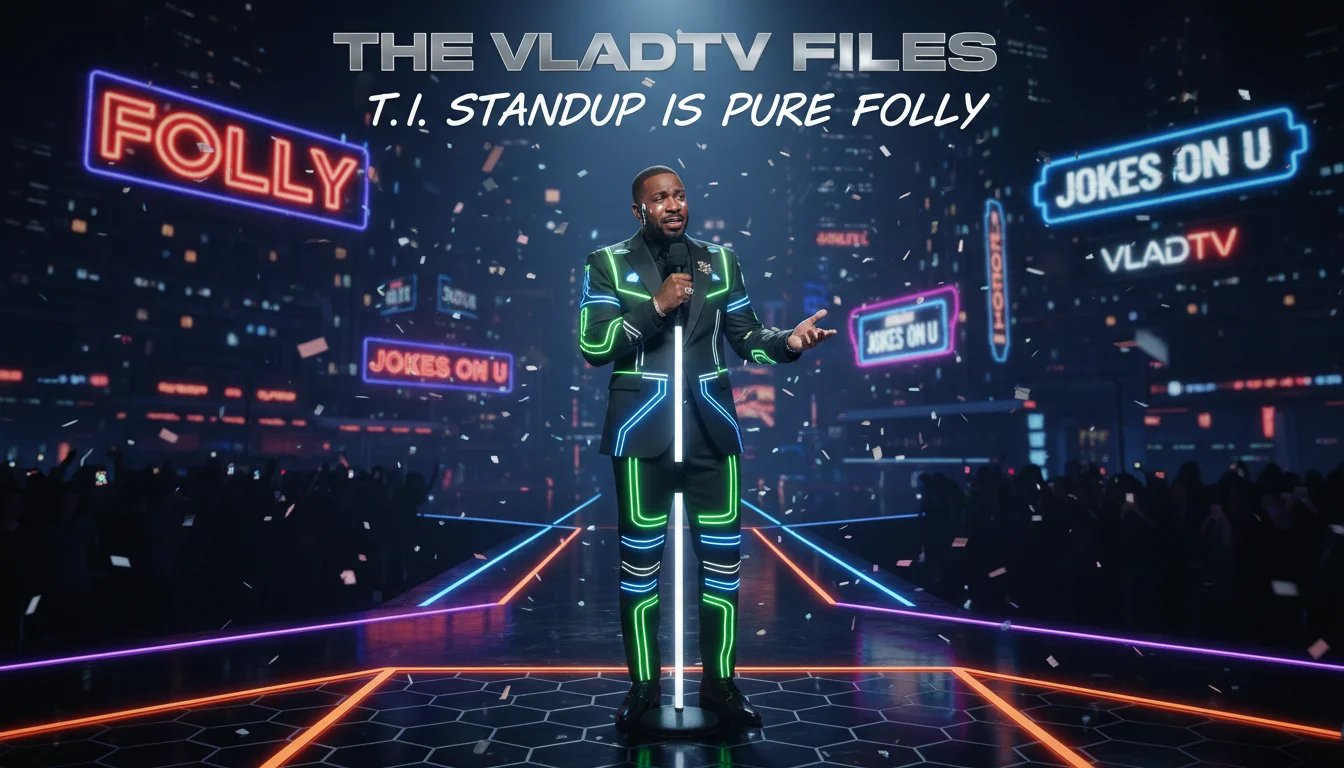
The platform known for getting people to talk has done it again. VladTV, notorious for its long-form interviews that often delve into sensitive topics, hosted DL Hughley, where the comedian weighed in on T.I.’s transition to stand-up comedy. While the main thrust of the conversation centered on the merits of T.I.’s comedic abilities, the discussion, characteristic of VladTV, brushed against potentially problematic areas with legal implications. The key question we’ll explore here is: did DL Hughley, in offering his opinion on T.I.’s past and present conduct, inadvertently provide ammunition for future legal battles, whether his own or others? The analysis will focus on the concept of “self-snitching,” a term often used (though not legally defined) to describe the act of providing information that could be used against oneself or others in a legal context.
Firstly, it’s important to acknowledge that opinions, even strongly worded ones, are generally protected under the First Amendment. Simply stating that T.I.’s stand-up is comparable to Michael Jordan playing baseball, while perhaps controversial, does not create legal exposure. The danger lies in the surrounding context and the specific details discussed during the interview. VladTV interviews are known for their meandering nature, often touching upon past events, personal experiences, and anecdotal information. It is in these seemingly casual digressions that legal pitfalls can arise.
One area of concern, and one common across many VladTV interviews, is the potential for discussing past actions, particularly those that might relate to ongoing or future legal proceedings. While I cannot definitively say what was said that would cause legal problems without specific references, the inherent risk of discussing past events that might be construed as admissions or confessions is present. This is particularly true when discussing events that may involve illegal activity, even if those activities occurred years ago.
The concept of “self-snitching,” though colloquial, highlights this potential legal vulnerability. It refers to the act of inadvertently providing law enforcement or opposing counsel with information that can be used to build a case. This information doesn’t necessarily need to be a direct confession. It can be a seemingly innocuous detail that, when pieced together with other evidence, paints a damaging picture. In the context of a VladTV interview, the relaxed and conversational atmosphere can lull guests into a false sense of security, leading them to reveal information they might otherwise keep private.
For example, hypothetically speaking, if DL Hughley were to recount an interaction with T.I. regarding a past incident, and in doing so, inadvertently corroborated details that had previously been disputed or unknown to investigators, that information could potentially be used against T.I. in a legal setting. Similarly, if Hughley were to comment on the motivations behind T.I.’s actions in a way that suggests knowledge of illegal activity or intent, that too could create problems.
Moreover, Hughley’s own potential legal vulnerabilities should be considered. While seemingly giving an opinion on T.I, he may have opened himself up to something else. If, during the conversation, Hughley made statements that could be interpreted as defamatory towards T.I. or any other party, he could face legal action. Defamation requires a false statement of fact, published to a third party, that harms the reputation of the individual. Simply expressing an unflattering opinion is generally not defamatory, but making false and damaging statements about someone’s character or conduct could cross the line.
Furthermore, there is always the possibility of unintended consequences related to information shared about third parties. If Hughley discussed information about another individual’s alleged criminal activity or questionable behavior, he could face legal repercussions depending on the nature of the information and the context in which it was shared. This is particularly true if the information is confidential or subject to a non-disclosure agreement.
It’s crucial to remember that the legal implications of a VladTV interview, or any public statement, are highly fact-specific. Without a complete transcript of the interview and a thorough understanding of the relevant legal context, it’s impossible to definitively say whether DL Hughley incriminated himself or others. However, the inherent risk of discussing sensitive topics in a public forum, particularly one known for its probing and often controversial nature, should be carefully considered.
In conclusion, while the DL Hughley interview on VladTV may primarily focus on T.I.’s comedic endeavors, the potential for legal repercussions stemming from the discussion of past events and personal experiences cannot be ignored. The concept of “self-snitching,” the risk of defamation, and the potential for unintended consequences related to information shared about third parties all contribute to a complex legal landscape. While the First Amendment protects freedom of speech, it does not shield individuals from the consequences of their words, especially when those words touch upon sensitive legal matters.
Learn more about Pulse of Fame and our editorial team. Want to weigh in? Join the conversation in the Pulse of Fame community forum.
Related: The Chrisean Rock Files: Mom pins child to jacket, yikes.