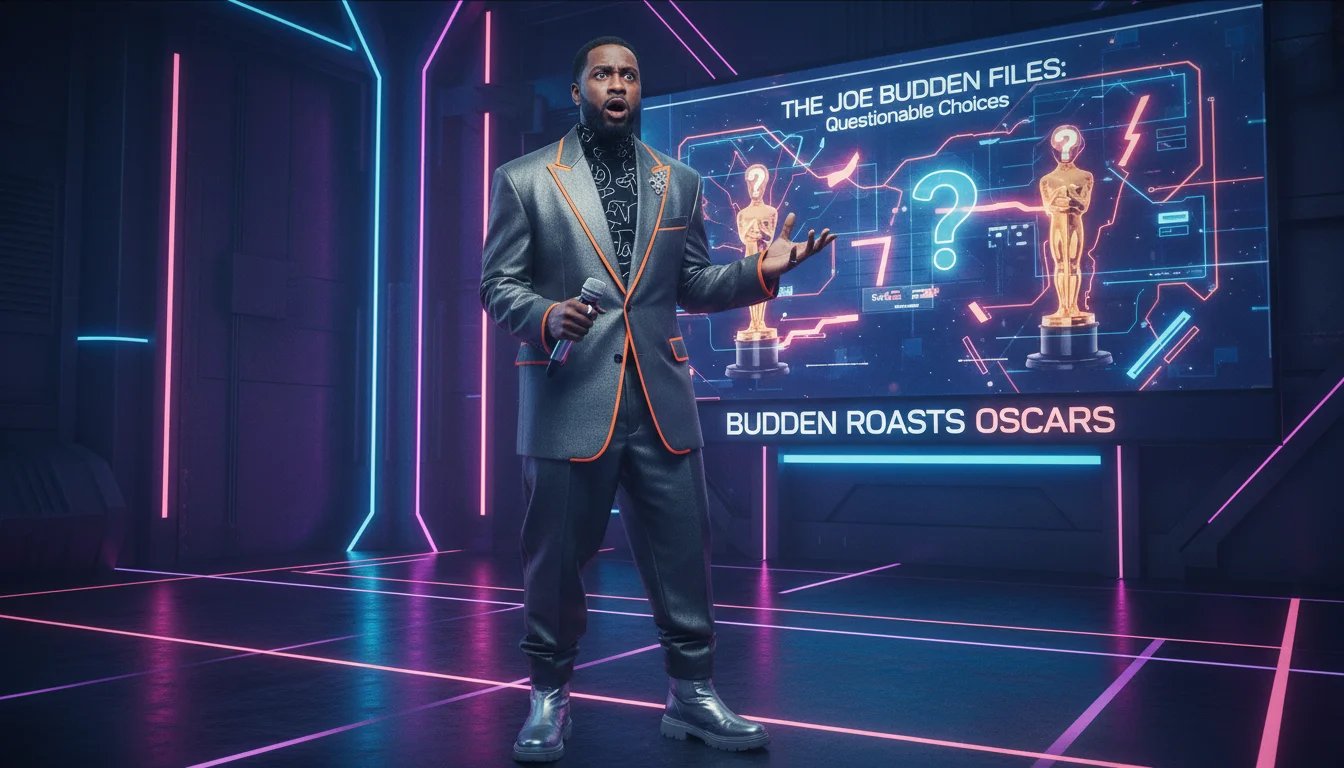
Joe Budden Predicts the Future of Music Crossover to Film
By The Exec
Joe Budden often speaks for the music executives, and his take on a hypothetical 2026 Oscar nomination landscape involving musical artists is revealing. While presented in a lighthearted and speculative manner, his comments touch upon the evolving relationship between the music industry and Hollywood, highlighting the financial incentives, contractual considerations, and the potential power shifts that accompany such crossovers. Budden’s analysis, even framed as a reaction to a hypothetical scenario, offers valuable insights into the strategies and power dynamics at play.
At the core of Budden’s perspective is the undeniable lure of Hollywood for musicians. He understands that an Oscar nomination, let alone a win, transcends musical recognition and catapults an artist into a different stratosphere of fame and financial opportunity. This isn’t just about bragging rights; it’s about leveraging newfound prestige to negotiate better record deals, secure lucrative endorsement contracts, command higher touring fees, and ultimately, build a more resilient and diversified brand. Industry speculation suggests that these types of crossover opportunities are highly sought after.
Budden would likely point out, if discussing real-world examples, how successful musicians have always dabbled in acting, producing, and film scoring. However, the increasing convergence of these industries, fueled by streaming services and the blurring lines between content creation and consumption, has amplified the potential rewards. A strong performance in a film, especially one that garners critical acclaim, can reignite a musician’s career, introduce them to a wider audience, and unlock new revenue streams.
One key aspect Budden implicitly addresses is the contractual minefield that artists navigate when venturing into Hollywood. Record labels, management companies, and publishing houses all have vested interests in an artist’s success and will undoubtedly seek to capitalize on their forays into film. Negotiations surrounding film scores, soundtracks, acting roles, and even cameo appearances can become incredibly complex, involving multiple parties and potentially conflicting agendas. Budden, with his own experiences in the industry, is acutely aware of the need for artists to have strong legal representation to protect their interests and ensure they receive fair compensation for their contributions.
Moreover, Budden would likely analyze the strategic alliances and partnerships that are often forged between music labels and film studios. These collaborations can take various forms, from co-producing film soundtracks to jointly developing music-themed films and television shows. Such partnerships allow both industries to leverage their respective expertise and resources, creating synergistic opportunities that benefit all parties involved. However, they also raise questions about creative control and the potential for artistic compromises.
The conversation would undoubtedly touch on the role of streaming services in facilitating these crossovers. Platforms like Netflix, Amazon Prime Video, and Disney+ have become major players in the entertainment industry, investing heavily in original content and seeking to attract top talent from both music and film. These platforms offer artists a unique opportunity to showcase their versatility and reach a global audience. However, they also present new challenges in terms of negotiating streaming royalties and ensuring fair compensation for their work.
Furthermore, Budden understands the impact on touring. A successful film role, especially a memorable one, can significantly boost an artist’s ticket sales. Fans are more likely to attend concerts and purchase merchandise from artists they perceive as multi-talented and relevant in the broader cultural landscape. This “Hollywood bump” can provide a much-needed revenue stream for artists in an era of declining album sales.
The “beef” element, if it were to arise in a real-world scenario, might stem from perceived opportunism or questions of authenticity. Traditional musicians might view artists who prioritize acting over their music as sellouts, while film purists might question the artistic merit of musicians who dabble in acting without proper training or dedication. This kind of industry rivalry is nothing new, but it can be amplified by social media and create unnecessary friction.
Ultimately, Budden’s hypothetical Oscar commentary underscores the growing interconnectedness of the music and film industries. He sees the business potential for artists to leverage their musical talent and popularity to create opportunities in film. He also recognizes that the business is complicated. The real winners, as Budden might suggest, are those who navigate these challenges strategically, protect their creative vision, and build a sustainable career that transcends the boundaries of any single industry. The industry is watching, and speculation about who will be the next to successfully cross over is always rife.
By Petty Pablo | Lead Social Analyst The internet remembers Jeremy Meeks as the man with the mugshot that broke containment. Blue eyes, sharp features,
To provide the best experiences, we and our partners use technologies like cookies to store and/or access device information. Consenting to these technologies will allow us and our partners to process personal data such as browsing behavior or unique IDs on this site and show (non-) personalized ads. Not consenting or withdrawing consent, may adversely affect certain features and functions.
Click below to consent to the above or make granular choices. Your choices will be applied to this site only. You can change your settings at any time, including withdrawing your consent, by using the toggles on the Cookie Policy, or by clicking on the manage consent button at the bottom of the screen.
Functional
Always active
The technical storage or access is strictly necessary for the legitimate purpose of enabling the use of a specific service explicitly requested by the subscriber or user, or for the sole purpose of carrying out the transmission of a communication over an electronic communications network.
Preferences
The technical storage or access is necessary for the legitimate purpose of storing preferences that are not requested by the subscriber or user.
Statistics
The technical storage or access that is used exclusively for statistical purposes.The technical storage or access that is used exclusively for anonymous statistical purposes. Without a subpoena, voluntary compliance on the part of your Internet Service Provider, or additional records from a third party, information stored or retrieved for this purpose alone cannot usually be used to identify you.
Marketing
The technical storage or access is required to create user profiles to send advertising, or to track the user on a website or across several websites for similar marketing purposes.
To provide the best experiences, we use technologies like cookies to store and/or access device information. Consenting to these technologies will allow us to process data such as browsing behavior or unique IDs on this site. Not consenting or withdrawing consent, may adversely affect certain features and functions.
Functional
Always active
The technical storage or access is strictly necessary for the legitimate purpose of enabling the use of a specific service explicitly requested by the subscriber or user, or for the sole purpose of carrying out the transmission of a communication over an electronic communications network.
Preferences
The technical storage or access is necessary for the legitimate purpose of storing preferences that are not requested by the subscriber or user.
Statistics
The technical storage or access that is used exclusively for statistical purposes.The technical storage or access that is used exclusively for anonymous statistical purposes. Without a subpoena, voluntary compliance on the part of your Internet Service Provider, or additional records from a third party, information stored or retrieved for this purpose alone cannot usually be used to identify you.
Marketing
The technical storage or access is required to create user profiles to send advertising, or to track the user on a website or across several websites for similar marketing purposes.