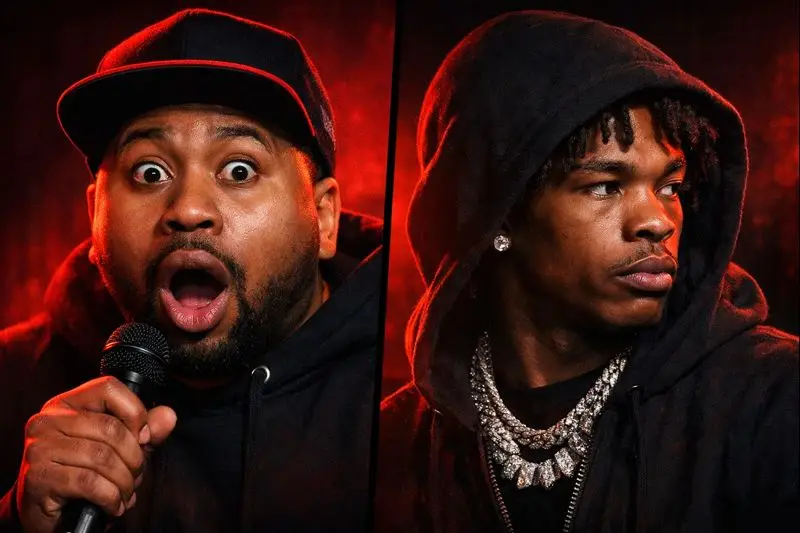
DJ Akademiks says there’s no “yapping in the circle” this time, just a receipt-heavy reaction to a streamer storyline that refuses to stay offline. Tylil went live to deny he “backdoored” Akademiks during a tense moment outside a Miami club, and Akademiks isn’t buying the cleanup.
If you’ve seen the clips floating around and wondered why the dates, the calls, and the “who was standing where” matter so much, this breaks down what Akademiks claims happened, what Tylil claims happened, and why the timeline is the real main character.
Why Akademiks says Tylil’s explanation doesn’t add up
By Agent 00-Tea
Akademiks frames the situation as simple: he barely knows Tylil, met him once, and hasn’t seen him since. He says he has no personal revenge energy, but he does have a clear opinion about Tylil’s reliability. In his view, Tylil is the kind of person who’ll switch sides when it benefits him, then act confused when anyone calls it out.
A key part of Akademiks’ argument is motive and social positioning. He repeatedly suggests Tylil’s priority is staying in good standing with Kai Cenat’s audience and circle, which (in Akademiks’ telling) creates pressure to deny anything that looks like a setup. Akademiks also points out what he sees as the “logic gap” in Tylil’s defense: Tylil both claims he was not involved and also describes being present for pieces of the night.
Akademiks spends time addressing a rumor that he was physically struck. He says that’s exactly why he didn’t bring the situation online at the time. His stance is that if anything serious had happened, there would be footage, and that footage would have value in the modern attention economy. He even jokes that if a clean, undeniable video existed, it would be everywhere.
His bigger point is about narrative control. Akademiks argues that this became a public drama because other people started talking, not because he ran to the internet first. That distinction matters to him, because he believes it flips the usual stereotype people try to attach to him.
The timeline Akademiks insists is “fact-based,” not vibes
Akademiks repeatedly anchors his story to dates. He says Tylil referenced the incident as happening in August, but Akademiks insists the timeline is March, tied to the Brand Risk 5 weekend in Miami. He references messages, calls, and social posts as time stamps, plus the sequence of venues and links.
He describes a weekend that included:
- A Brand Risk event
- A club afterward where Tylil is seen on stage in footage
- Kiki on the River the next night (where Akademiks says he took off his hat and changed clothes to meet dress code)
- A later link-up with Trippie Redd
- A strip club stop (Booby Trap) where Akademiks says Trippie was throwing large amounts of money
Akademiks uses the Kiki on the River detail for a specific reason: he suggests if the internet claim were true that he’d been visibly struck, it would show on his face in photos and videos from the very next night. He also points to hair length and appearance as another “soft proof” that the timing is consistent.
He’s also careful (by his standards) to describe the confrontation outside the club as a short exchange that went nowhere, ending with the other person swinging toward the window as the car pulled off. He states the swing missed, and that the situation didn’t turn into a prolonged physical incident.
That same “receipt energy” is why he keeps returning to a practical question: how would someone get close to his vehicle through a crowd that included security and friends, unless someone helped create an opening?
If you want a quick snapshot of how media has summarized this particular Miami story thread, here’s a Baller Alert recap of the Miami run-in.
What “backdoor” means in Akademiks’ version of the story
Akademiks makes a very specific distinction: he’s not claiming Tylil caused the conflict, he’s claiming Tylil facilitated access.
In his telling, the “backdoor” is about social camouflage. He says the other man approaching the car would not have been allowed to get that close if security read him as a direct problem. The way around that, Akademiks claims, is approaching alongside someone who’s already “good” with the group, using a friendly greeting and familiarity to lower defenses.
Akademiks also revisits how he first met Tylil. According to him, the initial Brand Risk conversation was about Akademiks reposting Tylil’s content years ago and cropping out credit. Akademiks admits he has reposted content without tags at times, and he explains it as partly a platform risk decision, especially when content originates from accounts that regularly get deleted or violate rules. He describes the “Demon Time” era as chaotic, with many pages popping up and disappearing, and he implies tagging those sources could invite unwanted scrutiny.
Where he says it turns into “backdoor groundwork” is the number exchange and the “we shook on it” moment. Akademiks argues that once you’ve had a respectful interaction and swapped contact info, you become a trusted face in a crowd. In his view, that trust is exactly what can be exploited later.
To Akademiks, Tylil’s denial comes off like a rhetorical trick: “Our problem was solved, so why would I set you up?” Akademiks’ response is essentially, “Because the setup wasn’t about your personal issue, it was about impressing someone else.”
The AJ phone call: the key detail Akademiks uses as “confirmation”
Mid-reaction, Akademiks calls someone named AJ live to back up the “how did he get there?” part. AJ’s account, as presented on stream, supports Akademiks’ claim that Tylil was physically near the vehicle during the approach and communicated to the security group that his “man” wanted to talk.
Akademiks leans heavily on a few points from that call:
- Tylil approached and greeted people near the car in a very familiar way.
- Tylil allegedly told security someone wanted to speak to Akademiks.
- Tylil was positioned by the backseat area during the approach.
- Afterward, calls and texts to Tylil allegedly went unanswered.
Akademiks claims he called Tylil repeatedly that night and frames it as a bet-level dispute, offering escalating money amounts to prove call logs if needed. He also argues that if Tylil truly had nothing to do with it, he should have addressed it directly with Akademiks, instead of letting Kai Cenat become the messenger.
Another theme Akademiks pushes is reputation by pattern. He claims there are many unrelated stories about Tylil being untrustworthy, and he treats this situation as consistent with that alleged track record. He also issues a blunt warning to Kai’s circle: if loyalty is tied to who’s paying the bills, it’s fragile.
For a separate mainstream write-up showing how quickly this feud cycle can reignite in public, here’s an XXL report on the renewed Lil Baby and DJ Akademiks beef.
Where Akademiks says the blame really lands (and what happens next)
Even while calling Tylil a “backdoor” type, Akademiks ultimately aims most of his anger at Lil Baby (or, more accurately, Lil Baby’s circle) because he believes they’re the ones who let a private situation become a public flex. Akademiks frames it as a mismatch of rules: if you present yourself as street-connected, he expects you to keep situations off the internet. Once it becomes online chatter, he says he’s going to respond in the language of online chatter.
He also says this situation taught him operational lessons. He describes tightening security, reducing lingering outside venues, and being more aware of how crowds and distractions can create openings.
At the same time, he rejects the idea that a rumor like “you got slapped” would silence him. He argues the opposite: that trying to embarrass him only makes him louder, because his brand was never built on being physically intimidating.
To close the loop, he tries to pursue video proof from the venue. He brings a friend, Fresh, on stream and asks him to check with the club owner about whether surveillance from the relevant March date still exists. Akademiks says he wants it not just to win an argument, but to show how stories shift when people feel pressure to protect an image.
He ends this segment still in “reaction mode,” promising to speak with other creators later (including Aiden Ross), and suggesting he wants direct conversation with Lil Baby’s side if possible.
Timeline of Events (As Described by Akademiks)
- Brand Risk weekend in Miami, which Akademiks ties to March 15-17.
- Akademiks meets Tylil at the Brand Risk event and they discuss reposted content.
- They exchange numbers and Akademiks claims he called Tylil after the later incident.
- The group goes to a club afterward, where Tylil is seen on stage in footage.
- The next night includes Kiki on the River (Akademiks says he’s clearly visible without a hat).
- Later, Akademiks links with Trippie Redd and ends up at Booby Trap.
- Outside a club, a man approaches Akademiks’ vehicle, there’s a tense exchange, and the man swings toward the window as the car leaves (Akademiks says it missed).
- Akademiks later asks his team how the person got so close, and claims they identified Tylil as the familiar face who helped him approach.
What We Know vs What’s Still Disputed
| Category | Details |
|---|---|
| What Akademiks states on video | He says the incident happened in mid-March, tied to Brand Risk 5 weekend, and not in August. He says he did not get visibly struck. He says he called Tylil repeatedly afterward. |
| What Tylil claims (as described in the video) | He denies “backdooring” Akademiks, describes the situation as between two grown men, and disputes key details like repeated calls and proximity. |
| What remains disputed | Whether Tylil actively facilitated access to the car, how close he was during the approach, and whether call logs would support Akademiks’ claims. |
Conclusion
This DJ Akademiks Tylil drama is less about a single moment outside a club and more about who gets to control the story after the fact. Akademiks’ whole case rests on timing, access, and consistency, and he treats shifting details as the loudest “tell.” Whether surveillance or call logs ever surface, the real takeaway is how fast private tension turns into public branding. If there’s one word Akademiks wants attached to his stance, it’s accountability.
Learn more about Pulse of Fame and our editorial team. Want to weigh in? Join the conversation in the Pulse of Fame community forum.
Related: The DJ Akademiks Files: DJ Akademiks Is “Compromised”, Fantano Breaks it Down