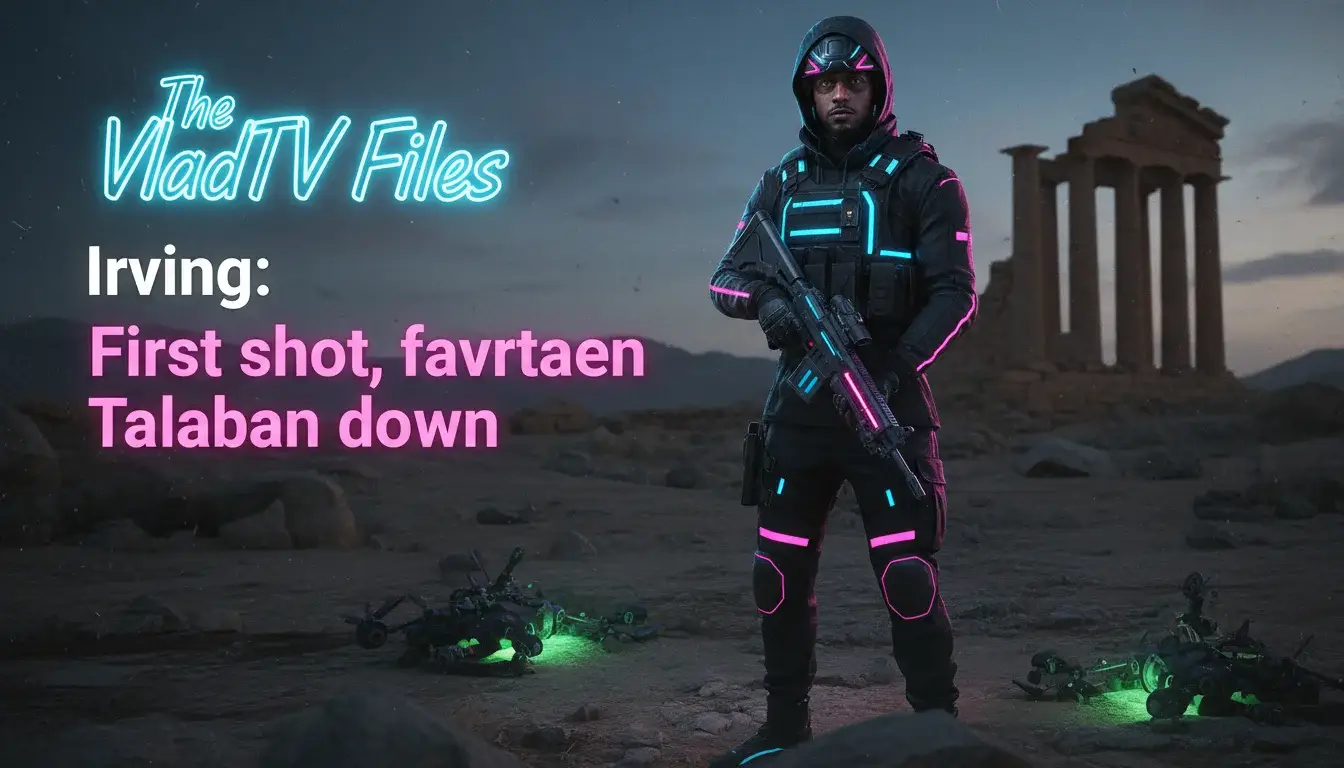
Did Nicholas Irving Potentially Open Himself Up to Scrutiny Regarding Rules of Engagement in VladTV Interview?
The platform known for getting people to talk has done it again. In a recent VladTV interview, former U.S. Army Ranger sniper Nicholas Irving recounted his experiences in combat, specifically detailing an engagement where he killed 14 Taliban fighters after being shot at for the first time. While Irving’s interview offers a compelling, albeit potentially dramatized, account of his time in service, a closer examination raises several legal considerations regarding the potential for self-incrimination, particularly in the context of adherence to the Rules of Engagement (ROE).
The core issue here is whether Irving’s description of the event, however compelling, could expose him to future scrutiny regarding whether his actions were consistent with the ROE in place at the time. “Self-snitching,” as it’s colloquially known, isn’t necessarily a direct admission of guilt, but rather the divulging of information that could be used against an individual in a future investigation or legal proceeding. In this context, it refers to any statements that might suggest a deviation from the ROE, potentially leading to further inquiry.
The ROE are a set of directives issued to military personnel that define the circumstances and limitations under which force may be used. They are designed to ensure that military operations are conducted in accordance with international law, domestic law, and policy. Violation of the ROE can result in disciplinary action under the Uniform Code of Military Justice (UCMJ), and in extreme cases, criminal charges.
Several aspects of Irving’s account warrant legal consideration. First, the interview lacks precise details about the specific ROE in effect during the described incident. ROE can vary depending on the location, time period, and the specific mission. Without knowing the exact ROE, it’s impossible to definitively determine whether Irving’s actions were fully compliant. However, his narrative could still raise red flags.
For instance, Irving’s description of killing 14 enemy combatants after being fired upon prompts questions about proportionality. While self-defense is a fundamental principle enshrined within the ROE, the use of force must be proportionate to the threat. This means that the force used should not exceed what is necessary to neutralize the threat. The number of enemy combatants killed, while potentially justified under the circumstances, could nonetheless trigger an inquiry into whether the response was excessive. Were all 14 actively engaged in attacking U.S. forces? Was there any opportunity for surrender or disengagement? These are the types of questions that investigators might ask.
Furthermore, the concept of “positive identification” is crucial to ROE. Soldiers are generally required to positively identify a target as a legitimate enemy combatant before using lethal force. This means confirming, to the best of their ability, that the individual is actively participating in hostilities or posing an imminent threat. Irving’s description could be scrutinized to determine whether he had sufficient information to positively identify each of the 14 individuals as legitimate targets before engaging them. Did he have clear visual confirmation they were armed? Were they engaged in hostile acts? These details are vital for assessing compliance with ROE.
It’s important to note that combat is inherently chaotic and unpredictable. Soldiers often make split-second decisions under extreme pressure. The law recognizes this and provides some leeway for reasonable mistakes made in good faith. The concept of “combat immunity” can protect soldiers from liability for actions taken during armed conflict, provided they acted in accordance with the law of war and ROE. However, combat immunity is not absolute and does not shield individuals from liability for intentional violations of the ROE or war crimes.
Another legal angle is the potential for the interview to be used in civil litigation. While less likely, it’s conceivable that the families of the deceased Taliban fighters could attempt to bring a lawsuit against Irving in U.S. courts, alleging wrongful death or other tort claims. While such a lawsuit would face significant legal hurdles, including jurisdictional issues and the application of the political question doctrine, Irving’s statements in the interview could potentially be used as evidence to support their claims.
Moreover, Irving’s statements regarding the events could open him up to scrutiny from international organizations or human rights groups. While the United States is not a party to the International Criminal Court (ICC), the ICC has jurisdiction over war crimes committed by nationals of non-state parties if the crimes are committed on the territory of a state party. While it’s highly improbable that Irving would be prosecuted by the ICC based on his interview, the potential for international scrutiny exists, especially if his statements are interpreted as evidence of violations of the law of war.
In conclusion, while Nicholas Irving’s VladTV interview provides a gripping account of his experiences in combat, it also raises potential legal considerations. His description of the engagement, while not necessarily an admission of wrongdoing, could expose him to future scrutiny regarding his adherence to the ROE. The absence of specific details about the ROE in effect at the time, combined with questions about proportionality and positive identification, could potentially trigger further inquiry. While the likelihood of legal action is relatively low, the interview serves as a reminder of the importance of understanding the potential legal ramifications of public statements, especially when those statements relate to sensitive topics such as the use of force in armed conflict. It highlights the inherent risks of “self-snitching” and the need for caution when discussing potentially controversial events.
Learn more about Pulse of Fame and our editorial team. Want to weigh in? Join the conversation in the Pulse of Fame community forum.
Related: The Chrisean Rock Files: Chrisean Rock son update stuns world