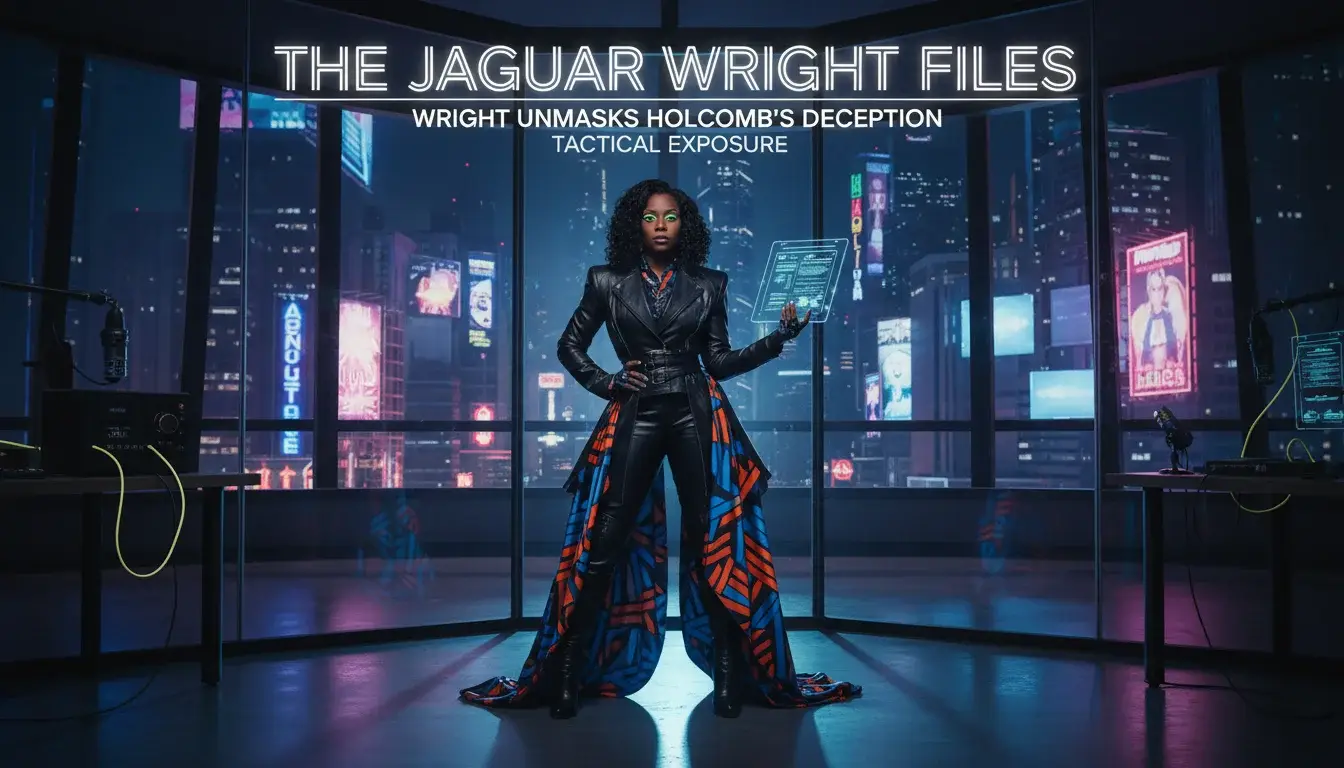
Jaguar Wright Makes New Allegations Regarding Jill Scott, Lil’ Mo, and James Holcomb in Latest Interview
The industry whistleblower is speaking again, and the claims are specific. Jaguar Wright, known for her outspoken nature and previous allegations against prominent figures in the music industry, has released another interview, this time focusing on alleged instances involving singer Jill Scott, Lil’ Mo, and a man named James Holcomb. It is important to note that these are allegations, and none have been independently verified.Wright begins by allegedly casting aspersions on Jill Scott, revisiting a past narrative she has shared regarding an alleged incident involving Scott and singer Lyfe Jennings. While the details are somewhat obscured, the implication is that Scott allegedly engaged in behaviour that Wright considered inappropriate, involving Jennings. Wright paints a picture of Scott that sharply contrasts with the public persona of a wholesome and grounded artist. These are strong accusations, and, it must be stated, they are alleged.A significant portion of Wright’s allegations focuses on James Holcomb, whom she appears to accuse of financial impropriety and potentially exploiting artists. She refers to it as the “Holcomb Grift,” and although the exact nature of the alleged grift is not explicitly laid out, the insinuation is that Holcomb allegedly took advantage of artists financially or in some other exploitative manner. Wright seems to suggest that Holcomb is someone who operates behind the scenes, allegedly pulling strings and engaging in unethical practices within the music industry. Her claims regarding Holcomb are presented with a high degree of certainty, though, once again, they remain alleged until proven otherwise.Wright further allegedly implicates Lil’ Mo in her narrative. While the details are murky, Wright suggests that Lil’ Mo was allegedly aware of some of Holcomb’s alleged dealings or possibly even complicit in them. Wright doesn’t provide concrete evidence to support this claim but uses suggestive language to create a picture of Lil’ Mo being part of an alleged inner circle. She allegedly questions Lil’ Mo’s character and suggests that she is not who she presents herself to be publicly.It’s crucial to underline the importance of approaching these claims with critical analysis. Wright’s allegations are delivered with passion and conviction, but they are, at this stage, unverified. The interview is primarily based on Wright’s personal accounts and interpretations of events, and as such, they should be considered as her perspective. The truth of these claims is not established, and those named deserve the presumption of innocence.Wright’s criticisms extend beyond specific individuals to encompass a broader critique of the music industry. She alleges that there are systems in place that allow for the exploitation of artists, particularly Black artists. She alleges that certain individuals and organizations profit from the talents and vulnerabilities of musicians, leaving them with little control over their careers and finances. This is a common narrative that resonates with many who feel disenfranchised within the entertainment industry.The interview also delves into what Wright perceives as a calculated effort to silence or discredit her. She suggests that there are forces at play actively working to undermine her credibility and prevent her from speaking out about her experiences. This adds another layer to her narrative, suggesting that she is not only fighting against alleged injustices but also against alleged efforts to suppress her voice.In conclusion, Jaguar Wright’s latest interview contains a series of allegations against Jill Scott, Lil’ Mo, and James Holcomb, accusing them of various forms of alleged misconduct. These allegations range from personal grievances to accusations of financial exploitation. While Wright presents her claims with apparent certainty, it is crucial to remember that they are alleged and have not been independently verified. Further investigation and evidence would be required to substantiate these claims. The individuals named are entitled to due process, and it is essential to avoid jumping to conclusions based solely on Wright’s account. Her words, while impactful, remain at this point, allegations. The public should, therefore, approach these claims with a healthy dose of skepticism and await further developments before forming definitive opinions. The veracity of these statements remains to be seen, and all parties involved deserve a fair and unbiased assessment.Learn more about Pulse of Fame and our editorial team. Want to weigh in? Join the conversation in the Pulse of Fame community forum.
Related: The Pearl Files: Hypocrisy laid bare Pearls brave truth.