Por Pablo el mezquino | Analista social principal
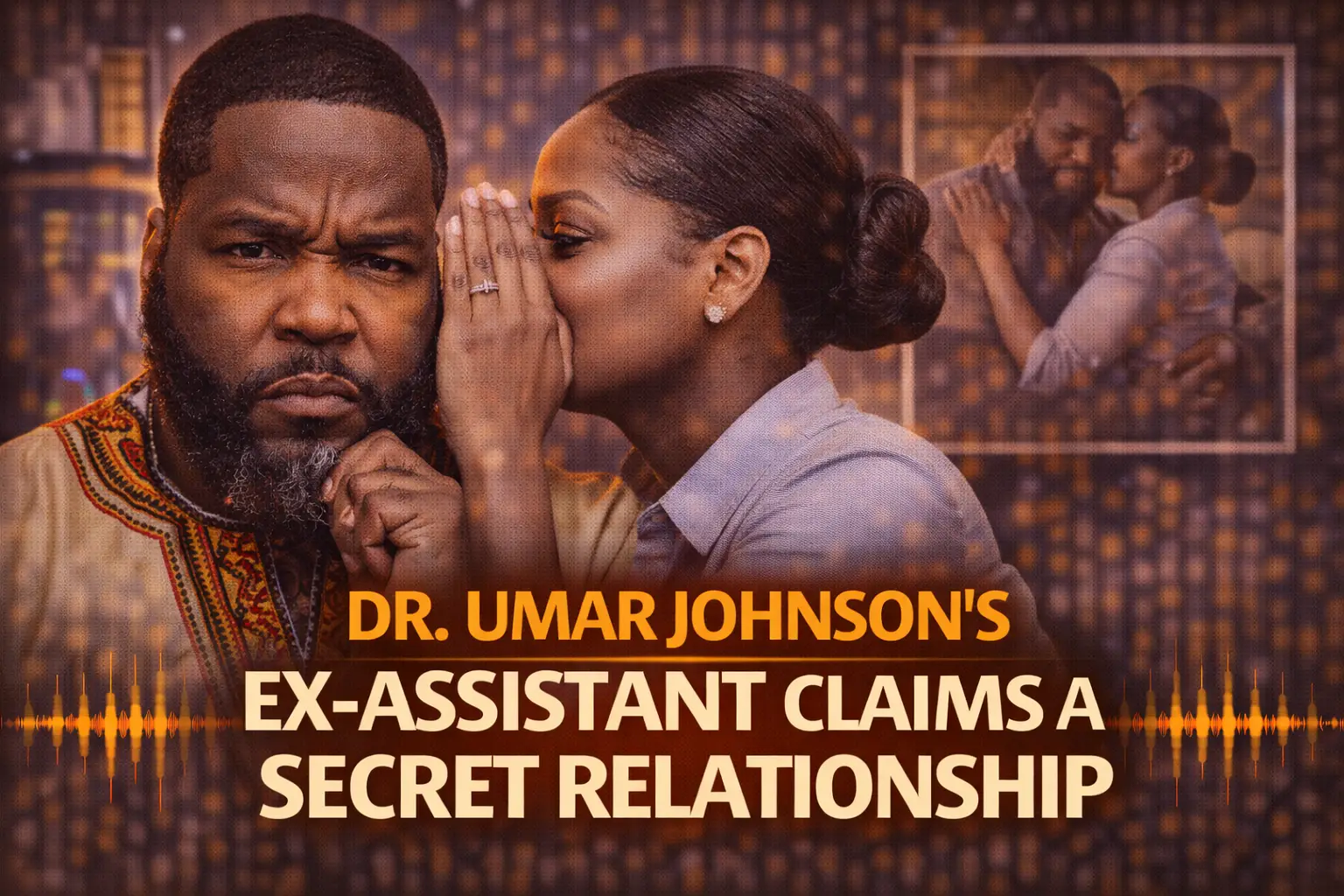
Influencer media runs on two currencies, trust and optics. In the exclusive Dr. Umar Johnson ex-assistant Storm Monroe interview, a former assistant (who goes by “Mia”) described what she says she saw while working in Dr. Umar Johnson’s pan-Africanism orbit, from irregular caregiver work for his mother to a filthy house. She also raised the kind of question audiences always ask when a long-running fundraising story drags on: where’s the money going?
- Mia claimed she started working as a caregiver with Dr. Umar Johnson around February 2025, after messaging him online and then meeting him in person.
- She said the job centered on caregiving for his mother, with random scheduling y no fixed pay rate.
- Mia and another guest (“Champagne Queen”) described the mother’s living conditions as cluttered and in disrepair, arguing it clashes with his public image and messaging.
- Mia also alleged there was a private romantic involvement, which she now says she regrets.
- The conversation kept circling back to school donations, the long-promised Academia FDMG, and why the living situation, if accurately described, hasn’t improved.
How Mia Says She Got Got Hired (and Why It Started as a “Joke”)
Mia introduced herself with a stack of nicknames, which set the tone for an interview that mixed internet humor with serious claims:
- “The real Miami”
- Mia
- “Tama” (as mentioned)
- “Champagne Queen” (a friend who joined as a witness/commentator)
According to Mia, she reached out to Dr. Umar Johnson in February 2025 through a direct message after posting something playful on her social media about wanting to “join the pan-Africanism movement.” She framed it as half serious, half joking, but also said she genuinely felt inspired by Black activists, including historical figures like Marcus Garvey, and the kind of work a psychologist like Dr. Umar is known for online, especially his persona as the Príncipe del panafricanismo. She added that she had studied in that area for a few semesters, and that his persona helped shape her interest.
From there, Mia claimed the interaction moved quickly into texting and phone calls after he shared his number. She described herself as talkative, and said the conversations became personal, including her circumstances at the time and the fact she wasn’t working. She alleged that’s when he offered a job opportunity, but not in the way a typical “assistant” role sounds.
Instead, Mia said he wanted her to serve as a caregiver for his mother in Philadelphia. The host, Storm Monroe, asked about her age at the time; Mia said she was 23. That detail matters, not because age alone proves anything, but because it frames the power dynamic she later described: a young supporter moving from admirer to employee inside a very private family situation.
For background on Dr. Umar Johnson’s public-facing bio and how he’s widely described, see Umar Johnson’s profile summary.
The Caregiving Reality: On-Call Shifts, No Set Pay, and a Mother’s Condition
Mia described the work as inconsistent. She wasn’t hired for a steady Monday-through-Friday schedule, and she wasn’t quoting an hourly rate. Instead, she said she’d get called as needed, sometimes for daytime help, sometimes overnight if he traveled out of state. In her telling, it was less “job” and more “on call, under the table.”
She also described the tasks as standard caregiver responsibilities. In simple terms, she claimed she was doing the unglamorous basics that keep someone comfortable day to day:
- Cooking foods his mother liked
- Changing her and helping with hygiene
- Putting on movies and keeping her company
Storm Monroe raised a separate issue after reviewing video of the Chestnut Hill home (discussed later): if the space was as messy as shown, why not hire consistent help or improve the environment? Mia’s response was that Dr. Umar, and in her words the local community, already knew the condition of the home. She also claimed other women had been brought in before her as caregivers, suggesting a pattern of rotating helpers rather than building stable, professional support.
When asked about the mother’s health, Mia said she believed the mother had multiple sclerosis (MS) y dementia (or dementia-like symptoms). She described speech that could become choppy, memory that came and went, and a sense that the mother’s reality could feel “distorted.” Still, Mia said she could speak at times and hold short conversations, although they could drift.
Mia also claimed Dr. Umar told her the mother’s condition worsened after a prior caregiver situation, including a UTI y bed sores that allegedly went untreated for a long period. She further alleged that once Dr. Umar became the primary caregiver, he cut off contact with other family members connected to that earlier period. Those are serious claims; the video presents them as Mia’s account, not verified records.
The sharpest tension in the interview wasn’t just “messy house” talk or the mother’s living conditions, it was the gap between public messaging about uplift and the private logistics of care.
The Home Optics: Clutter, Neglect Claims, and the Nursing Home Debate
The interview’s most viral element is simple: the house. Storm Monroe reacted to footage that, according to the guests, showed a filthy house in disarray. Mia characterized the environment as unclean and neglected, and Champagne Queen backed that up with broader commentary about how neglect can become normalized when systems fail people.
The conversation then moved into a debate that a lot of viewers will recognize. Storm Monroe said that if someone can’t maintain a safe, clean environment for an ill parent, a nursing home might seem like the obvious solution. Champagne Queen pushed back. Her point was that institutional care can be worse, especially for people with limited resources, and that government systems are often underfunded and inconsistent. In her framing, moving someone into “a home” doesn’t automatically mean better care, it can mean different problems.
Still, Storm Monroe held the line on a common-sense standard: even if outside systems fail, most people don’t want to see their parent living in conditions that look unsafe or degrading. Mia agreed, and added a detail that made the optics worse, not better: she claimed Dr. Umar also lives there. If true, that undermines any narrative that the mess is temporary or out of his control.
They also talked about the cost of cleaning help in Philadelphia in rough terms, estimating something like $150 to $200 for a day of heavy cleaning, depending on the job. Storm Monroe contrasted that with what he said Dr. Umar earns from speaking engagements (they referenced $600 or more per booking), funds often directed toward his primary building project, the FDMG Academy. The math isn’t a court filing, but it’s an optics problem: when a public figure asks supporters for donations, audiences expect basic living conditions to reflect at least some reinvestment.
The Alleged Relationship: From Admiration to Regret (and Why Power Matters)
Storm Monroe asked directly whether Mia and Dr. Umar had a relationship. Mia said it wasn’t a formal relationship, but she did allege there was a private romantic involvement. She claimed it happened fewer than six times, and later said she regrets it. (The interview also included references to marriage and other family dynamics; the discussion was messy, but the core claim was her regret and disillusionment.)
Mia’s explanation followed a familiar arc in influencer culture: admiration first, reality later. She said she’d known of him since she was 16, and that meeting a person who inspired her felt like meeting a celebrity, even if he isn’t one in the mainstream sense. Over time, she claimed the “star-struck” feeling faded. Once she started looking at his daily life, habits, and environment, she said her perception changed to viewing him as a narcissist, and the personal connection cooled.
Champagne Queen framed it as maturity. People make choices differently at 23 than they do with more life experience and distance, and that’s true even before you add the weirdness of mixing caregiving work with personal access to a public figure.
The interview also referenced allegations that Dr. Umar has a strained relationship with his daughter Siobhan Stone. Storm Monroe and the guests used that as another “values versus practice” example, amid broader claims of family neglect like child support issues and being labeled a deadbeat father. Related online coverage has circulated before, including family court battles over a custody agreement; for context on that public dispute, see Yahoo Entertainment’s report on the online feud. That link doesn’t confirm anything in this interview, but it shows the broader backdrop of controversy that shapes how audiences hear new claims.
In influencer scandals, the details get the clicks, but the pattern gets the belief.
Donations, the School Narrative, and the Trust Gap
Underneath all the personal claims sits the real driver of audience emotion: money and credibility. Storm Monroe made a point that cuts through a lot of internet noise. Dr. Umar has asked for donations for years, tied to the promise of building the Academia FDMG. Yet the guests claimed they didn’t see lifestyle markers that typically explain “missing money,” like luxury cars, designer wardrobes, jewelry, or flashy travel.
Mia said she mostly saw regular clothing, plus African-themed products around the home that reflected his commitment to pan-Africanism. She also claimed the home itself didn’t look improved, which raises the obvious question: if the funds aren’t visible in personal luxury and they aren’t visible in home upkeep, where are they?
The interview didn’t provide a verified ledger, and it didn’t prove wrongdoing or spark outright fraud allegations. What it did show is how trust erodes in public fundraising stories, particularly around school donations:
- Time stretches on (a vandalized school may partly explain construction delays), and people lose patience.
- Receipts feel incomplete, even if some payments exist, highlighting gaps in donaciones transparency.
- Optics get louder than explanations, especially when a home environment looks rough.
Mia also described inconsistent payment for her caregiving work, and said she had screenshots of payments. She claimed that around August (year not fully clarified, but within the same period), Apple Pay stopped working for him due to a rumored bank accounts frozen issue, and payments shifted to PayPal. Storm Monroe referenced amounts he said he saw, including $300, $25, y $150, as examples of how irregular the support looked.
This is where “internet court” kicks in. A public figure can argue that school funding and personal finances are separate, or that construction and bureaucracy take time. That may be true. At the same time, when supporters give money for a cause, they also expect the messenger’s life to look stable. If the messenger’s own home looks chaotic, it creates a narrative vacuum. The internet always fills that vacuum.
If you want to explore Storm Monroe’s own work beyond this interview, his description includes Monroe Productions links and bookings and his listed book, LOVE and POEMS by Sunny Monroe.
Timeline and Claim Check (As Described in the Video)
Cronología de los acontecimientos (según se describe en el vídeo)
- February 2025: Mia said she DM’d Dr. Umar Johnson about joining the movement, then began texting and calling after he shared his number.
- Early 2025: Mia claimed she met him in person and was offered a role centered on caregiving for his mother in Philadelphia.
- Throughout 2025: She described on-call caregiving shifts, sometimes overnight, with no fixed schedule.
- Around August (during the work period): Mia claimed Apple Pay stopped working due to an account issue, and payments shifted to PayPal.
- During the work period: Mia alleged a private romantic involvement occurred, then ended as her view of him changed.
- February 2026: Mia claimed she stopped working with him after a tense final interaction where she felt he was making “power moves,” and she chose to leave.
Lo que sabemos vs. lo que es especulación
| Categoría | Detalles |
|---|---|
| What’s stated in the Storm Show video | Mia said she worked as a caregiver for Dr. Umar’s mother from about Feb 2025 to Feb 2026, described irregular scheduling, and claimed payments shifted from Apple Pay to PayPal after an account issue. |
| ¿Qué se alega? | Mia alleged a private romantic involvement, alleged the home conditions were very poor, and claimed the mother’s health included MS and dementia (or similar symptoms). She also alleged prior caregiving issues contributed to a decline. |
| ¿Qué es especulación? | Commentary that labels Dr. Umar as a “sociopath”; claims about motives (ego, resentment); theories about where donation money may be going without direct proof; monikers like “Evil Vegan” and “Baby Smurf” tied to the broader controversy; parallels to how Tasha K distributes viral influencer stories. |
El veredicto final
This interview works because it hits three nerves at once: caregiving, money, and brand integrity. Mia’s claims are just that, claims, but they spotlight a bigger truth about internet leadership from a psychologist. His public taglines like “black queens forever” only heighten the irony in light of the allegations. When your platform runs on moral authority and donations, your private life becomes part of the public audit, fair or not. In the end, the loudest question isn’t about drama, it’s about responsabilidad, and whether the optics match the message of pan-Africanism.
Nota: Este artículo analiza los comentarios de un video disponible públicamente. Las afirmaciones descritas se atribuyen a los oradores y no se presentan como hechos confirmados.
Más información Acerca de Pulse of Fame y nuestro equipo editorial. ¿Quieres dar tu opinión? Únete a la conversación en el foro de la comunidad Pulse of Fame.
Relacionado: Young Pharaoh Arrested in New York for Criminal Contempt: What Storm Monroe Repo