Por el Agente 00-Tea | Analista Cultural
Every few years, La próxima top model de Estados Unidos finds its way back into the group chat, and the cycle is always the same. People rewatch old clips, the wave of outrage hits, Tyra Banks becomes public enemy number one, then the internet moves on until the next rewatch, like the recent social media cycle sparked by the Netflix documentary.
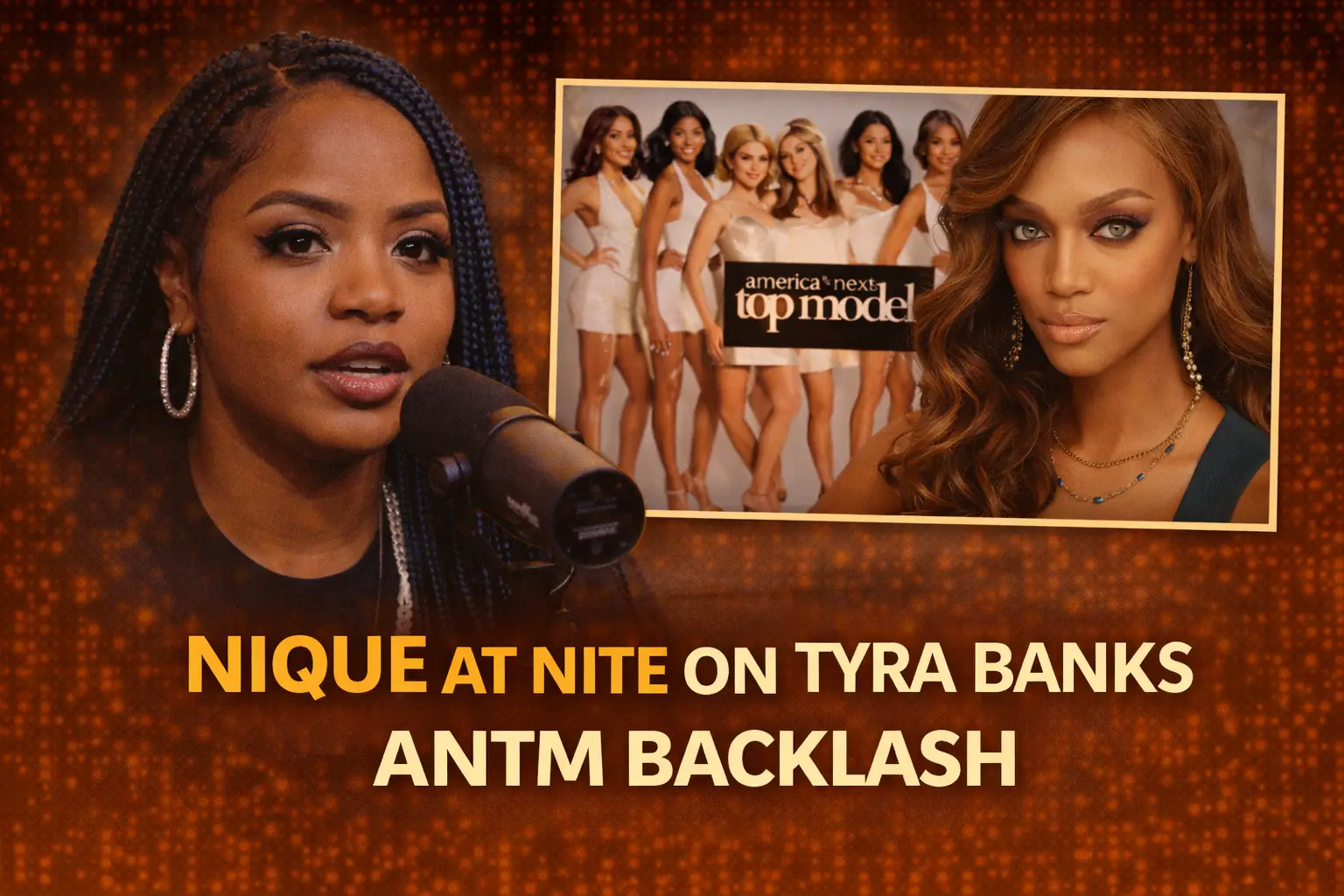
Nique at Nite isn’t buying the pile-on. In her livestream, she argues Reality Check: Inside America’s Next Top Model kicked up familiar anger, but the blame is getting pinned on one person while everyone else from judges to creatives to contestants to network decision-makers gets a soft edit.
The outrage cycle is real, but so is selective memory
Nique frames the backlash as part of a predictable loop. Viewers rediscover moments that feel wild by today’s standards, looking at old clips through a “2020 lens” and reacting like it’s breaking news, and then rinse and repeat the next time the show trends. Her point isn’t that people can’t criticize what happened, it’s that the outrage often ignores how reality TV worked in the early 2000s.
She brings up how audiences used to consume shows like El mundo real as “popcorn TV.” The messy parts were the point. Catty confessionals, uncomfortable house tension, romance drama, it all got packaged as “real.” ANTM, in her view, borrowed that format and blended it into a competition show in the modeling industry.
That’s why she side-eyes the sudden moral panic over things viewers once watched faithfully. Hindsight is 20/20 if you loved the chaos in real time, and it’s a little convenient to act shocked now, especially if the same people still subscribe to modern “trash TV” that thrives on conflict.
Nique also calls out what she sees as a parasocial effect. Fans remember Jay Manuel, Miss J. Alexander, and Nigel Barker as charismatic TV staples. So when they show up in documentary-style interviews sounding hurt or blindsided, audiences may instinctively take their side because the parasocial relationship fans have with the contestants feels familiar.
Her core argument: if accountability is the goal, it can’t stop at the most famous face on the poster.
Why Nique says the Netflix documentary felt one-sided
Nique’s biggest issue with the Netflix documentary is structure. She views the project as a “documentary expose” that leaned heavily into “woe is me” storytelling, featuring people who didn’t find lasting success after the show, without balancing those experiences with contestants who did benefit from the platform.
She’s clear that not everyone was going to win, and not everyone was going to become a household name. ANTM was a competition, not a participation ribbon. One winner per cycle was always the deal, and even non-winners had to pivot and hustle if they wanted to build a career.
From her perspective, a more rounded project would include both sides:
- Contestants who felt harmed or misled
- Contestants who used the show as a stepping stone
- People who can speak to how the modeling industry treated “reality TV models” afterward
Instead, she felt the documentary narrowed the lens and left viewers with the impression that the entire franchise existed only to embarrass contestants and boost Tyra’s brand.
She also challenges the idea that Tyra was the sole architect of every decision. Nique repeatedly points out the show had teams: judges, creatives, production, and network leadership, including key figures like executive producer Ken Mok and Tyra. Even “executive producer” can be more complicated than viewers assume, sometimes a credit, sometimes true control, sometimes a mix.
For readers tracking the broader conversation, mainstream write-ups have also highlighted how split the reactions are, including former contestants reacting to the docuseries.
Accountability can’t be a one-person job, especially with judges involved
Nique’s sharpest criticism isn’t aimed at Tyra; it’s aimed at what she sees as selective accountability among the former judges and crew. She names Janice Dickinson as one of the harshest presences in the show’s history and questions why this former judge, along with others like Nigel Barker, doesn’t get the same heat in this latest discourse on accountability.
She also calls out Jay Manuel’s positioning. In Nique’s telling, he wasn’t simply around the chaos as creative director; he helped design it by shaping photo shoots, challenges, and the toxic work environment contestants had to endure. That’s why she finds it odd to watch him appear as a victim of a machine he helped run.
Nique even brings up his book, The Wig, The Bitch and the Meltdown, describing it as a not-so-subtle drag of Tyra (even if names weren’t used directly). Her stance is simple: if you feel a way, stand on it, but don’t rewrite history once the internet finds a villain.
At the same time, she doesn’t let Tyra off completely. She acknowledges Tyra could have handled certain moments differently, but she refuses to treat Tyra as the only decision-maker expected to issue a public apology while the full panel of former judges and others get to keep clean hands.
This ties into the broader “Tyra Banks Nique at Nite America’s Next Top Model” debate Nique is really having: who gets blamed when a cultural phenomenon ages badly, the face of the franchise, or the full team that built it?
For a snapshot of how intense the online reactions got, this roundup of internet reactions to the ANTM documentary shows how quickly Tyra became the main target.
The Shandi Sullivan hot tub controversy, consent, and why Nique won’t follow the crowd
One of the biggest lightning-rod storylines Nique discusses involves Shandi Sullivan (Cycle 2). Nique describes the situation as a party night after the contestants made it to the top five, with alcohol involved and Shandi Sullivan having a boyfriend at the time.
In the documentary chatter, Nique says many people argue production should’ve stepped in, and some viewers go further and label it sexual assault. Nique doesn’t agree based on what she remembers seeing. She emphasizes a case-by-case approach and says that, from what was shown, it looked consensual.
She also says her opinion would change if unedited footage showed clear non-consent. But she pushes back on the idea that alcohol automatically removes adult accountability in every scenario. In her view, that’s a slippery standard, and it risks turning regret into a blanket claim.
Nique is more torn on whether the exploitative production should’ve aired the footage at all. She sees the argument that it was unnecessary for a modeling competition. Still, she also notes that reality TV at the time chased “raw and uncut” moments, and ANTM was clearly playing in that sandbox.
Her frustration is that Tyra gets blamed as if she personally filmed the scene, edited it, and hit “export,” even though Tyra wasn’t physically present in the moment. Nique also points out that other reality franchises aired hookup drama for years, yet they don’t get retroactive moral tribunals at the same scale.
One reason this moment keeps resurfacing is because the doc reignited debates about production ethics and the reality TV trauma for the cast. Coverage like Eva Marcille’s response to the backlash shows how layered the reactions are, even among people from the franchise.
The success stories Nique says the documentary left on the cutting-room floor
Nique argues the documentary would’ve landed differently if it included contestants who used ANTM as fuel, not a final verdict. She lists several examples of contestants who found success without necessarily winning, defying rigid beauty standards:
- Yaya DaCosta, who she remembers from the Eva season and describes as having a successful career afterward
- Winnie Harlow, who built a major career outside the show
- Toccara, one of the plus-size models who hosted on BET and remains successful
Her point isn’t that every contestant thrived. It’s that the story becomes distorted when you only show the people who didn’t. A competition show will always create losers. That’s not cruelty by default, that’s the format.
Nique also revisits Cycle 1’s Ebony, calling the “ashy” commentary foul, especially coming from a Black woman who understands how loaded that kind of critique can be amid body shaming, diet culture pressures, and risks of eating disorders. At the same time, she’s honest that Ebony’s photos didn’t hit for her personally, and she didn’t find the storyline the most compelling choice for a documentary centered on long-term impact and shifting beauty standards.
Then there’s Keenyah Hill, another contestant who faced specific challenges, and Danielle Evans (Cycle 6), who Nique calls beautiful and deserving. Yet she also emphasizes the reality of a colorist industry, where even a winner can struggle once the cameras stop rolling, as seen in moments like the race-swap photo shoot. She contrasts that with Eva Pigford, who she describes as having a more “exotic” look that translated more easily into opportunities.
It’s not a comfortable conversation, but it’s a real one: exposure is powerful, but it doesn’t override industry bias.
Nique’s personal modeling history, and why it shapes her view of “accountability”
Nique doesn’t just talk as a viewer. She connects her opinion to her own experience trying to work in the modeling industry in California. She shares stories of being on sets, networking, and finding casting opportunities through industry connections.
She recalls attending the “Beautiful Girls” video set for Sean Kingston and learning about LA Casting from another model. Later, she says she submitted for the Lady Gaga and Beyoncé “Telephone” video, got booked, and insisted on taking the day off work because she wasn’t missing the opportunity.
Most importantly, she shares a moment with a powerful casting contact who made an advance, and she says she refused because she wasn’t willing to trade intimacy for bookings. The takeaway she draws is blunt: the industry can be fake, opportunities aren’t always fair, and sometimes the price of “getting in” is something you simply won’t pay. These encounters echo the dramatic makeover episodes, serving as a metaphor for the transformation and hurdles models face.
That lived experience is why she struggles with narratives that place every outcome on Tyra’s shoulders. In Nique’s view, contestants still made choices during the show, and careers still required pivoting once it ended, as seen when comparing the paths of winners to those like Adrien Curry who had to pivot after the show.
She also rejects the idea that she’s disagreeing just to be contrarian. She mentions other creators (like Lovely T) may have different takes, and she refuses to let audiences pit commentators against each other as if there’s one approved opinion.
For another angle on the broader backlash, this piece on Eva Marcille reacting to the Tyra discourse shows how many different “truths” are being argued at once.
Conclusion: If you want accountability, ask for it from everybody
Nique at Nite’s stance amid the Tyra Banks ANTM backlash is unpopular in the current moment, and she knows it. Still, her argument is consistent: ANTM was a product of its era, a lot of adults helped shape it, and it’s messy to treat Tyra as the lone mastermind while everyone else collects sympathy.
If the goal is real reflection, it has to be full accountability, not a trending villain edit, to take a wider lens on the show’s history. The bigger question is what people want now: an honest breakdown of reality TV’s past, or a simple target to throw tomatoes at. These issues might even be relevant if there were a cycle 25.
If you’ve watched the Netflix documentary and followed the Tyra debate, where do you land on who owes the audience or the cast a public apology: shared responsibility, or one person at the center of it all?
You can also keep up with Nique’s work through her official Nique at Nite website, her Nique LaClaire YouTube channel, y Nique at Nite on Instagram.
Más información Acerca de Pulse of Fame y nuestro equipo editorial. ¿Quieres dar tu opinión? Únete a la conversación en el foro de la comunidad Pulse of Fame.
Relacionado: T.I. on Million Dollaz Worth of Game: Atlanta’s Legacy, “Let Em Know,” and Raisi