Por Pablo el mezquino | Analista social principal
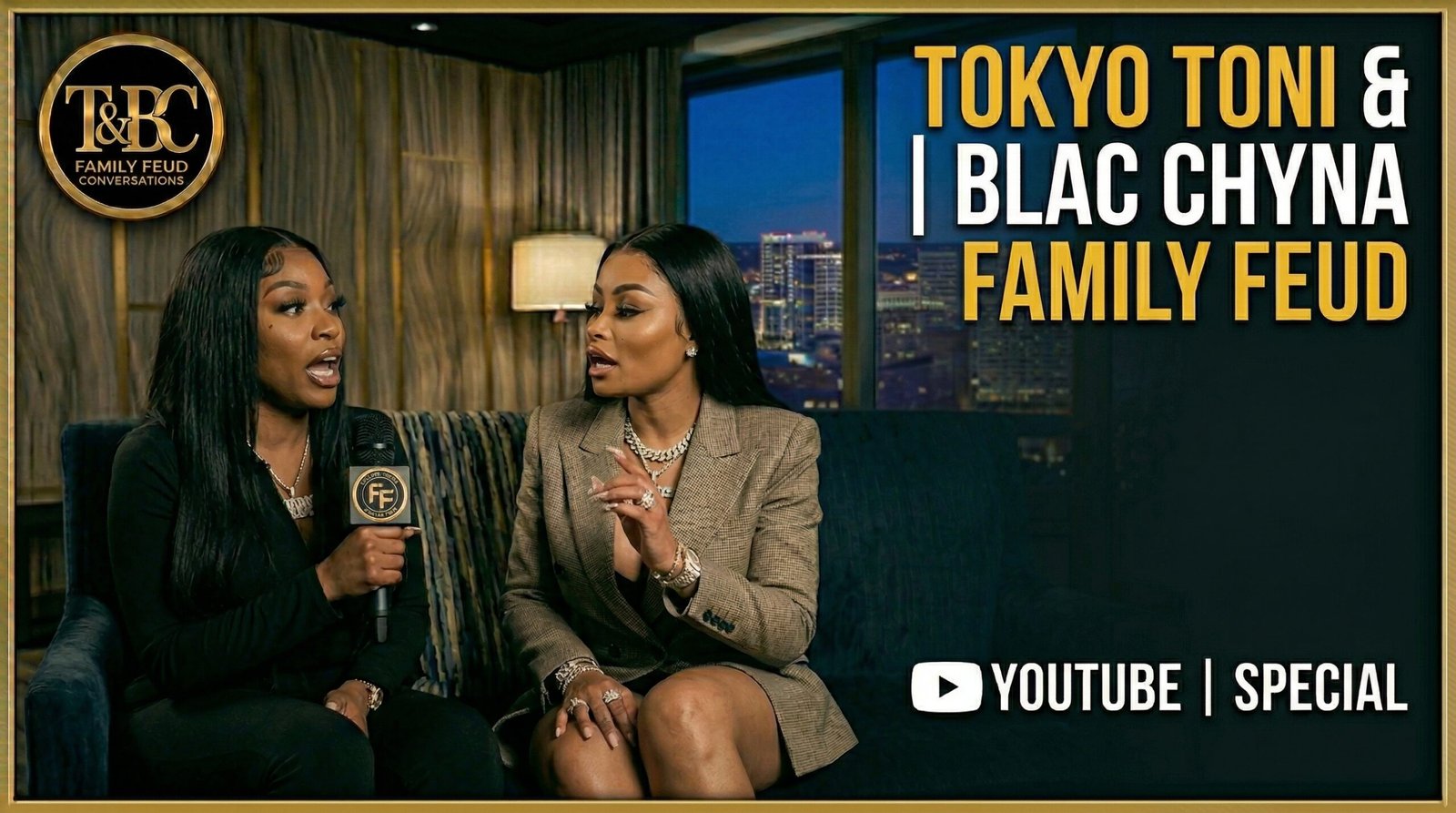
Once a family dispute starts sounding like a safety issue, the internet stops feeling like a stage and starts feeling like a witness stand. That is the lane Armon Wiggins takes in his commentary on Tokyo Toni’s latest public rant about Blac Chyna.
His read is blunt but measured: this no longer sounds like messy family business, it sounds like a boundary crisis. From there, the bigger story becomes less about shock value and more about access, resentment, and who gets to stay close when trust is gone.
- Armon says Tokyo Toni’s latest comments about Blac Chyna crossed a major line because they sounded threatening, not simply emotional.
- He argues Blac Chyna should treat the remarks seriously and consider full distance, including limiting access to her children.
- He also suggests the public fallout may reflect older wounds, including resentment over money, recognition, and family loyalty.
- His broader point is sharp: being a parent does not automatically guarantee access, especially when public behavior becomes harmful.
Why Armon says Tokyo Toni crossed the line
Armon opens from a place of reluctant support. His tone is not, “I’ve always been against her.” It’s closer to, “I’ve tried to give grace, but this is getting hard to defend.” That distinction matters because it frames his reaction as a turning point, not a pile-on.
According to his commentary, Tokyo Toni has spent about a week posting rant-style videos about Blac Chyna on YouTube. In his view, the latest post stood apart because it included language that sounded like a direct threat if Blac Chyna showed up in person. Armon highlights that moment as the point where concern replaces gossip.
“I’m trying to support Tokyo, but you’re losing me.”
That line captures the whole mood. He isn’t reacting to ordinary family shade. He’s reacting to a public statement that, in his view, suggests possible real-world danger.
What stood out in the rant
Armon references Tokyo Toni saying she was ready to harm Blac Chyna “on sight,” then call police afterward. He also points to her calling her daughter a “devil” or “demon,” which he sees as part of a pattern: harsh language first, moral framing second.
For Armon, that’s where the optics get ugly. Once someone uses spiritual labels to justify explosive behavior, the argument stops sounding righteous and starts sounding unstable. His takeaway is simple, this was not normal venting.
Why he thinks Blac Chyna should take it seriously
Armon’s response is direct. If he were in Blac Chyna’s position, he says, he would consider a protective order. He calls it unfortunate, especially because this involves a mother and daughter, but he doesn’t leave much room for sentiment once threats enter the room.
He also argues that access to children should be part of that boundary. In his framing, if a grandparent sounds unhinged toward the parent, then supervised family harmony is no longer the default. He mentions Tyga, Rob Kardashian, and even Kris Jenner as examples of people who, in his view, should think carefully about keeping children away from that energy.
His logic is less about punishment and more about risk. If rage is this public, this intense, and this personal, then no one can pretend it ends neatly at the adult level.
The children become part of the story
Armon keeps circling back to one point, kids should not inherit the same chaos their parent survived. He says Blac Chyna already has enough to think about, from internet chatter to what her children may eventually see online. Bringing them into direct contact with that tension, in his view, would only repeat the cycle.
That part of the commentary gives the video its real weight. The issue is not only what Tokyo Toni said. It’s what those words imply about safety, trust, and emotional spillover.
The deeper tension Armon thinks is driving this feud
Armon spends a good chunk of the video reading the conflict as something older and more layered than one bad livestream. He suggests Tokyo Toni may feel shut out of Blac Chyna’s life, especially if access to her daughter, grandchildren, or financial help has changed.
He is careful to present that as interpretation, not fact. Still, his theory is clear: when support, attention, or resources dry up, resentment can get loud online. In that sense, he sees the rant as part pain, part power struggle.
Recognition seems to matter here too
Another thread in Armon’s commentary is credit. He says Tokyo Toni appears frustrated that Blac Chyna has publicly credited her grandmother as a major support system, while giving her mother less of that shine. That imbalance, he suggests, may be feeding old wounds.
His point lands because it gets at something familiar in family disputes: money matters, but recognition matters too. Sometimes the loudest fight is really about who gets named as the foundation.
Armon’s bigger point about parents, loyalty, and public shame
This is where the video moves beyond celebrity commentary and into family politics. Armon argues that some parents expect blind loyalty no matter what happened in childhood. In his words, a parent doesn’t get to neglect, embarrass, compete with, or publicly use their child, then later demand support on title alone.
That idea sits at the center of his argument. Being “the mother” is not, by itself, a lifetime pass. Respect can be damaged, and access can be lost.
He also critiques what he sees as a familiar contradiction, harsh behavior followed by religious language. In his reading, calling your child a demon while acting recklessly doesn’t make you the moral authority. It makes the situation look more fractured.
Clips tied to this storyline have also circulated on Instagram, which helps explain why the dispute keeps expanding beyond a private family matter.
Timeline of events, as described by Armon
- Tokyo Toni had reportedly been posting anti-Blac Chyna rants for about a week.
- Armon says the latest video included language that sounded like a threat of physical harm if Blac Chyna appeared in person.
- He reacts by saying the comments should be treated seriously, not brushed off as internet talk.
- He suggests that Blac Chyna may have already limited contact, possibly because of toxicity or past instability.
- He also speculates that tension over money, access, and family credit may be part of the larger breakdown.
- By the end, he argues that private therapy and firm distance may be the only realistic path.
Lo que sabemos frente a lo que es especulación
This quick breakdown helps separate Armon’s sourced points from his interpretation.
| Categoría | Detalles |
|---|---|
| Lo que se dice en el vídeo | Armon says Tokyo Toni posted repeated rants and made comments that sounded threatening toward Blac Chyna. He also says she referred to her daughter in demonic terms. |
| ¿Qué se alega? | Armon suggests Blac Chyna may have cut off contact or refused support, but he does not present proof. |
| ¿Qué es especulación? | He wonders whether jealousy, untreated mental health issues, or resentment over money and recognition may be driving Tokyo Toni’s behavior. |
The clean takeaway is that the strongest claims come from what Armon says was said publicly. Everything else stays in the category of interpretation.
Why Armon thinks distance and private help may be the only path
Armon says the pair has tried therapy before, but he doesn’t think televised healing does much when the wounds are this deep. His view is that any real attempt would need to happen off-camera, away from performance, audience reward, and viral incentives.
He also says he hopes, for Tokyo Toni’s own sake, that there may be an untreated mental health issue involved. He names possibilities like bipolar disorder or schizophrenia as speculation, not diagnosis. The point is not clinical certainty. The point is that the behavior, in his view, no longer reads as ordinary anger.
That leads to one of his coldest but clearest conclusions: if this were his situation, the relationship would be over unless serious treatment and real change happened first. Not paused, not lightly managed, over.
For readers who follow Armon’s commentary beyond YouTube, his show is also on Apple Podcasts, Spotify, y Spreaker.
El veredicto final
Armon’s commentary works because it doesn’t treat this as random celebrity chaos. He frames it as a story about acceso, entitlement, and what happens when unresolved family pain turns into public content.
His sharpest point is also the simplest one: once a parent starts sounding unsafe, the title alone can’t carry the relationship. The hardest part of this story isn’t the noise online, it’s the possibility that the break may already be permanent.