Por el Agente 00-Tea | Analista Cultural
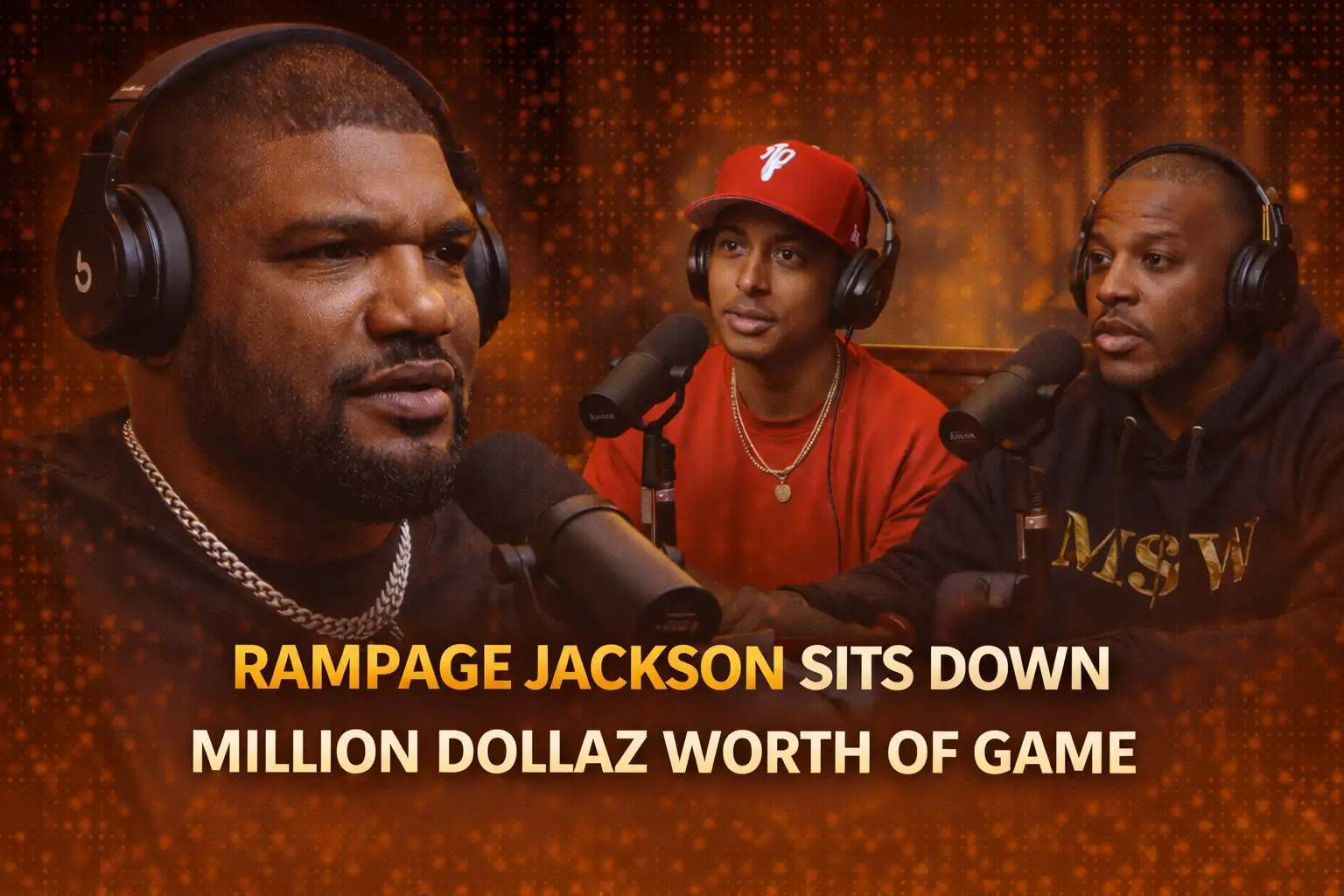
Rampage Jackson pulled up to Juego valorado en millones de dólares and reminded everyone why he’s still must-watch. The episode bounces from real fight talk to streaming money, and old UFC politics. The main theme is reinvention, because Rampage has taken hits in the cage and in the comments, and he’s still here.
“who could beat Rampage?”
Rampage was a problem, sure, but they named five “could’ve handled him” picks. The list was pure culture soup: Mr. T, Junkyard Dog, Kimbo Slice, Apollo Creed, and a “probably” thrown in for extra spice.
Rampage wasn’t having the Kimbo talk. He said he coached Kimbo Slice on The Ultimate Fighter, so he knew the strengths and the weaknesses. Out of respect, he kept it measured, but he still framed it like a fighter would: experience matters, and he believed he could take Kimbo into “deep waters” and stop him.
That exchange basically previews the whole episode. It’s jokes, but it’s also pride. Everybody is laughing, yet nobody wants their legacy played with too freely.
Jon Jones, fight pain, and the stuff Rampage wants outlawed
When the conversation turned serious, Rampage pointed to Jon Jones as the best fighter on the planet, while also calling out tactics he thought were unnecessary. He described moments where, just as he started doing well, he’d get poked in the eye, then hit with that knee attack that bends the leg in a direction it should never go.
Rampage also broke down what actually hurts in a fight. With adrenaline going crazy, he said you often don’t feel head shots the way people think. Instead, he highlighted a rib-area injury (a small muscle between ribs) as real pain, plus leg kicks and calf kicks as strikes you truly feel in real time.
He even said that knee-focused kick (often framed as an “oblique kick”) should be illegal, because it can attack the joint in a way that changes careers.
A big takeaway from Rampage’s fight talk is simple: the crowd remembers highlights, but fighters remember the damage that lingers.
The weight cut story that sounds like a stress test for the human body
Rampage’s Japan era stories still hit different, and the weight-cut story was the standout. He said that for one of his first fights in Japan, he had to cut 27 pounds in three hours. The method sounded like survival mode: sauna, jacuzzi, cold bath, back again, plus nonstop spitting and praying.
The opponent was Kazushi Sakuraba, a legend known for beating multiple Gracies. Rampage said there was no official weight class for the matchup, but promoters wanted him to drop 30 pounds, and they wanted it the day of the fight. He called that approach basically unsafe, because cutting that much water can leave you easier to knock out.
He said he managed to hit 27, then acted like he was about to collapse so they’d accept it. Not glamorous, but it’s honest, and it shows how different that era was.
Streaming sponsors, viral clips, and why being yourself is the only real plan
Rampage addressed a headline-like claim that floated around: he didn’t say streaming checks beat his fight earnings overall. He clarified that it was sponsor money since streaming. In his words, he’s made more from sponsors in about eight months of streaming than he did from sponsorships across 25 years of fighting.
Here’s the cleanest way to frame what he meant:
| Income category | What Rampage said |
|---|---|
| Fight purses and fight money | He made millions fighting |
| Sponsorship money during fight career | Lower than expected |
| Sponsorship money during streaming era | Higher than his past sponsor totals |
Rampage also explained what he thinks wins in streaming: be yourself, because a fake persona cracks over time, and grind because consistency still matters. The cheat code, though, is clip culture. He credited his streaming manager with making clipping a bigger strategy, and said clips pushed his reach far beyond the 5,000 to 8,000 live viewers. At one point, he said he saw over 800 million views in a month from clips across the internet.
For more context on the episode release, the show’s feed is listed at Million Dollaz Worth of Game on Barstool Sports.
UFC then vs now, plus the Reebok deal story Rampage still blames for “uniform era”
Rampage said the fight game feels different now because the UFC uniform era made it harder for personalities to stand out. He remembered when fighters had signature looks: Chuck Liddell’s “Iceman” vibe, Tito Ortiz flames, Rampage camo shorts. Then the kits came, and everybody looked more alike.
Skill-wise, he gave the modern era credit. Fighters pull off crazier techniques now, and he credited Conor McGregor for pushing MMA deeper into household-name status. He also said fighters make more money now, which he sees as natural progression.
Then came the business part. Rampage claimed Reebok wanted to sponsor him, but the UFC blocked it, saying they didn’t have a relationship with Reebok. Later, he said the UFC ended up doing a broader deal that resembled what he could’ve had, and he blamed an old manager for pitching the “package” idea to the UFC. Rampage framed that situation as a major reason he left, eventually taking a better-paying offer elsewhere (he named Bellator), even if the UFC controlled the narrative like he’d retired.
If you want a snapshot of how this story circulated outside the episode, see MMA Mania’s summary of Rampage’s streaming money comments, which echoes the same debate about what he meant by “more money.”
Rumors, troll culture, and the lesson: if you can’t laugh, you can’t last
Rampage answered a tough question about what the public got wrong. He brought up an old claim that he said wasn’t true, that a woman accused him of causing a miscarriage. He said it was tied to insurance fraud, that investigators found she was lying, and that the frustrating part was nobody publicly cleaned it up for him. He admitted that kind of storyline still stings, even when you know the truth.
From there, the episode drifted into modern internet chaos. Rampage said streaming culture surprised him, especially how trolls coordinate jokes, spam, and AI images. He explained how text-to-speech donations can ignite a viral nickname in seconds, especially if the streamer reacts. He said he learned the hard way that “crashing out” on a troll can multiply the joke.
Still, he also drew a line: he bans people when comments shift the energy into disrespect, because he doesn’t want his stream to feel toxic.
Family stories, growing up fast, and why retirement pushed him toward streaming
Rampage shared pieces of his early life that explained the edge. He described being around older “wannabe” hustlers as a kid, learning to fight, then getting pulled into trouble, including a story about being very young and driving a car tied to bad decisions. Later, he mentioned a college incident where a teammate hit him with a payphone, and the fight spiraled.
He also got real about wear and tear. Rampage said MMA was a young sport when he came up, and recovery resources weren’t like what NFL or NBA players have. After fights, he’d go celebrate, then return to the gym, basically macho-ing through pain. Now, he said his knees and joints pay the price.
On the mental health question, Rampage said he hasn’t personally seen many retired MMA fighters dealing with depression. He suggested part of that might be because the grind is so brutal that retirement can feel like relief, and many fighters stay connected by coaching or opening gyms. For him, streaming became the “something to do,” especially once injuries made a return harder.
Conclusion: Rampage is still the same, the internet is just louder now
Between the GOAT debate (he named Demetrious “Mighty Mouse” Johnson and Jon Jones), the Japan fight stories, and the final arm-wrestling moment, the episode made one thing clear: Rampage still runs on personality, even when the jokes get messy. The cage built the legend, but streaming turned him into a daily character people can’t stop watching. The whole vibe is a reminder that thick skin is a real skill now, right next to cardio and confidence.
Más información Acerca de Pulse of Fame y nuestro equipo editorial. ¿Quieres dar tu opinión? Únete a la conversación en el foro de la comunidad Pulse of Fame.
Relacionado: Marjorie Taylor Greene on Life After Congress, Pam Bondi, and the Epstein Files